I spent twenty years watching coaches walk around with laminated tactical sheets, treating their players like chess pieces that were supposed to slide perfectly into pre-drilled slots. They’d spend hours obsessing over “positional play,” only to watch their entire structure crumble the moment a midfielder took a heavy touch or an opponent decided to play a bit of a scrappy, physical game. Most of the pundits on TV will try to bury you in jargon to explain how relationism differs from positional play, making it sound like some mystical, high-concept philosophy reserved for the elite. But let me tell you, it isn’t about magic; it’s about the difference between a team that follows a rigid map and a team that actually knows how to talk to one another when the pitch turns into a swamp.
I’m not here to sell you on a new “revolutionary” system or give you a lecture that requires a PhD to follow. I’m going to strip away the nonsense and show you what these concepts actually look like when you’re standing on a touchline in the pouring rain. We’ll look at why one relies on geometry and the other relies on human connection, and more importantly, which one actually works when your players are tired and the game gets messy.
The Death of Rigid Geometry and Zonal Occupation vs Relational Movement
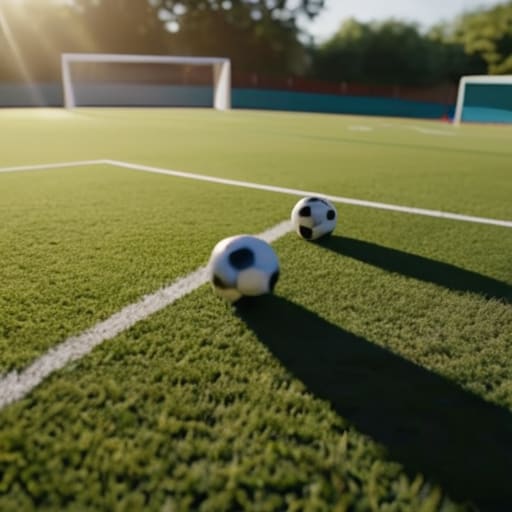
If you’ve ever stood on a touchline watching a team play “the right way,” you’ve seen the positional play model in action. It’s beautiful on a chalkboard: players occupying specific zones, maintaining strict distances, and ensuring the pitch is perfectly divided. It relies on zonal occupation vs relational movement as a constant tug-of-war. In a positional system, if a winger wanders too far from his designated corridor, the whole structure starts to look like a broken fence. It’s about maintaining a shape that provides passing lanes, treating the pitch like a grid that must be filled.
But relationism throws that grid into the bin. Instead of telling a player, “Stay in this rectangle,” you’re looking for tactical fluidity in football that comes from instinct rather than geometry. It’s not about where the player should be according to a diagram, but where he is in relation to the ball and his teammates. When the game gets messy—and it always gets messy—the rigid lines of positional play often snap. Relationism, however, thrives in that chaos because it doesn’t rely on a fixed map; it relies on the players’ ability to find each other in the thick of it.
Why Structural vs Relational Football Models Fail in the Mud
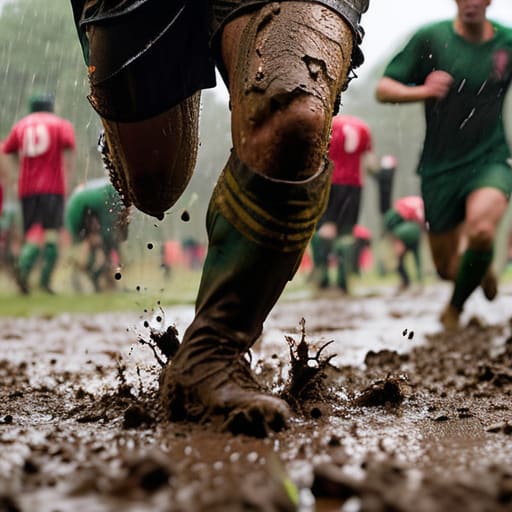
Here is the reality of a Saturday afternoon in November: the pitch is a sponge, the ball is heavy, and the tactical diagrams you drew on the whiteboard in the changing room have gone straight out the window. When you rely purely on structural vs relational football models that demand perfect spacing, you’re asking for trouble. Positional play works beautifully on a pristine carpet in Barcelona, but in the mud, a player can’t always find that precise pocket of space because the ground won’t let them. If your system demands a winger stay exactly on a specific line to maintain the shape, that player is going to get bypassed the moment the game turns into a scrap.
This is where the tension between juego de posicion vs relationism becomes visible. A rigid structure fails because it treats players like chess pieces that must move to specific squares. But football isn’t played on a chessboard; it’s played in a series of chaotic, shifting duels. When the game gets messy, you don’t need more geometry; you need players who can find each other through instinct rather than a pre-set map. If your team is too focused on maintaining a perfect shape, they’ll stop reacting to the actual ball and start reacting to an imaginary grid, and that is exactly when you’ll get caught on the break.
Five things to remember when the chalkboard meets the pitch
- Stop obsessing over the grid. In positional play, you’re teaching kids to stay in their little squares like they’re waiting for a bus. Relationism is about the player next to you. If your winger moves, your midfielder needs to feel that pull instinctively, not wait for a whistle or a mental checklist to tell them where to stand.
- Trust the chemistry, not just the formation. You can have the perfect 4-3-3 on paper, but if your two central midfielders don’t actually understand each other’s rhythm, they’ll leave a canyon in the middle of the pitch. Relationism prioritizes those natural partnerships—the players who just know where the other is going to be without looking.
- Prepare for the chaos of the transition. Positional play tries to organise the chaos; relationism accepts it. When you lose the ball, a rigid system often sees players standing in the wrong spots because they were following a geometric rule rather than reacting to the threat. Teach your players to react to the ball and the man, not the coordinate.
- Don’t mistake freedom for a lack of discipline. Just because a player isn’t glued to a specific zone doesn’t mean they’re just wandering about aimlessly. In a relational model, the discipline comes from the connection to the team. They move because the game demands it, not because they’ve been told to occupy the left half-space.
- Watch the players, not the tactical app. If you’re coaching a relational style, you can’t just look at a heatmap to see if they’re doing it right. You have to watch the eyes and the body language. Are they looking for the space, or are they looking for the instruction? If they’re waiting for you to tell them where to move, you aren’t coaching relationism; you’re just managing a group of statues.
The Bottom Line: What You’re Actually Looking For
Stop obsessing over where your players stand when the ball is dead; positional play is about the structure you build, but relationism is about the connections that actually happen when the game gets chaotic.
If your players are so glued to their “zones” that they can’t see a teammate three yards away in space, you haven’t coached a tactical system, you’ve coached a geometry lesson that will fall apart the moment a real opponent presses them.
Don’t try to pick one and discard the other; use positional structure to give your players a foundation, but allow for relational freedom so they can actually react to the messiness of a real match instead of waiting for a diagram to tell them what to do.
The Bottom Line
Look, at the end of the day, you have to decide what you’re actually asking of your players. Positional play is a beautiful, mathematical concept that works wonders when everyone is on their best behavior and the pitch is a pristine carpet. But relationism is the reality of the unpredictable game. It’s the difference between telling a boy to stand in a specific square on the grass and teaching him to look his teammate in the eye to see where the space actually is. One relies on a pre-planned geometry that breaks the moment a heavy touch or a bad bounce happens; the other relies on the human connection that makes football worth watching in the first place.
Don’t get so caught up in the tactical jargon that you forget you are coaching people, not chess pieces. Whether you lean towards the rigid structure of positional play or the fluid chaos of relationism, your job remains the same: build players who can think for themselves when the plan goes out the window. I’ve seen plenty of “perfect” teams crumble because they didn’t know how to react when the formation shifted two yards to the left. Focus on the relationships between the players, and the tactics will take care of themselves. Now, get out there and actually coach something.
Frequently Asked Questions
If we stop obsessing over players staying in their designated zones, how do I stop my team from turning into a disorganized mess in the middle of the pitch?
You’re worried about the chaos, and rightly so. If you let them roam without a compass, you’ll end up with eleven players chasing the ball like a pack of hungry terriers. The secret isn’t more rigid zones; it’s defining the intent of the movement. You don’t tell them to stay in a square; you tell them that if they move to support the ball, someone else must move to cover the space they left. It’s about rotational responsibility, not static positioning.
Can a squad of players with average tactical intelligence actually pull off relationism, or is it a luxury reserved only for the elite?
Look, if you’re expecting a squad of average players to intuitively “feel” the space like a bunch of seasoned pros, you’re dreaming. Relationism isn’t magic; it’s high-level communication. If your lads don’t have the tactical brain to read a teammate’s body language, they won’t look “relational”—they’ll just look lost. You can’t teach instinct, but you can teach them to look for the man, not the zone. Without that, it’s just chaos in the rain.
How do I balance these fluid, relational movements without completely losing the defensive shape that keeps us from getting countered every time we lose the ball?
You don’t balance them with a whiteboard; you balance them with discipline. If you let your players wander off looking for “relational connections” without a recovery trigger, you’re just playing suicide. I tell my lads: you can play as fluidly as you like in possession, but the moment that ball turns, the geometry returns. We don’t hunt the ball like headless chickens; we drop into a shape that protects the middle. Freedom is earned through defensive responsibility.
