I’ve spent more Sunday mornings than I care to admit standing on touchlines where the wind cuts through your jacket like a knife, watching “tactical gurus” on YouTube try to explain how a diamond midfield works using nothing but colorful arrows and expensive jargon. They’ll tell you it’s about “spatial dominance” and “passing lanes,” but they’ve never had to deal with a central pivot who’s completely gassed by the sixty-minute mark. A diamond isn’t some magical geometry lesson; it’s a high-stakes gamble that relies entirely on whether your players actually have the engine to cover the gaps when the structure inevitably stretches.
I’m not here to sell you a theoretical dream that falls apart the moment your opposition decides to play a simple long ball. I’m going to tell you exactly what happens when that formation hits the reality of a muddy pitch and a tired squad. We’ll strip away the nonsense and look at the actual mechanics—the roles, the risks, and the specific physical demands that determine if your diamond is a masterclass in control or just a recipe for getting carved open in the middle.
Overloading the Center of the Pitch Without Losing Your Head
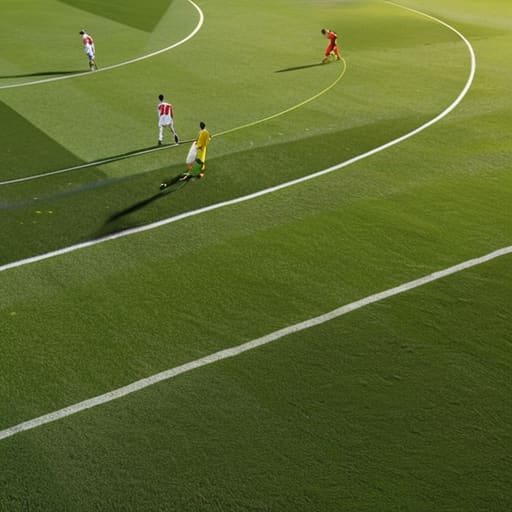
The whole point of this setup is overloading the center of the pitch, but there is a massive difference between having extra bodies and having extra problems. On paper, having four midfielders in a tight cluster looks like a tactical masterstroke. In reality, if you don’t manage those distances, you aren’t controlling the game; you’re just crowding your own players and making it impossible to pass. You want to create passing triangles that force the opposition to make a decision, not a congested mosh pit where nobody can find a yard of space to breathe.
The real danger lies in the defensive midfielder positioning. If your pivot decides to wander too far forward to join the party, you’ve left a gaping hole that a halfway decent team will exploit before you’ve even finished your half-time oranges. You aren’t just playing a formation; you are managing a series of delicate relationships. If the connection between your holding player and the rest of the diamond snaps, you aren’t “controlling the middle”—you’re just standing in the way of your own defenders.
The Defensive Midfielder Positioning That Saves Your Season

Now, let’s talk about the player who actually keeps the lights on: your pivot. In a diamond, the defensive midfielder positioning isn’t just about sitting in a hole and waiting for things to happen. If that player treats their job like a spectator sport, you’re finished. They are the glue. When you’re pushing bodies forward to exploit the center, this player has to be the one reading the game two steps ahead, cutting off the passing lanes before the opposition even realizes they’ve found a gap.
I’ve seen too many coaches try this setup only to watch their team get shredded on the counter because the pivot was too busy chasing the ball like a terrier. You don’t want a ball-winner who wanders; you want a player who understands spatial discipline. They need to act as the anchor that allows the rest of the shape to breathe. If they lose their discipline, you aren’t playing a diamond anymore—you’re just playing with a massive, gaping hole in the middle of your pitch that any decent winger will exploit by the second half.
Five Hard Truths About Making the Diamond Actually Work
- Stop treating your attacking midfielder like a luxury item. In a diamond, that number ten is the engine, not just a passenger. If they aren’t working hard to find pockets of space when you don’t have the ball, your whole shape becomes a glorified 4-4-2 with too many players standing still.
- Your wide players must have lungs like marathon runners. Because you’ve sacrificed a natural winger to pack the middle, your wide midfielders are the only things providing width. If they don’t track back to cover the flanks, your full-backs will be left isolated and embarrassed by every overlapping run the opposition makes.
- Don’t fall in love with the shape if the players can’t handle the distance. A diamond creates massive gaps between the lines if your players are static. If your central midfielders aren’t constantly adjusting their distance to one another, you’ll end up with a cluttered middle and a wide-open pitch for the opposition to exploit.
- The ‘Pivot’ isn’t just a position; it’s a responsibility. That defensive midfielder sitting at the base of the diamond needs to be the most disciplined person on the pitch. If they get caught ball-watching or chasing a player out of position, the structural integrity of the entire team vanishes, leaving your centre-backs exposed to a direct counter-attack.
- Prepare for the 70th-minute collapse. The diamond is physically demanding because it requires constant, short-burst movements to maintain the shape. If I see your players’ heads dropping and their distances stretching in the final quarter of the match, it’s not a tactical failure—it’s a conditioning failure. You can’t play a diamond if you’re too tired to hold the lines.
The Reality Check: What You Actually Need to Take Away
A diamond is not a magic shield; it is a high-maintenance engine that requires your central pivot to be the fittest player on the pitch, or the whole shape will disintegrate by the hour mark.
Don’t get seduced by the idea of “possession for possession’s sake”—if your midfielders are just passing sideways in a diamond without stretching the opposition, you aren’t controlling the game, you’re just wasting energy.
Success in this formation lives or dies by the distance between your attacking midfielders and your defensive pivot; if that gap gets too wide, you’ve just handed the opposition a playground in the middle of the park.
The Reality Check
At the end of the day, a diamond midfield isn’t some magic trick you pull out of a tactical handbook to confuse the opposition. It is a commitment to structural discipline. If you want that central overload to actually work, your pivot has to be a vacuum cleaner, your two advanced midfielders have to be tireless engines, and your attacking man can’t just drift aimlessly waiting for a handout. You can draw all the pretty triangles you want on a whiteboard in a warm clubhouse, but if your players aren’t prepared to communicate and cover the gaps when the shape inevitably stretches, you aren’t playing a diamond—you’re just playing with four players standing in a line while the rest of the pitch remains wide open.
Don’t get caught up in the hype of “perfect” systems or the latest tactical trend you saw on a highlight reel. Football is played on grass, usually when it’s muddy, and usually when your players are tired. A formation is only as good as the character of the people occupying the roles. If you teach your squad to understand the “why” behind the diamond—why they move, why they hold, and why they sprint—you’ll find they can survive much more than a bit of tactical pressure. Get back to the basics, drill the positioning until it’s second nature, and trust the process over the jargon. That’s how you win games that matter.
Frequently Asked Questions
What happens to my full-backs when the opposition decides to play with two wide wingers instead of staying narrow?
If they go wide, your full-backs are in a proper scrap. In a diamond, you’ve sacrificed width for central density, so if those wingers start stretching the pitch, your full-backs can’t just sit there looking pretty. They have to step out and engage. If they hesitate, they leave a massive gap behind them for your central midfielders to sprint into. It’s a balancing act: if they push too high, they’re bypassed; if they stay too deep, they’re isolated.
If my attacking midfielder is having a nightmare, how do I stop the whole diamond from turning into a flat, useless line?
If your number ten is having a nightmare, you can’t just hope they’ll wake up. When that top point of the diamond goes missing, the whole shape flattens and you’re just playing a standard, predictable midfield. You have two choices: either instruct your two advanced midfielders to push higher and squeeze the space, effectively turning it into a narrow 4-4-2, or drop your striker deeper to create a link. Don’t let the gap grow; if you don’t fill it, the opposition will exploit it.
Is the diamond actually worth the extra running, or am I just setting my central midfielders up to be exhausted by the hour mark?
It’s worth it, but only if you aren’t lying to yourself about your players’ engines. A diamond isn’t a tactical luxury; it’s a physical demand. If you’re playing it to “control the game” but your central duo spends the first twenty minutes walking because they haven’t done proper conditioning, you’ve already lost. You aren’t setting them up for exhaustion; you’re testing whether they have the discipline to maintain the shape when the legs go heavy.
