I’ve sat through enough coaching seminars in drafty community halls to know that most of the “tactical gurus” online have no idea what they’re talking about. They’ll show you slick, high-definition clips of Premier League players moving in perfect synchronicity and tell you that understanding how switching play works is just about “spatial awareness” or “triggering transitions.” It’s rubbish. If you try to teach that kind of abstract nonsense to a group of twelve-year-olds on a waterlogged pitch in November, they won’t find space; they’ll just find themselves out of breath and frustrated. Real switching play isn’t some magical, choreographed dance; it’s about manipulating the opposition’s shape until they’re too tired or too narrow to stop you.
I’m not here to sell you a complex tactical theory that falls apart the moment a heavy breeze hits the pitch. Instead, I’m going to tell you how this actually functions when the legs are heavy and the pressure is on. We’ll look at why your team gets stuck in a loop on one flank and, more importantly, the simple, repeatable movements required to get the ball to the other side of the pitch before the defense can react. No jargon, no hype—just the reality of getting the ball moved.
Overloading One Side to Manufacture Space
Now, don’t get it twisted—overloading one side isn’t about just cramming everyone into a corner and hoping for a miracle. It’s a calculated trap. When you start overloading one side, you aren’t just playing football; you are actively inviting the opposition to commit. You want their midfielders to see that cluster of blue shirts and think, “Right, let’s go help them.” As they squeeze inward to hunt the ball, they naturally vacate the spaces on the far flank. You’re essentially using your own players as bait to pull their defensive shape out of alignment.
The magic happens in the moment of the release. Once you’ve drawn them in, you need disciplined ball circulation techniques to move the play before they can react. If you hesitate, you’ve just played into their hands and handed them a turnover. But if you move it quickly—one, two, and then a crisp diagonal to the winger who has been standing in the shadows—you’ll find you’re exploiting defensive gaps that weren’t even there ten seconds ago. It’s about creating a vacuum on one side by overstuffing the other.
Exploiting Defensive Gaps Before They Close
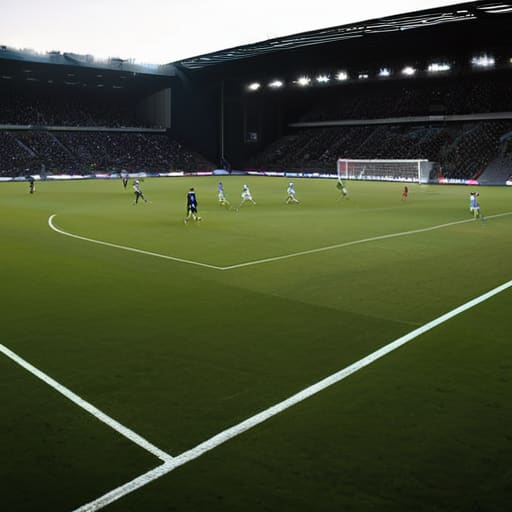
The problem with most young players is they wait for a gap to appear like they’re waiting for a bus. They stand there, watching the opposition shift, hoping a lane opens up by magic. In reality, you don’t wait for the gap; you manufacture it by forcing the opposition to make a choice. When you’ve successfully completed the move of overloading one side, the opposition’s defensive block is naturally pulled toward the ball. They are reacting to the threat in front of them, which means their shape is constantly under tension.
The moment you see their defensive line start to tilt or their midfielders begin to compress, that is your window. Exploiting defensive gaps isn’t about a long, Hollywood ball that goes straight to the keeper; it’s about the crisp, purposeful pass that hits the far-side winger just as they’ve found their footing. If your players lack the patience to wait for that split second of misalignment, they’ll just keep recycling the ball in circles. You have to teach them that timing is everything—if the pass is too early, you hit the defender; if it’s too late, the window has already slammed shut.
Five Realities of Moving the Ball Without Losing Your Head
- Stop looking for the ‘killer pass’ and start looking for the ‘safe pass.’ You cannot switch play if your midfielders are too terrified of losing possession to play a simple, lateral ball to their partner. You build the rhythm on the short side so you have the confidence to go long on the other.
- The ball doesn’t switch itself; the players do. If your winger stays glued to the touchline while the ball is on the opposite flank, you aren’t switching play, you’re just playing with a spectator. Your wide players need to tuck in to create the congestion that forces the opposition to shift, then explode into the space once the ball moves.
- Watch your body shape. I’ve seen countless kids receive a ball with their back to the field, turn, and then realize they have no idea where the rest of the pitch is. If you want to switch play, you need to receive the ball on your back foot, facing the direction you want to go, not like you’re trying to look at your own shoelaces.
- The ‘blind side’ is your best friend. When you move the ball from left to right, don’t just aim for the open man; aim for the space behind the defender who is currently obsessed with the ball. If you hit the player exactly where they can see both the ball and the space, they don’t have to think—they just play.
- Discipline in the transition. The most common mistake I see is the moment the ball changes sides, the entire team forgets their defensive shape. If you’re attacking the far flank and you lose it, you must be set. If your ‘switch’ results in your entire team being caught in a vertical line, you haven’t outplayed them—you’ve just handed them a counter-attack on a silver platter.
The Reality Check: What You Actually Need to Take Away
Switching play isn’t a fancy tactical trick you pull out of a textbook; it is a survival mechanism for when the opposition has successfully choked your strongest side.
If your wide players aren’t prepared to sprint into space the moment the ball moves, you aren’t “switching play,” you’re just passing the ball sideways and inviting a counter-attack.
Don’t bother drilling this in training unless your players can actually find the courage to play the long, diagonal ball under pressure; a tactical plan is useless if your midfielders are too terrified of losing possession to attempt the switch.
The Reality of the Long Ball vs. The Quick Switch
At the end of the day, switching play isn’t about some fancy tactical diagram you’ve drawn up on a whiteboard in a warm classroom. It’s about the simple, brutal reality of physics and human reaction times. If you can successfully overload one side to draw the opposition in, and then find that diagonal pass to the wide man before the defensive line can shift their weight, you’ve won the battle. You aren’t just moving a ball; you are moving the entire defensive structure until it snaps. Remember, the goal isn’t to hit a spectacular sixty-yard Hollywood pass every time; it’s about manipulating the opposition’s shape so that when the ball finally travels to the other flank, they are playing catch-up in a space they didn’t even know they had.
Don’t get discouraged if your players struggle to pull this off in their first few sessions. It’s hard to do when the pitch is heavy and the lungs are burning. But if you keep drilling the concept of creating and exploiting space rather than just kicking it blindly, you’ll see it start to happen. You’ll see that moment where the midfield suddenly breathes, the wingers find themselves unmarked, and the game opens up. Coaching isn’t about the highlights; it’s about building the habits that allow your players to solve these problems themselves when the pressure is on. Now, get back out there and get them moving.
Frequently Asked Questions
What do I do when my players keep trying to switch the ball too early, before we've actually drawn the opposition in?
You’re teaching them to pass, not to play. If they’re pinging it across the pitch the moment they get the ball, they aren’t switching play; they’re just avoiding the fight. You have to teach them to invite the pressure. Tell them: “If you don’t see their midfielders sprinting at you, you haven’t earned the right to switch it yet.” Make them play in tight spaces until they realize the gap only exists once the opposition commits.
How do I stop my wingers from standing around waiting for the long ball instead of actually helping us build the shape?
Stop treating your wingers like spectators waiting for a delivery. If they’re standing on the touchline staring at the ball, they aren’t wingers; they’re bystanders. You need to teach them that their job starts when we don’t have the ball. I tell my lads: if you aren’t providing a passing lane or a defensive screen, you’re just taking up space. Drill them on “recovering to shape” until it’s muscle memory, not an afterthought.
If we're playing on a pitch that’s more mud than grass, is it even worth trying to switch play, or should we just stay compact?
Look, if the pitch is a bog, you aren’t going to play like prime Barcelona. Forget the pretty, sweeping diagonals; a heavy ball in the mud won’t travel ten yards accurately, let alone forty. In those conditions, switching play becomes about gravity, not grace. You use short, sharp movements to draw their shape toward one side, then you play a purposeful, low pass to the opposite flank. If you can’t pass it, you better be ready to run it.
