I’ve spent thirty-five years standing on muddy touchlines, and if there is one thing I’ve learned, it’s that most of the “expert” advice on how to coach mixed ability groups is absolute rubbish. You’ll see these glossy coaching manuals suggesting you split the squad into “elite” and “developmental” tiers, as if you’ve got a fleet of assistants and a heated indoor facility at your disposal. In reality, you’re usually standing in a damp park with one kid who thinks he’s the next Bellingham and another who is still trying to figure out which direction the goal is. If you try to run a high-intensity tactical drill for your star winger while the rest of the group is just trying to keep their socks up, you aren’t coaching; you’re just managing a slow-motion disaster.
I’m not here to give you any theoretical nonsense that only works in a textbook. I’m going to show you the drills that actually survive a Tuesday night under dim lights and how to structure a session so the top players don’t get bored and the beginners don’t get left behind. We are going to focus on practical, scalable movements that work for everyone, regardless of whether they’ve got a professional contract in their future or they’re just there to burn off some energy. No jargon, no fluff—just the truth about what actually works when the rain starts coming down.
Managing Diverse Skill Levels Without Leaving the Back Row Behind
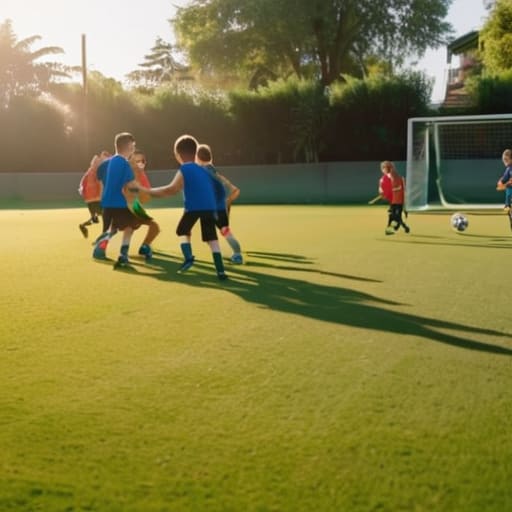
The biggest mistake I see is the “one-size-fits-all” approach. You set up a drill, blow the whistle, and expect everyone to perform at the same tempo. If you do that, you’ll find your top-tier players getting bored and starting to play keep-away with each other, while the kids at the back end up standing around like they’re waiting for a bus. You haven’t failed them; you’ve just failed to use adaptive coaching techniques that actually account for the reality of your squad.
Instead of changing the entire drill—which is a nightmare when you’ve only got one bag of cones and ten minutes of daylight left—you change the constraints. I call it scaffolding skill development through small tweaks. If you’re working on passing, the advanced players might have to use their weaker foot only, or take an extra touch before they can play. Meanwhile, the kid who is still struggling with their first touch gets a larger ball or a shorter distance to aim for. It’s not about making it “easy” for them; it’s about making it challenging enough to keep them focused without making it impossible.
Adaptive Coaching Techniques That Actually Work in the Mud

The biggest mistake I see is coaches trying to force a “one size fits all” drill and then wondering why the talented kids are bored and the struggling ones are terrified. If you want to survive a Tuesday night session in the wind, you need to embrace adaptive coaching techniques that allow for movement within the drill itself. Instead of changing the whole game, change the constraints. If you’re running a passing circuit, tell your advanced players they can only use their weaker foot or have two touches maximum. Meanwhile, let the player who is still struggling with their first touch take three. You aren’t lowering the bar; you’re just adjusting the height of the hurdle so everyone actually gets a chance to jump.
I’ve always found that scaffolding skill development works best when you layer the difficulty like a building. You don’t start with a tactical shape; you start with the basic mechanics. Once the group has the foundation, you add a defender, then a time limit, then a specific direction. This way, the kid who is still figuring out where his feet are can focus on the ball, while the player who’s ready for the Premier League is busy navigating a high-pressure scenario. It keeps the session moving without you having to run three different practices at once.
Five Ways to Stop the Session From Splitting in Two
- Stop using a “one size fits all” drill. If you set up a passing circuit where the best player in the squad is bored out of his mind and the lad at the back is terrified of the ball, you haven’t run a session; you’ve just managed a group of people doing different things. Adjust the distance, change the speed, or add a second ball. Keep the intensity high for the top end and the confidence high for the bottom end.
- Use the “Natural Leader” trick. I’ve spent decades watching the gifted players get frustrated because they’re waiting for the session to start. Instead of letting them stand there looking bored, put them in charge of a small group. It forces them to communicate—which they usually hate doing—and it gives them a sense of responsibility that a simple cone drill never will.
- Focus on the “Why” for everyone. The kid who can’t juggle doesn’t need a lecture on body orientation, but he does need to understand why we move our feet before we receive. If you explain the principle—”we move so we aren’t trapped”—the better players will sharpen their technique and the struggling players will actually start to see the game happening in front of them.
- Don’t let the “Star Player” dictate the tempo. I’ve seen too many sessions where the best player takes the ball, runs through everyone, scores, and the rest of the group just watches him do it. If the drill is being dominated by one person, change the constraints. Make it two-touch only, or require everyone to touch the ball before a goal can be scored. Force the group to work together, not just watch a soloist.
- Watch the body language, not just the feet. If a player is constantly looking at the ground or drifting toward the edge of the pitch, they aren’t “unfocused”—they’re overwhelmed. Don’t bark at them to “get stuck in.” That’s useless. Instead, pull them into a smaller, more controlled part of the drill for five minutes to get their rhythm back before throwing them back into the thick of it.
The Sunday Morning Reality Check
Stop trying to find one “perfect” drill for everyone; instead, design exercises that allow the gifted players to move faster and the developing players to move more carefully within the same space.
If you spend your entire session hovering over the kid who can’t trap a ball, you’ve effectively stopped coaching the rest of the team, so learn to set the task and let the better players find their own way.
Success isn’t measured by how many goals the star striker scores during a drill, but by whether every player on that pitch—regardless of their starting point—is actually thinking about the next move.
The Final Whistle
At the end of the day, coaching a mixed-ability group isn’t about finding some magic, high-tech training tool that makes everyone equal; it’s about constant adjustment. You’ve seen the patterns by now: you scale the drills so the top players aren’t just coasting, and you tweak the constraints so the ones struggling aren’t just watching from the sidelines. If you stop being observant, you stop being a coach. You have to manage the space, the intensity, and the mental load differently for every player in that group. It’s exhausting, and it’s often messy, but effective coaching lives in those small, mid-session corrections rather than in a perfectly scripted plan that falls apart the moment the first kid starts chasing a butterfly.
Don’t get discouraged when a session feels like you’re trying to herd cats in a thunderstorm. Some days, the gap between your best player and your most hesitant one will feel like an ocean, and no amount of clever drill design will bridge it instantly. But remember why you’re standing out there in the cold: you aren’t just teaching football; you’re teaching resilience and belonging. When you manage those levels well, you create an environment where the star player learns patience and the beginner finds their confidence. If you can get them all to walk off that pitch feeling like they actually contributed something, then you’ve done your job properly.
Frequently Asked Questions
What do I do when the "star player" gets bored and starts making up their own rules because the drill is too easy?
Look, I’ve seen it a thousand times. Your best player starts treating the drill like a circus act because they’ve mastered the basics. Don’t punish them by making them sit out, and don’t let them derail the session. Instead, give them a “handicap.” Tell them they can only use their weaker foot, or they have to play one-touch only. If they’re still bored, they aren’t playing the drill—they’re playing a game of ego. Raise the ceiling.
How can I stop the more advanced kids from constantly taking the ball away from the struggling ones during small-sided games?
Stop treating it like a free-for-all. If the talented ones are just bullying the weaker players to get a goal, you aren’t playing a game; you’re watching a training session for one person.
If I change the difficulty of a drill for one player, how do I stop the rest of the group from thinking I'm playing favorites?
You don’t call it “making it easier” or “making it harder”—that’s where you lose them. You call it “adjusting the challenge.” If I tell a kid he’s getting a smaller goal because he’s struggling, he’ll sulk. If I tell the star player he’s got a tighter space because he’s bored, he’ll take it as a compliment. Frame every change as a specific tool for a specific job. If they see you’re tailoring the work to the player, they see a coach, not a judge.
