I remember standing on a touchline in mid-November, watching a lad try to execute a delicate, thirty-yard diagonal ball through a driving sleet that felt like it was made of gravel. He’d spent all week practicing his “technical precision” in a pristine training park, only to find that the reality of a waterlogged pitch and a biting wind had rendered his entire tactical plan completely useless. Most of the pundits on the telly will talk about “environmental variables” and “atmospheric pressure,” but they’ve clearly never had to explain to a group of shivering twelve-year-olds why their beautiful passing game just died in the mud. If you want to understand how weather affects match decisions, you need to stop looking at a weather app and start looking at the state of the turf and the direction of the wind.
I’m not here to give you some academic lecture on meteorology. I’m going to tell you exactly when to scrap the short passing game and when to tell your players to stop overthinking and just play long. We’ll look at how to adjust your shape when the wind is howling and how to manage your players’ energy when the temperature drops. I promise you this: no jargon, no fluff, just the practical truths that actually work when the conditions turn against you.
When Drainage Systems and Pitch Maintenance Fail You
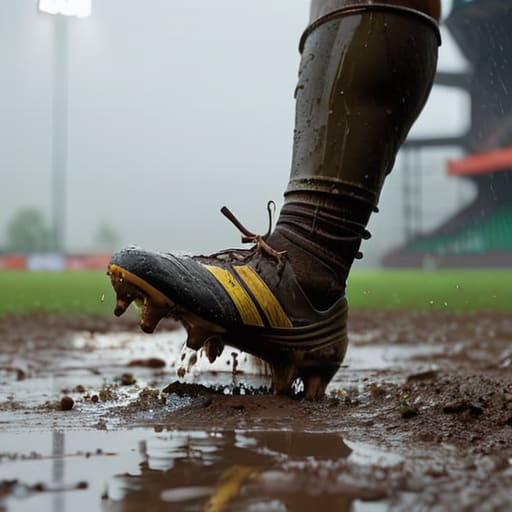
When the drainage systems and pitch maintenance fail you, you aren’t playing football anymore; you’re playing a game of obstacle courses. I’ve stood on pitches where the center circle looked more like a shallow pond than a playing surface. In these moments, all your tactical preparation goes out the window. You can talk all you want about building from the back, but if the ball is sticking to the grass like wet cement, your “possession-based” style is just an invitation for a turnover. You have to accept that playing conditions and player injury risk skyrocket when the ground is uneven and heavy. If a lad tries to pivot on a patch of standing water, he’s not going to find his footing; he’s going to find his ligaments.
When the water starts pooling, don’t wait for the officials to step in. While I respect the formal referee pitch assessment protocols, I’ve learned that the decision usually needs to be made long before the whistle blows. If the surface is turning into a swamp, you have to pivot your instruction immediately. Stop asking for intricate through-balls and start teaching your players to win the second ball. If the pitch is a mess, the game becomes about grit and directness, not geometry.
The Real Truth Behind Referee Pitch Assessment Protocols

Now, let’s talk about the man in the middle and those official referee pitch assessment protocols. I’ve stood on many a touchline watching a ref walk around a saturated field, looking like he’s deciding whether to call the game or just accept his fate. Most people think these checks are a formality, but they are the thin line between a competitive match and a disaster waiting to happen. If the referee decides the surface is a hazard, the match is off. It isn’t personal; it’s about the fact that once those boots start sliding, you aren’t playing football anymore—you’re just participating in a high-speed slip-and-slide.
The reality is that these protocols are less about the “spirit of the game” and more about managing the playing conditions and player injury risk. I’ve seen too many coaches argue for a game to go ahead because they’ve already paid for the minibus and the kit, ignoring the fact that a waterlogged pitch is a recipe for torn ligaments. When the official looks at the state of the goalmouths, he isn’t looking for a tactical challenge; he is looking for safety. If the ground is uneven or the mud is deep enough to swallow a shin pad, the decision to postpone is the only professional one.
Five ways to stop the weather from ruining your game plan
- Stop chasing the “perfect” pass. When the ball is heavy and the surface is slick, your intricate, one-touch passing patterns are a recipe for a turnover in a dangerous area. If the pitch is a sponge, teach your players to play more direct and focus on winning the second ball rather than trying to play through a swamp.
- Shorten the recovery distance. In the heat, you’re managing hydration and fatigue; in the freezing rain, you’re managing muscle stiffness and mental focus. If it’s bitter cold, don’t expect your players to maintain a high-intensity press for ninety minutes. Adjust your tactical instructions to involve more compact shapes so they aren’t sprinting fifty yards just to close a gap.
- Respect the wind, don’t fight it. I’ve seen too many coaches lose their heads because the wind is blowing against their attacking shape. If you’re playing into a gale, stop trying to play out from the back with short, risky balls. Use the wind to your advantage by playing long into the channels and letting the weather do the work of pushing the ball toward their goal.
- Watch the goalkeeper’s eyes, not just their hands. Wet weather changes everything for a keeper. If the ball is skidding and the pitch is greasy, they aren’t going to be catching anything. Don’t scream at them for “mistakes” when they spill a wet ball; instead, instruct your defenders to stay tighter to the strikers to pick up those rebounds immediately.
- The seventy-two-hour rule for fatigue. If the weather has been atrocious for three days straight, your players aren’t “unfit”—they’re physically battered by the conditions. If you’ve been training on mud and driving through sleet, you cannot expect the same intensity on match day. Adjust your training load before the weather breaks you, or you’ll be playing with a squad of walking wounded by mid-season.
The Bottom Line for Sunday Morning
Stop trying to play out from the back when the pitch is a bog; if the ball isn’t moving, stop pretending your tactical shape matters and teach your players to win the second ball.
Don’t blame your players’ fitness when they’re heavy-legged in the final fifteen minutes if you haven’t accounted for the fact that they’ve been sprinting through six inches of mud all afternoon.
If the referee decides the game is going ahead on a swamp, your job isn’t to moan about it—it’s to simplify your instructions and stop asking for intricate passing patterns that the pitch simply won’t allow.
The Bottom Line
At the end of the day, you can spend all morning studying tactical manuals and heat maps, but none of that matters when the clouds break and the pitch turns into a bog. We’ve looked at how poor drainage turns a game into a physical battle of attrition, and how the referee’s decision to play or postpone is often more about safety and pragmatism than any fancy rulebook. If you try to play out from the back on a surface that’s more mud than grass, you aren’t being brave; you’re being reckless. You have to recognise when the conditions have stripped away the nuance of your training and turned the match into a test of who can win the second ball and who can keep their footing.
Don’t let the weather defeat you before the whistle even blows. A good coach doesn’t complain about the rain or the wind; they adapt the plan to meet the reality of the afternoon. Use these shifts in conditions to test your players’ character and their ability to think on their feet when things go sideways. Football isn’t played in a laboratory, and it certainly isn’t played on a perfect surface every Sunday. It’s played in the wind, the rain, and the muck, and if you can teach your squad to embrace that, you’ll find yourself winning games that other teams are too busy moaning about to contest.
Frequently Asked Questions
If the pitch is a total washout, should I bother trying to play out from the back, or is that just asking for a goal against us?
If you try to play out from the back on a surface that’s more sponge than grass, you aren’t coaching; you’re just setting up your goalkeeper for a nightmare. You’re asking for a mistake that ends in a goal. Forget the textbook. When the pitch is a washout, your priority is directness and winning the second ball. Get the ball into the channels, bypass the midfield scrap, and make them work for every inch.
How do I stop my players from losing their heads and playing like idiots when the wind is blowing a gale?
Stop trying to play out from the back. If the wind is howling, your “possession-based” philosophy is just a recipe for a turnover and a goal against you. Tell them the truth: the ball isn’t going to do what they want it to do today. Keep it simple. Direct play, win the second ball, and keep the shape compact. If they start chasing shadows and losing their tempers, pull them in and remind them that football is played on the grass, not in the clouds.
When the temperature drops and the ground gets hard, how do I adjust my training drills so I'm not sending my lads home with busted ankles?
When the pitch turns into a concrete slab, stop the high-intensity shuttle runs and the sharp, jagged change-of-direction drills. You aren’t testing their lungs anymore; you’re testing their joints. Switch to technical work with more emphasis on ball control and passing lanes rather than explosive sprints. If you’re running drills, keep them linear or use larger, softer surfaces if you can find them. If the ground is unforgiving, don’t force them to dance on it.
