I spent twenty minutes yesterday listening to a young lad in a designer tracksuit explain how inverted full-backs are the “revolutionary key to unlocking modern positional play,” as if he’d discovered fire rather than just reading a Twitter thread. He made it sound like some magical tactical alchemy, but if you actually try to implement it without understanding the mechanics, you aren’t “controlling the tempo”—you’re just creating a massive, gaping hole in your flank for every winger in the league to exploit. Most people spend far too much time talking about the glamour of the movement and not nearly enough time discussing how inverted full-backs work when your midfield is getting bypassed or your wide men are too lazy to track back.
I’m not here to sell you on a trend or give you a list of Premier League players to copy blindly. I want to talk about the actual cost of this system: the physical demand on the player, the specific positioning required from your holding midfielder, and the exact moment your structure collapses if the transition isn’t perfect. I’m going to tell you what this role actually asks of a player so you don’t go out there on a Sunday morning and watch your team fall apart because you chased a tactic instead of a solution.
Creating Numerical Superiority in Midfield Without Losing Your Mind
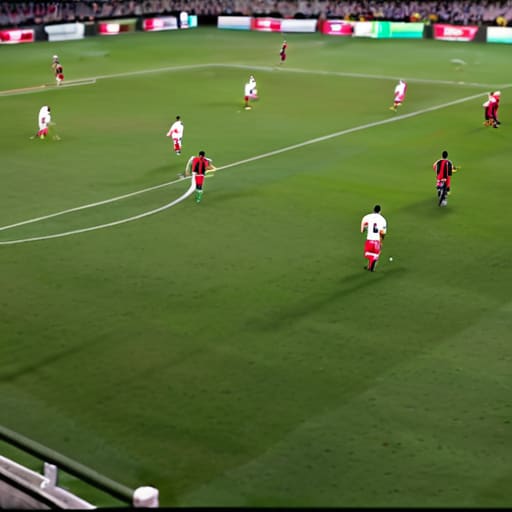
The whole idea behind creating numerical superiority in midfield isn’t about having more players; it’s about having more useful players in the right pockets of space. When you tell your full-backs to tuck inside, you aren’t just moving them for the sake of a diagram. You are effectively turning a traditional back four into a box midfield. This allows your central midfielders to stop acting like human shields and start acting like distributors. Instead of being bypassed by a single vertical pass, your opposition suddenly finds themselves facing a crowded middle where your inverted players are occupying those vital channels.
However, you can’t just tell a lad to “move inside” and expect it to work without a plan for the fallout. If you get this wrong, you aren’t creating a midfield engine; you’re just creating a massive, gaping hole on the flanks. The real magic—and the real danger—lies in the defensive transition and rest defence. If your full-backs are committed to the middle, your wide players must be disciplined enough to cover the space behind them. It is a delicate balance of positional play in modern football that requires your players to think two steps ahead, or you’ll find yourself getting carved open on the wings every single weekend.
Half Space Exploitation Tactics That Actually Break Lines

When we talk about half-space exploitation tactics, most people get bogged down in fancy diagrams that look great on a tablet but fall apart the moment a winger decides to actually sprint at you. In reality, the goal of tucking your full-backs inside is to create a “pocket” of space between the opponent’s midfield and their defensive line. By moving into those channels, your inverted players act as a bridge. They aren’t just standing there looking pretty; they are providing a constant passing lane that forces the opposition’s central midfielders to make a choice: do they step out to press, or do they stay goal-side? If they step out, they leave a hole. If they stay, your players have time to turn and pick a pass.
The magic happens during the transition from defense to attack. When you win the ball back, your inverted full-backs are already positioned to receive it in those crucial interior zones. This isn’t just about positional play in modern football for the sake of being trendy; it is about ensuring that when your team breaks, you have immediate, short-range options that bypass the opposition’s first line of pressure. If your players are too wide when you win the ball, you’re just playing long and hoping for the best, and we both know how often that ends in a turnover.
The Reality Check: Five Things You’ll Learn the Hard Way
- Stop treating them like extra midfielders and start treating them like defensive liabilities. When you tuck that full-back inside, you aren’t just gaining a passing option; you are effectively removing a defender from the flank. If your winger doesn’t track back with a sense of urgency, you’re essentially inviting the opposition to play a long ball into the space your player just vacated.
- Check their engine before you check their passing range. I don’t care if they can play a forty-yard diagonal like Prime Pirlo; if they haven’t been doing high-intensity interval work, they’ll be standing in the center circle looking like they’ve lost their way by the sixty-fifth minute. An inverted full-back needs the lungs of a marathon runner to transition from the inside channel back to the defensive line when the ball is lost.
- You must coach your wide midfielders to occupy the “buffer zone.” If your full-back moves inside, your winger or attacking midfielder has to be prepared to cover that wide channel. If you haven’t drilled that rotation until it’s muscle memory, your team will look like a collection of eleven individuals rather than a cohesive unit, and you’ll get carved open on the break.
- The “Why” matters more than the “How.” Don’t just tell a player to move into the half-space because it looks clever on a tactical board. Explain that they are moving there to pull a specific opponent out of position or to create a passing lane for your number ten. If a player doesn’t understand the purpose of the movement, they’ll hesitate, and in my experience, hesitation is where games are lost.
- Prepare for the “Transition Chaos.” The most dangerous moment for a team using inverted full-backs is the three seconds after you lose possession. Your shape is unnatural, and your players will be caught in no-man’s land. You need to drill your central midfielders to immediately squeeze the space, or you’ll find yourself defending a massive, gaping hole in the middle of the pitch every single time you turn the ball over.
The Reality Check: What You’re Actually Buying and Selling
Don’t mistake ball retention for control; if your full-backs move inside but your midfielders aren’t disciplined enough to occupy the spaces they leave behind, you haven’t gained an advantage, you’ve just created a highway for the opposition to exploit.
This tactic lives or dies on the fitness and tactical intelligence of your wide players, because if your wingers don’t understand when to tuck in to cover the vacated flank, you’ll find yourself defending a massive gap every time you lose possession.
Stop looking for a magic fix in the shape and start looking at the transition; an inverted system is a high-wire act that demands your players make split-second decisions under fatigue, or you’ll spend the final twenty minutes of every match chasing shadows.
The Reality Check
At the end of the day, moving your full-backs into the midfield isn’t a magic trick that guarantees you’ll dominate possession; it is a high-stakes trade-off. You are trading the width and security of your flanks for a central overload that can dictate the tempo of a game. If your wide players aren’t disciplined enough to hold their positions, or if your central midfielders aren’t prepared to cover the massive spaces left behind when that inversion fails, you aren’t “controlling the game”—you are simply inviting a counter-attack that will leave your centre-halves isolated and exhausted. It’s about the balance between having an extra man in the middle and ensuring you don’t leave your flanks as wide-open highways for the opposition.
Don’t get caught up in the tactical jargon you see on television and try to force this onto a squad that isn’t ready for it. A tactic is only as good as the players’ ability to execute it when they’re twenty minutes into a heavy pitch in November. If you decide to pull the trigger on this style, make sure your players understand the why behind the movement, not just the where. Coaching isn’t about following the latest trend; it’s about building a structure that survives the chaos of a real match. Get the fundamentals right first, and then you can worry about the fancy stuff.
Frequently Asked Questions
If my full-backs are tucking into midfield, who is actually responsible for stopping the opposition's winger from running us ragged on the counter?
That’s the question that keeps coaches awake at 11 PM. If you tuck your full-backs in, you aren’t just “adding numbers”; you’re making a massive structural gamble. The responsibility falls squarely on your wide midfielders or your wingers. If they aren’t disciplined enough to track back and plug that gap the second possession is lost, you’re essentially inviting the opposition to feast on your flanks. You can’t ask a full-back to be in two places at once.
Do I need specific types of players for this, or can I just tell my existing wide defenders to move inside and hope for the best?
If you just tell your existing wide defenders to “move inside” and hope for the best, you’re going to get slaughtered on the counter. You can’t just repurpose a traditional overlap-heavy fullback into an inverted role without looking at their profile. You need players with the technical composure to pass under pressure and the tactical discipline to tuck in. If they lack the engine or the brain to read the passing lanes, you’ve just built a highway for the opposition.
How much extra conditioning do my midfielders actually need if they're constantly having to cover the space left behind when the full-backs vacate the flanks?
It isn’t just about “extra cardio”—if you’re just running laps, you’re wasting your time. You’re asking for lateral agility and repeated high-intensity recovery sprints. If your full-backs are tucking in, your midfielders aren’t just running more; they’re covering more ground horizontally to plug those wide gaps. Before you add more mileage, ask them what they’ve done in the last seventy-two hours. If they’re gassing out, it’s usually a lack of functional stability, not just lung capacity.
