I spent thirty years watching men in suits sit in air-conditioned boardrooms, drawing elaborate flowcharts and talking about “strategic developmental pathways” as if they were designing a space station. They love to make it sound like a complex puzzle, but if you listen to the pundits, you’ll get lost in a fog of jargon before you even find the pitch. Most people looking into how women’s football is structured are being fed a diet of high-level nonsense that has nothing to do with the actual game. They’ll talk to you about global commercial frameworks, but they won’t tell you how a local club actually climbs the ladder from a muddy park to a professional academy.
I’m not here to recite a textbook or give you a lecture on administrative hierarchies. My job is to strip away the marketing fluff and show you the actual bones of the game. I’m going to lay out the real architecture of the sport—from the grassroots clubs fighting for every penny to the professional leagues at the top—so you can see exactly where the power sits and how a player actually moves through the system. We’re going to look at the practical reality, not the glossy brochures.
Governance of Womens Soccer Who Actually Holds the Reins
You can spend all day looking at the organisational charts provided by the FA or FIFA, but if you want to understand the actual governance of women’s soccer, you have to look at where the decisions land on the pitch. It’s easy to talk about high-level policy in a boardroom, but for the person running a Sunday morning session, governance is felt in the way funding trickles down—or doesn’t. We see a massive divide between the shiny, televised professional women’s football leagues and the reality of the clubs trying to make ends meet. The top tier is moving fast, but the structure often feels like it’s being built while the plane is already in flight.
The real tension lies in the gap between the elite and the foundation. While the governing bodies focus on the commercial viability of the big leagues, the women’s football ecosystem relies heavily on the volunteers and local clubs that provide the initial spark. If the pathway from a local club to a professional academy is broken or inconsistent, all the top-down restructuring in the world won’t fix it. You can’t have a sustainable professional game if the base of the pyramid is crumbling under the weight of poorly managed youth development programs.
The Womens Football Ecosystem Beyond the Bright Lights
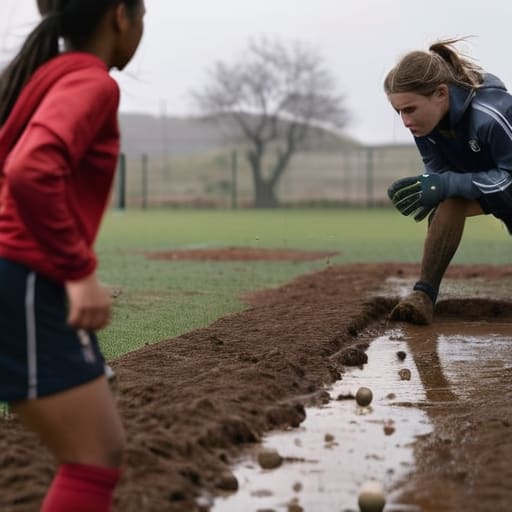
If you only watch the televised matches on a Sunday afternoon, you’re seeing the tip of a very large, very messy iceberg. The real engine of the sport isn’t found in a polished stadium; it’s found in the muddy local parks where grassroots football for girls is actually taking place. This is where the foundation is laid, often with nothing more than a bag of deflated balls and a coach trying to keep ten teenagers focused while the wind whips through their hoodies. You can have all the funding in the world at the top, but if that local club doesn’t have a way to transition a player from a Saturday morning scrimmage into a structured environment, the whole system fails.
The gap between semi-professional vs professional football is where most players get lost in the weeds. It’s a precarious climb. You see these talented girls hitting a ceiling because the women’s football talent pathways are often more like broken ladders. One minute they are the best player in their county, and the next, they are drifting away from the game because there isn’t a clear, supported route to the next level. It shouldn’t be a matter of luck or who knows which scout; it should be about a consistent structure that catches them before they fall through the cracks.
Five Realities of the Pyramid (That You Won't Find in a Brochure)
- Stop looking at the professional leagues as the whole game; they are just the tip of a very large, very fragile iceberg. If the foundation of community clubs and regional leagues isn’t solid, the top tier has nothing to pull from, no matter how much TV money they secure.
- Understand that the “pathway” is often more of a jagged staircase than a smooth ramp. For a young player, the jump from a local club to a professional academy isn’t just a step up in quality—it’s a total shift in how the entire structure around them operates.
- Don’t mistake central governance for local control. While the big federations set the rules and the branding, the actual day-to-day survival of the game is decided by the volunteers at the grassroots level who manage the pitches, the kits, and the schedules.
- Watch how the commercial structure is evolving. We are moving from a model where women’s football was a “charity case” tucked under the wing of men’s departments to a standalone economy. This shift is creating new power structures that don’t always align with the old ways of doing things.
- Recognize that player development is tied to the structure of the competition itself. If the league structure doesn’t provide enough meaningful, competitive minutes for developing players outside of the elite academies, you’ll see a massive talent gap that no amount of coaching can fix.
The Bottom Line: What Matters When the Whistle Blows
Forget the fancy diagrams of international federations; the real health of the game is measured by whether a local club can afford a pitch and a referee on a Sunday morning.
Structure isn’t just about who sits on the board, it’s about the ladder—if there’s no clear path from a grassroots training session to a professional academy, the whole system is just spinning its wheels.
Growth is useless if it’s top-heavy; a game that only exists in televised stadiums but lacks a foundation of local, community-run leagues is a house built on sand.
The View from the Touchline
At the end of the day, understanding the structure of the women’s game isn’t about memorizing a flowchart of governing bodies or tracking every penny of a sponsorship deal. It is about recognizing that the system is a massive, interconnected web—one that stretches from the high-stakes boardrooms of the professional leagues all the way down to the local clubs where the real heavy lifting happens. We have looked at the hierarchy, the commercial engines, and the grassroots foundations that keep the whole thing from falling apart. If you want to see where the power lies, don’t just look at the trophies; look at how the support flows from the top down to the players who are just trying to get a pitch that isn’t a mud bath on a Sunday morning.
The structure is still being built, and frankly, it’s a bit messy in places, but that’s how progress works. It won’t be perfect overnight, and the gap between the elite and the amateur will take time to bridge, but the momentum is undeniable. My advice to anyone watching this unfold is to look past the glossy headlines and focus on the foundation. Whether you are a coach, a parent, or a player, remember that a structure is only as strong as the people standing within it. The architecture is changing, and for the first time in a long time, the world is finally paying attention to the right things.
Frequently Asked Questions
If the big governing bodies are all signing these massive commercial deals, why does it feel like the local grassroots clubs are still struggling to find a decent pitch to train on?
Because money flows like a river, not a rain shower. Those massive commercial deals are caught in the upper reservoirs—the professional leagues and national federations. By the time that capital trickles down to the grassroots, it’s often just a few droplets of administrative support. The big money builds stadiums; it doesn’t necessarily fix the drainage on a muddy field in a local park. We’re seeing the glitter at the top, while the foundation is still starving.
How much of the professional structure is actually designed to help players move up from the youth ranks, and how much is just a closed shop for the elite?
Look, if you’re looking for a meritocracy, you’re looking in the wrong places. On paper, the academies are there to bridge the gap. In reality? They’re often just high-end finishing schools for the players who were already superstars at twelve. For every kid who makes the jump from a local club to a pro setup, there are a hundred more stuck in a loop of “developmental” drills that lead nowhere. It’s a closed shop, plain and simple.
With the leagues expanding so quickly, is the actual coaching and development side of things keeping pace, or are we just building a house on a shaky foundation?
Look, we’re building a house on sand, plain and simple. The leagues are expanding at breakneck speed, but the infrastructure underneath is still catching up. We’ve got more players than ever, but if you walk into a local club on a Tuesday night, you’ll find coaches struggling with outdated equipment and even more outdated methods. We’re throwing more money at the top tier, but unless we invest in the grassroots coaching pipeline, the foundation will crack.
