I’ve spent enough time on muddy touchlines to know that when someone offers you a “complete guide to women’s football” filled with glossy infographics and high-level tactical jargon, they’re usually selling you something they’ve never actually had to implement. Most of these guides are written by people sitting in air-conditioned offices, theorizing about “spatial dominance” and “transition phases” as if the game happens on a computer screen. But I know what it’s actually like when you’re trying to organize a squad of players who are battling heavy winds, uneven grass, and the sheer mental fatigue of balancing life outside the pitch. If your coaching manual doesn’t account for the reality of a player losing her footing in a puddle, it isn’t worth the paper it’s printed on.
I’m not here to give you a lecture or a list of theoretical concepts that fall apart the moment the whistle blows. Instead, I’m going to give you the unvarnished truth about what actually works, from building fundamental technical habits to managing the specific psychological demands of the women’s game. We’re going to skip the hype and focus on the practical realities that will keep your players composed when the game gets heavy.
Tracing the History of Womens Football Through the Mud
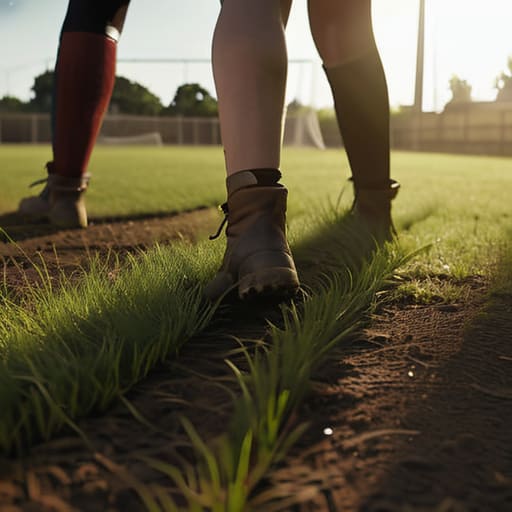
You won’t find the real history of women’s football in a glossy textbook or a polished documentary. If you want the truth, you have to look at the scars on the pitches where it was actually played. For decades, this game wasn’t about sponsorship deals or televised finals; it was about women playing in the shadows, often on nothing more than a patch of uneven grass and a shared sense of defiance. I’ve seen the older generation of coaches who remember when the game was treated like a curiosity rather than a discipline. They didn’t have academies or structured pathways; they just had the grit to show up when nobody was watching.
The leap from those muddy sidelines to the rise of modern professional women’s football leagues hasn’t happened by accident. It’s been a slow, hard-fought climb. We’ve moved from a time when a girl’s talent was often ignored by the establishment to an era where female football player development is finally being taken seriously with proper coaching structures. It isn’t just about playing the game anymore; it’s about building a foundation that actually lasts.
Grassroots Womens Football Opportunities That Actually Matter

Now, don’t get me wrong—it’s all well and good watching the professionals on a bright Saturday afternoon, but if you’re looking for real growth, you won’t find it in a polished TV studio. The real work happens in the local leagues, where the pitches are uneven and the changing rooms smell of damp kit. True grassroots women’s football opportunities aren’t about finding a shortcut to a televised stadium; they are about finding a club that actually understands female football player development. You need a place that won’t just give a girl a bib and a ball, but one that teaches her how to scan the field and hold her position when her legs feel like lead.
I’ve seen too many talented players vanish because they were told they could “just make it” without a foundation. If you want to see genuine women’s soccer career progression, you have to respect the ladder. You start in the local Sunday league, you learn how to win a tackle in the mud, and you build the mental toughness required to play when the stakes actually matter. It isn’t glamorous, and it certainly isn’t easy, but the foundation you build in the rain is what determines whether a player survives the jump to the higher tiers or disappears into obscurity.
Five Realities They Don't Teach You in the Coaching Manuals
- Stop obsessing over tactical complexity and start with the basics of spatial awareness. I’ve seen plenty of young women with incredible technical ability get swallowed up by the pitch because they don’t understand how to create or occupy space. If they can’t find a pocket of room when the pressure is on, the most sophisticated 4-3-3 in the world won’t save them.
- Conditioning isn’t just about running laps until they want to cry. If your players are flagging by the sixty-minute mark, don’t just tell them to work harder; look at their recovery. I won’t call a player unfit until I know if they’ve had a proper meal and decent sleep in the last seventy-two hours. Football is a game of repeated sprints, not a marathon in a tracksuit.
- Technical proficiency must be built under duress. A drill that works perfectly in a sunny, empty park is useless if it falls apart the moment an opponent steps in and starts breathing down their neck. Train them in tight spaces, with limited touches, and with someone actually trying to take the ball off them. If they can’t control a ball while a defender is closing them down, they aren’t ready for match day.
- Understand that mental resilience is a skill, not a personality trait. In the women’s game, as in the men’s, players often struggle when a referee makes a poor call or a teammate misses a sitter. You have to coach them through the emotional dip. Teach them how to reset after a mistake, because the game doesn’t stop to wait for them to find their composure.
- Respect the physicality of the game without making it the only focus. There is a misconception that women’s football is “softer,” which is nonsense. It is physical, it is contact-heavy, and it requires strength. You need to integrate functional strength and stability into your sessions so they can hold their ground in a shoulder-to-shoulder challenge without losing their balance.
What You Actually Need to Take Away
Forget the gloss; real progress in the women’s game happens on the muddy, poorly lit pitches where consistency matters more than fancy equipment or social media hype.
A formation is useless if your players don’t understand the physical and mental demands of their specific roles when the game gets heavy in the second half.
Success isn’t found in professional academies alone, but in building a solid foundation at the grassroots level where the real character of the game is forged.
The Long Game
We’ve looked at where the game came from, the grit it took to keep it alive, and where the real opportunities sit for those willing to do the work. If there is one thing I want you to take away from this, it’s that a “complete guide” isn’t found in a glossy brochure or a professional academy’s marketing deck; it’s found in the consistency of the fundamentals. Whether you are a player trying to find your footing or a coach trying to build something that lasts, remember that success in women’s football isn’t about the sudden surge of popularity or the latest commercial deal. It is about building a foundation that can withstand the weather, both literally and figuratively.
At the end of the day, the game doesn’t care about your pedigree or how much funding you were promised at the start of the season. It only cares about what you do when the legs get heavy and the pitch turns into a swamp. Don’t get distracted by the noise of the professional game if you’re working at the grassroots level; focus on the quality of your sessions and the character of your players. If you get the basics right and you treat the game with the respect it deserves, the rest will take care of itself. Now, stop reading and get out on the grass.
Frequently Asked Questions
How do I actually structure a training session for a squad where half the players have played since they were five and the other half are just starting?
Stop trying to run one session for two different worlds. If you try to teach a veteran the basics, they’ll switch off; if you push a novice too hard, they’ll quit. You need “layered” drills. Set up a passing circuit where the experienced players have a tight space and a one-touch limit, while the beginners get more room and an extra touch. Same drill, different difficulty. Don’t let the gap widen; use the seniors to mentor, not to mock.
What are the most common mistakes I'll see when trying to implement a tactical shape in a team that lacks natural fitness?
The biggest mistake is thinking a tactical shape is a fixed geometry. You can’t demand a high press or a compact mid-block if your players are gasping for air by the twenty-minute mark. When they tire, the shape doesn’t just stretch—it snaps. You end up with massive gaps that look like highway lanes. Stop drawing complex patterns on the board and start building a shape that survives when the lungs start burning.
How do I keep players motivated and consistent when the local league doesn't have the facilities or the funding of the professional game?
Stop looking at what the pros have and start looking at what your players actually need. They don’t need a heated changing room to care about the game; they need to feel like they’re part of something that matters. Focus on the small wins—a clean tackle, a bit of tactical discipline, or finally nailing a drill that used to baffle them. If you build a culture where progress is visible, the lack of floodlights won’t matter.
