I’ve spent thirty-five years watching club secretaries pour money into fancy automated irrigation systems and overpriced chemical treatments, only to watch the halfway line turn into a boggy graveyard by the second week of November. Most of the literature out there claiming to be a complete guide to pitch maintenance is written by people who think a football pitch is something you maintain with a spreadsheet and a prayer. They talk about “optimal turf density” and “nutrient cycles,” but they’ve never had to stand in a puddle at 8:00 AM on a Sunday, watching a winger blow an ankle because the drainage gave up the ghost.
I’m not here to sell you on expensive gadgets or jargon that sounds good in a boardroom but fails in a downpour. My goal is to give you the truth about what actually keeps a surface playable when the weather turns sour. I’ll show you which tasks are worth your time and which ones are just expensive distractions. This is a practical, dirt-under-the-fingernails look at how to keep your ground from becoming a liability, focusing on the stuff that actually survives contact with a heavy Saturday afternoon fixture.
Mastering Soil Aeration and Drainage Before the Mud Wins
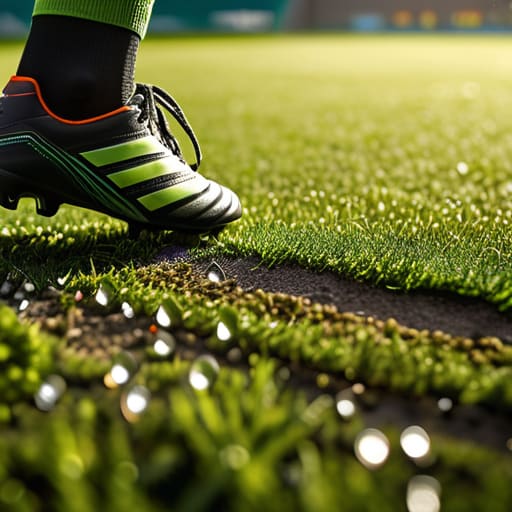
If you wait until your midfield is playing in a literal bog to think about your soil, you’ve already lost the battle. Most coaches I know treat the ground like it’s static, but it’s a living, breathing thing that gets compacted every time a player plants a boot for a turn. You need to get serious about soil aeration and drainage before the autumn rains turn your training ground into a graveyard for ankles. If the ground is hard as a concrete slab, the ball won’t roll and your players will be bouncing around like they’re on a trampoline. If it’s too soft, they’ll be fighting the mud instead of the opposition.
The trick is to stop being reactive. A proper seasonal pitch care schedule means you’re hitting the ground with a verti-drain or an aerator when the soil is at its most receptive, not when it’s already saturated. You want to create channels that let the water actually move through the surface rather than just sitting on top of it. If you aren’t proactively managing that compaction, you aren’t maintaining a pitch—you’re just managing a slow-motion disaster.
Lawn Fertilization for Sports That Actually Feeds the Roots

Most people treat fertilizing like they’re feeding a houseplant, tossing a bag of pellets over the grass and hoping for the best. That’s a mistake. When you’re dealing with a pitch that’s actually seeing action, you aren’t looking for a lush, decorative lawn for a garden party; you’re looking for structural integrity. You need a root system that can take a heavy tackle or a sudden change in direction without the whole surface tearing up like wet tissue paper. This is why lawn fertilization for sports has to be about slow-release nutrients that build strength from the bottom up, rather than a quick chemical hit that makes the grass look bright green for a week before it inevitably collapses.
You also need to stop thinking of fertilization as a “one and done” task. If you aren’t following a proper seasonal pitch care schedule, you’re essentially playing a game of catch-up with the weather. You feed the soil when the grass is actually growing, not when it’s dormant and shivering in November. If you dump nitrogen on a frozen pitch, you aren’t helping; you’re just wasting money and risking salt burn. Get the timing right, focus on the roots, and the surface will actually start to fight back against the wear and tear.
Five Ways to Stop Your Pitch from Becoming a Liability
- Stop cutting the grass like you’re grooming a garden. If you’re letting the blades get long and shaggy, you aren’t just making the game slower; you’re inviting disease and uneven bounces that’ll snap a winger’s ankle. Keep your heights consistent and keep your blades sharp, or you’re just mulching the surface into a mess.
- Learn to read the surface before the players do. I’ve seen too many coaches wait until the pitch is a literal bog before they even think about sand top-dressing. You need to be proactive with your sand levels during the dry spells so that when the heavens inevitably open, the water actually has somewhere to go besides sitting on top of the turf.
- Manage your traffic, or the traffic will manage you. You can’t run high-intensity drills on the same patch of goalmouth for three hours every Tuesday and expect it to look like Wembley. Rotate your training zones. If you see a bare patch forming, move the session. You can replant grass, but you can’t easily replant a dead ecosystem.
- Watch your line marking paint. It sounds like a triviality to the clipboard coaches, but if you’re using thick, heavy-handed applications of cheap paint, you’re essentially suffocating the grass blades. Use a professional spreader and keep it light; a pitch needs to breathe, even through the lines.
- Don’t ignore the perimeter. A pitch isn’t just the rectangle where the ball rolls; it’s the transition zones. If your touchlines are nothing but dust and weeds, your players will lose their footing the moment they try to accelerate out of a turn. Keep the edges as disciplined as your defensive line.
The Bottom Line: Don't Let Your Pitch Become a Liability
Stop chasing quick fixes with cheap chemical sprays; if you haven’t addressed the compaction and the drainage, you’re just painting a crumbling wall.
Consistency beats intensity every single time—it is better to do small, manageable maintenance tasks every fortnight than to try and fix a disaster once a year in May.
A good pitch isn’t about looking like a Sunday morning television broadcast; it’s about creating a surface that allows your players to move with confidence rather than fighting for their lives in a swamp.
Don't Let the Grass Become an Afterthought
At the end of the day, maintaining a pitch isn’t about chasing some perfect, manicured look you see on a Premier League broadcast; it’s about survival. If you haven’t sorted your drainage, no amount of fancy seeding is going to stop your midfield from turning the center circle into a boggy graveyard by mid-November. You’ve got to get the aeration right so the roots can actually breathe, and you need to feed the soil, not just spray green dye on the surface to hide the flaws. It’s a cycle of constant, unglamorous work—aerating, fertilizing, and monitoring—that ensures your players are competing against the opposition rather than fighting a losing battle against the mud.
I’ve spent thirty-five years watching coaches blame “bad luck” for a loss, only to realize their players were too busy trying to stay upright on a treacherous surface to actually play the game. A well-maintained pitch is the silent foundation of everything we try to teach on the training ground. When the surface is consistent, the passing becomes crisp, the tackles are predictable, and the technical quality actually has a chance to shine. So, stop treating your pitch like a landscaping project and start treating it like a piece of equipment. Do the hard work in the off-season, and I promise you, your players will thank you when the winter frost hits and the ball still rolls true.
Frequently Asked Questions
I've spent a fortune on top dressing, so why does my pitch still look like a patchwork quilt after a heavy rain?
Because you’ve likely just been throwing sand on top of a problem instead of fixing the cause. Top dressing is a cosmetic bandage, not a cure. If your surface is uneven after rain, your sub-base is either compacted like concrete or your drainage is non-existent. You’ve essentially just painted a cracked wall. Stop spending money on more sand and start looking at your aeration. If the water isn’t moving downward, that expensive top dressing is just expensive mud.
How much of this professional-grade equipment is actually necessary for a club that's running on a shoestring budget?
Look, I’ve seen clubs go broke buying shiny, petrol-guzzling aerators they don’t know how to use. If you’re on a shoestring, forget the professional-grade kit. You don’t need a tractor; you need a decent manual spike aerator, a sturdy lawnmower that actually cuts rather than tears, and a bit of grit. Invest your pennies in the soil and the seed, not the shiny metal. Most “professional” gear is just a way to make a hobby look like a business.
At what point does "healthy grass" become a hazard for players' ankles when the surface gets too thick and spongy?
Look, if you walk onto a pitch and it feels like you’re stepping on a memory foam mattress, you’ve gone too far. When the thatch gets that thick and spongy, the ball doesn’t roll—it dies—and more importantly, the studs don’t find purchase. That’s when a player plants a foot, the surface gives way, and their ankle decides to go in a direction it wasn’t designed to go. If it’s bouncy, it’s dangerous.
