I’ve spent thirty-five years standing on sidelines where the wind cuts right through your coat, and if there’s one thing I’ve learned, it’s that you can’t understand a player by reading a scouting report or a spreadsheet. People love to get bogged down in complex sociological theories when trying to explain how football culture differs by country, but they’re usually looking in the wrong direction. They talk about “tactical philosophies” and “national identities” as if they’re reading from a textbook, completely missing the point. The truth isn’t found in a boardroom in Nyon; it’s found in the way a crowd in Naples breathes differently than a crowd in Manchester, or why a kid in a dusty street in Lagos plays with a level of unfiltered aggression that you simply won’t find on a pristine academy pitch in Surrey.
I’m not here to give you a lecture on global demographics or some polished travelogue. My promise to you is much simpler: I’m going to strip away the jargon and tell you what actually matters when you’re trying to grasp how football culture differs by country. We’ll look at the grit, the temperament, and the unspoken rules that dictate how the game is actually played and felt. I’ll tell you why certain styles succeed and why others collapse when they hit a different climate, without the usual fluff.
The Raw Pulse of Stadium Atmosphere Differences

You can tell everything you need to know about a country’s relationship with the game by the way the crowd reacts when a referee makes a mistake. I’ve stood on the touchlines of half-empty parks in the Midlands and sat in the stands of some of the most intimidating grounds in Europe, and the difference isn’t just about the noise level. It’s about the weight of the air. In some places, the stadium atmosphere differences are driven by a sense of polite expectation, where a chorus of boos is a formal protest. In others, it’s a visceral, rhythmic roar that feels less like cheering and more like a physical assault.
When you look at the divide between European vs South American football, you aren’t just looking at different tactics; you’re looking at how people live. In South America, the supporters don’t just watch the ninety minutes; they participate in them, often blurring the line between the pitch and the stands. It’s a shared ritual. If you try to coach a kid from a culture where the game is a Sunday afternoon social event to play with the same frantic, desperate intensity you’d see in a Buenos Aires derby, you’ll find they simply don’t have the same emotional blueprint for it.
National Team Identity and the Weight of Tradition
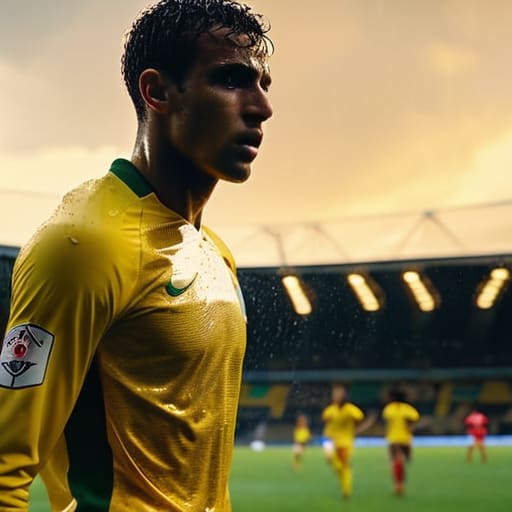
You see it every time a major tournament rolls around. It’s not just about the kit or the anthem; it’s about the invisible weight a player carries the moment they step onto the pitch. In England, there is this heavy, often suffocating expectation to play a certain way—a rigid adherence to what we think our history dictates. It’s a burden of expectation that can make a young lad’s legs feel like lead. Contrast that with the way a Brazilian player carries their national team identity. For them, the shirt isn’t just a uniform; it’s a permission slip to express themselves, fueled by a legacy of flair that feels almost biological.
This isn’t just romantic nonsense; it’s about how regional football playing styles are baked into the very soul of a nation. When you look at the tactical rigidity often found in certain European setups compared to the more fluid, improvisational nature of South American sides, you aren’t just looking at coaching manuals. You are looking at decades of football traditions and rituals being passed down through generations. One side is taught to respect the structure; the other is taught to respect the moment.
Five Realities of the Global Game That No Tactician Will Tell You
- Stop looking at the tactics board to understand a nation’s style. If you want to know why a team plays with a certain flair or grit, look at the local parks. You can’t coach a kid to play like a Brazilian if he grew up on a concrete pitch in a cold, grey suburb; the environment dictates the technique long before a scout ever shows up.
- Respect the local “unwritten rules” of the pitch. In some countries, the game is a gentleman’s pursuit of geometry and passing lanes; in others, it’s a battle of attrition where winning the second ball is more important than anything else. If you try to impose a high-pressing system on a culture that values defensive solidity and “parking the bus,” you aren’t being progressive—you’re being delusional.
- Understand that “footballing intelligence” isn’t a universal constant. What looks like a lack of discipline in one country is often a different way of reading the game entirely. I’ve seen coaches lose their heads because their players didn’t follow a rigid structure, failing to realise those players were playing a more intuitive, instinctive version of the game that’s been passed down through generations.
- Don’t mistake a national team’s success for a repeatable blueprint. Just because a country wins a trophy using a specific formation doesn’t mean every coach in that country should copy it. A formation is a tool, not a religion, and trying to force a “Spanish style” on a squad that lacks the technical floor to execute it is the fastest way to get laughed out of the dugout.
- Watch how the fans react to a mistake, not just a goal. The way a crowd responds to a misplaced pass tells you more about the footballing culture than any post-match analysis. Is it a collective groan of frustration or a roar of encouragement? That atmosphere trickles down to the players, shaping whether they play with freedom or with a fear of making errors.
What Actually Matters When You Look Past the Scoreboard
Stop looking at tactical diagrams to understand a country’s footballing soul; look at the terraces and the local parks instead, because that’s where the real identity is forged.
A national team isn’t just a collection of the best players available; it is a living vessel for a specific set of traditions and expectations that can break a player just as easily as a bad tackle.
Understanding global football culture means recognising that while the rules of the game are identical everywhere, the way the game is felt, lived, and suffered is entirely local.
The Reality Behind the Ritual
At the end of the day, what we’ve discussed isn’t about tactical diagrams or how many passing lanes a winger creates; it’s about the soul of the game that exists outside the lines of the pitch. Whether you’re standing in a rain-soaked terrace in Northern England or watching a tactical chess match in a sun-drenched stadium in Brazil, the culture is what dictates how the players breathe and how the fans react. We’ve seen how the atmosphere in a stadium can act as a twelfth man, how national identity can turn a simple friendly into a matter of life and death, and how the very way a game is played is often a reflection of the streets it was born on. It’s easy to get lost in the statistics, but the truth is found in the local nuances that no data analyst can ever truly quantify.
If there is one thing I’ve learned from thirty-five years of standing on touchlines, it’s that the game will always change, but the human connection to it remains constant. Formations evolve, players get faster, and the money gets bigger, but the fundamental reason people lose their voices singing for their club stays the same. Don’t let the modern, polished version of football blind you to the grit and the history that makes each nation’s version unique. Respect the roots of where you play, because whether you’re coaching a group of kids in a muddy car park or managing a professional side, you are part of a global tapestry that is far larger than any single result.
Frequently Asked Questions
If the culture is so different, why does the same tactical system seem to work in some countries but fail miserably in others?
Because a tactic isn’t a magic spell; it’s a set of instructions for human beings. You can draw a perfect 4-3-3 on a whiteboard, but if you’re asking players in a league where “blood and thunder” is the local currency to play a high-line possession game, they’ll freeze. They aren’t being difficult; they’re playing the way they’ve been taught to survive. A system only works when the players’ instincts actually back up the instructions.
How much of this "national identity" is actually baked into the players, and how much is just the pressure of the crowd making them play a certain way?
It’s a bit of both, but don’t mistake the crowd for the cause. The crowd is just the amplifier. The identity is baked in through the training ground. If a kid grows up in a system that demands bravery on the ball, he’ll play that way in a storm or a vacuum. The fans don’t teach a player how to press; they just make it feel like a sin if he doesn’t.
Does the way a country plays football actually change as the game becomes more globalized and professional, or are those local traditions set in stone?
Look, you’ll see the same 4-3-3 and the same high-pressing triggers from Madrid to Munich because the data tells them it works. Professionalism breeds a certain kind of uniformity; it’s efficient, and efficiency wins trophies. But don’t mistake a tactical blueprint for a soul. You can coach a kid to play a possession game, but you can’t coach the way a local crowd demands grit or how a certain street-footballer’s instinct defies the manual. The methods change, but the temperament? That’s harder to export.
