I’ve spent more Sunday mornings than I care to count standing on waterlogged pitches, watching coaches run these absurd, high-speed obstacle courses that look more like a circus act than a football session. They’ve got kids weaving through twenty tiny cones in a perfect line, looking clinical for exactly thirty seconds before the match starts and the actual chaos begins. If you’re looking for a way to teach fancy step-overs that only work on a manicured carpet, you’re in the wrong place. I’m here to talk about how to coach dribbling that actually holds up when a defender is breathing down a player’s neck and the ball is heavy with mud.
I’m not going to waste your time with expensive equipment or complex jargon that sounds good in a coaching manual but fails in a freezing car park. Instead, I’m going to give you the drills that survive the reality of the game. We are going to focus on ball mastery that works under pressure, spatial awareness, and the ability to keep possession when the legs are heavy and the focus is slipping. This is about building players who can actually use the ball, not just dance with it.
Mastering Close Control Techniques Under Pressure

You can spend all afternoon running players through cones in a straight line, but if they can’t keep that ball glued to their toe when a defender is breathing down their neck, you’ve wasted your Sunday. Real ball mastery isn’t about how many touches they can get in a vacuum; it’s about mastering close control techniques while their heart rate is hitting 170 and the space is disappearing. I’ve seen too many kids look like prime Messi in a drill, only to turn into a different player the moment a teammate steps within three yards of them.
To fix this, you have to stop treating technical work and pressure as two separate things. When you are developing player confidence in 1v1 situations, you need to introduce a “shadow defender”—someone who isn’t necessarily tackling, but is actively closing the gap and forcing a decision. If they don’t learn to use their body to shield the ball while they manipulate it, they’ll never survive a proper match. It’s about teaching them to use the sole, the outside, and the laces in a sequence that actually makes sense when someone is trying to take it off them.
Effective Soccer Training Methods That Survive Reality
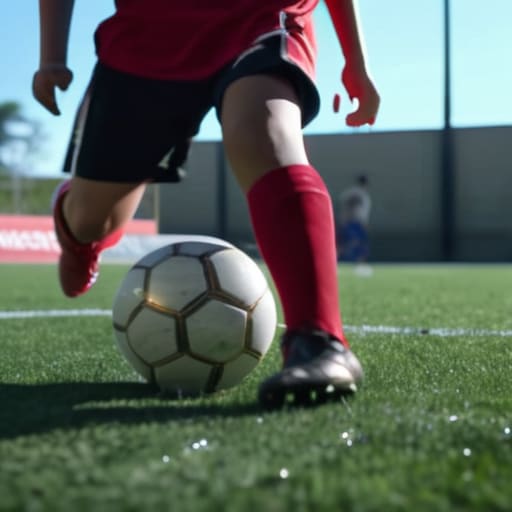
If you’ve ever tried to run a complex, high-speed technical circuit only to have half your players wandering off to look at a passing bus, you know what I mean. Most people think they need a library of complex patterns, but the best effective soccer training methods are actually the ones that force a player to make a decision. I don’t care how many cones you set up; if there isn’t a consequence for a heavy touch, they aren’t learning. I prefer “chaos drills”—small-sided games in tight spaces where the ball is constantly contested. It forces them to stop thinking about the mechanics and start feeling the ball.
When you are developing player confidence in 1v1 situations, you have to stop being a helicopter coach. If you blow the whistle every time a kid loses the ball, you’re teaching them to be afraid of failure. Instead, set up a simple gate game where the defender has a clear objective. Let them lose the ball. Let them get frustrated. It’s only when they’re forced to navigate a crowded, messy space that they actually start improving ball control skills under real-world stress.
Five Truths About Dribbling That You Won't Find in a Coaching Manual
- Stop obsessing over the ‘perfect’ technique and start coaching the eyes. I don’t care if they’re using the laces or the inside of the foot if they’re staring at their own boots the whole time. If they can’t see the defender coming because they’re too busy looking at the ball, they aren’t dribbling; they’re just walking with a toy. Teach them to keep their heads up, even if it means they lose the ball a few times in training.
- Dribbling drills are useless if there’s no consequence for losing the ball. If you set up a beautiful, sterile cone circuit where they have all the time in the world, you’re wasting your Sunday morning. You need to introduce a defender—even if it’s just you or one of the more energetic kids—to create that split-second of panic. Real dribbling happens when someone is actually trying to take it off you.
- Shrink the space to grow the skill. Most coaches make the mistake of giving players massive, empty squares to play in. That’s not training; that’s just running. If you want them to learn how to manipulate the ball, you have to crowd them. Force them to make decisions in tight pockets of space where a heavy touch means they’ve lost possession. It’s better to struggle in a small space on Tuesday than to fail in a big game on Sunday.
- Respect the difference between a ‘skill’ and a ‘tool.’ I see too many coaches trying to teach 10-year-olds triple elastico turns that look great on YouTube but serve zero purpose on a muddy pitch. Dribbling is a tool to beat a man or find a gap, not a circus act. Teach them the simple stuff—the change of pace, the body feint, the drop of the shoulder—and make sure they know why they are using it before they try to show off.
- Check their engine before you blame their touch. If a player is suddenly losing control and kicking the ball into the car park, don’t immediately assume their technique has gone to rot. Ask them what they’ve done in the last seventy-two hours. Half the time, they aren’t “bad” at dribbling; they’re just exhausted. You can’t coach fine motor skills to a kid who’s running on fumes, so learn to distinguish between a technical flaw and a lack of conditioning.
The Hard Truths to Carry Off the Pitch
Stop chasing “magic” drills that only work when the kids are fresh; if a technique doesn’t hold up when they’re panting and the pitch is turning into a bog, it’s not worth the time you’re wasting.
Dribbling isn’t just about fancy footwork in a vacuum; it’s about the ability to keep the ball under pressure, which means your training must include a defender who actually wants the ball back.
Focus on the “why” before the “how”—a player who understands why they need to keep the ball tight in a corner will find their own solutions when the game gets chaotic, whereas a player who just memorises patterns will freeze.
The Reality of the Sunday Morning Grind
Look, we’ve covered a lot of ground, from the mechanics of the touch to the chaos of working under pressure. If you take nothing else away from this, remember that dribbling isn’t about teaching a kid to perform a step-over for the sake of a highlight reel; it’s about teaching them to keep the ball when their lungs are burning and the defender is breathing down their neck. You need to move away from those static, lonely lines of players waiting for a turn and start building drills that actually force a decision. If the drill doesn’t require them to look up, adjust their stride, and handle the ball while being contested, then you aren’t coaching dribbling—you’re just running an expensive obstacle course. Keep it practical, keep it pressured, and keep it messy.
At the end of the day, you aren’t going to see the results of these sessions in the next ten minutes; you’ll see them in six months, or maybe in six years when a player finds that extra yard of space because they finally learned how to manipulate the ball under duress. Coaching is a slow burn, and it’s often a thankless one, especially when you’re standing in a damp car park on a Tuesday night. But don’t let the lack of immediate fanfare fool you. If you focus on the fundamentals that survive the mud and the fatigue, you are giving them something far more valuable than a flashy trick. You’re giving them the confidence to hold onto the ball when the game is on the line. Now, get out there and get them moving.
Frequently Asked Questions
How do I stop my players from just running in straight lines and actually using their turns when a defender is closing them down?
The reason they’re running in straight lines is that they’re terrified of losing the ball. When a defender closes them down, their instinct is to clear the danger, not play through it. You’ve got to stop coaching them to “dribble” and start coaching them to “change direction.” Stop the static cone work. Put them in tight, three-player squares where they have to turn to find an exit. If they don’t learn to use their body to shield while they turn, they’ll never survive a real match.
What do I do when I have a group of players with completely different skill levels and I can't run a single drill that works for everyone?
You’re facing the classic “split-session” headache. Don’t try to force a one-size-fits-all drill; you’ll just bore your best players and humiliate the ones struggling. Instead, use “constrained” drills. Keep the same basic setup, but adjust the parameters. Give the stronger players a smaller space or a tighter time limit, while letting the others use more touches or a larger area. It’s about varying the difficulty within the same game, not running two separate sessions.
At what point do I stop focusing on the technical footwork and start teaching them how to actually use their body to shield the ball?
You stop the moment they can actually keep the ball for three seconds under pressure. If you’re waiting until they’re “technically perfect,” you’ll be waiting until they’re thirty. In reality, the two overlap. Once a player can move the ball with intent rather than just reacting to it, start teaching them to get their frame between the ball and the opponent. Technical skill is useless if they let a defender bully them off the pitch.
