I’ve spent more Sunday mornings than I care to admit standing on a patch of frozen mud behind a primary school, staring at a group of twelve restless kids and a space no bigger than a garden shed. You’ll see plenty of “expert” coaches online telling you that you need a full-sized pitch and a fleet of high-tech training aids to develop real technical ability, but that is a load of nonsense. If you’re looking for a way to teach proper ball control while you’re squeezed between a brick wall and a parked Volvo, you don’t need a tactical degree; you just need to know how to run a session with limited space without losing your mind or breaking a window.
I’m not here to sell you on some expensive, flashy new methodology that only works in a pristine academy setup. I’m going to give you the actual drills that survived thirty-five years of coaching in the trenches—the ones that work when the wind is biting and the boundaries are tight. We’re going to focus on high-repetition, high-intensity movements that force players to think under pressure, ensuring that even in a cramped car park, they are getting better than the kids playing on the manicured grass down the road.
Maximizing Engagement in Tight Spaces Without Losing the Kids
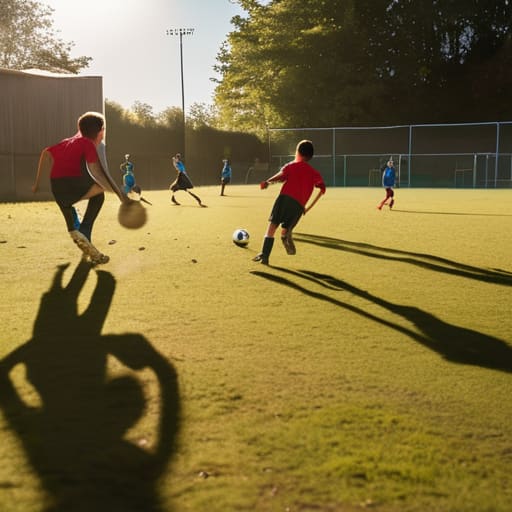
The biggest mistake I see is a coach trying to run a session like they’re at a Premier League academy, even when they’re squeezed into a patch of gravel behind a primary school. If you stand there with a clipboard and a whistle, lecturing a group of restless twelve-year-olds about “tactical positioning” while they’re staring at a nearby hedge, you’ve already lost them. You have to stop thinking like a lecturer and start thinking about managing group dynamics in restricted areas. When the space is tight, the energy has to be high, and that only happens if the ball is constantly moving. If a kid is standing still for more than thirty seconds, they aren’t learning; they’re looking for a distraction.
To keep them focused, you need to lean on creative activity adaptations that turn the lack of room into an advantage. Instead of a massive passing drill that requires a pitch, use that confinement to force quicker decision-making. I’ve always found that if you shrink the space, you must also shrink the time they have to think. You aren’t just running a drill; you are practicing maximizing engagement in tight spaces by making the game faster and more intense than they’re used to. If they’re too busy trying to keep the ball away from their teammate to notice the lack of grass, you’ve done your job.
Creative Activity Adaptations for Small Rooms and Hard Ground

When you’re stuck in a draughty community hall or a concrete courtyard, you have to stop thinking about “pitch size” and start thinking about ball control and reaction speed. You aren’t running a Champions League final; you’re running a high-intensity workshop. My go-to is the “Four-Corner Box.” Instead of long, sweeping passes that end up in a parked car, I use small, high-frequency drills where the ball rarely leaves a five-meter radius. This forces players to develop a much tighter first touch and quicker scanning. It’s about maximizing engagement in tight spaces by making the game faster, not bigger.
If the ground is hard, you can’t have them lunging into tackles, or you’ll be spending the session handing out ice packs. I pivot toward technical work that relies on body positioning and quick feet. Instead of traditional rondos, I use “shadow passing” or rapid-fire wall work where the focus is on the weight of the pass and the immediate transition. These creative activity adaptations for small rooms turn a cramped venue from a nuisance into a laboratory for technical precision. If they can control a ball in a broom cupboard, they can control it on a Sunday morning in the rain.
Five Rules for Surviving the Squeeze
- Ditch the long-range passing drills. If you’re working in a space where a misplaced ball is going to end up in a parked Vauxhall, stop asking for sixty-yard diagonals. Focus on one or two-touch play and tight-space control. If they can’t handle the ball in a phone box, they’ll never handle it in a stadium.
- Use more balls, not fewer. In a massive field, one ball per group is fine. In a cramped corner, it’s a recipe for boredom and kids wandering off to look at their phones. Keep the balls moving so the “waiting time” doesn’t turn into “distraction time.”
- Shrink the goals, not the intensity. You don’t need full-sized nets to play a meaningful game. Use cones or even just two jumpers on the floor. It forces the players to be more precise with their finishing and makes the game feel harder, even if the pitch is tiny.
- Stop the “conga line” coaching. I’ve seen too many coaches stand in the middle of a small space, gathering everyone around to talk for ten minutes. In a tight spot, if you stop the session to lecture, you’ve lost them. Keep your instructions to thirty seconds or less, then get them back to the ball.
- Manage the “out of bounds” chaos. When space is tight, the ball goes out of play every thirty seconds. Don’t let this kill the rhythm. Instead of long walks to fetch balls, implement a rule: if it goes out, the person who didn’t touch it retrieves it, or use “kick-ins” instead of throw-ins to keep the tempo up.
The Bottom Line for the Tight-Squeeze Session
Stop chasing the “perfect” drill from a textbook; if the space is small, focus on high-frequency touches and quick decision-making rather than long-distance passing drills that will only end in a broken window.
Keep the lines moving and the instructions short—if you spend more than thirty seconds explaining a drill in a cramped space, you’ve already lost half the group to staring at their boots.
Use the limitations to your advantage by forcing players to play in tight windows, teaching them the kind of close control and body positioning that actually matters when they’re squeezed in a real match.
The Bottom Line
At the end of the day, running a session in a cramped car park or a borrowed indoor hall isn’t about having the most expensive cones or the most sophisticated tactical software. It’s about adaptability. You’ve learned that if you can’t expand the pitch, you have to increase the intensity; if you can’t run long-distance sprints, you make them work on their first touch and decision-making in tight windows. Stop worrying about the lack of grass and start focusing on the quality of the repetitions. If the kids are working hard, reacting quickly, and not constantly taking out the local residents’ garden fences, you are doing your job.
Don’t let a lack of facilities make you feel like a lesser coach. Some of the best players I’ve ever worked with didn’t come from pristine academies with manicured turf; they came from people like us, scraping by on concrete and grit. A player who can find a passing lane in a telephone box is a player who will find one on a Saturday afternoon in front of five hundred people. Focus on the fundamentals that survive the squeeze, and remember that your job isn’t to provide a stadium—it’s to build the footballer. Now, pack up the gear and get some tea. You’ve earned it.
Frequently Asked Questions
If I'm working in a tiny space, how do I stop the players from just hoofing the ball blindly and losing control of the session?
If you’ve got no room to breathe, stop giving them the luxury of a big kick. The second you let them hoof it, the session is dead; you’re just watching balls bounce off fences while they wander around looking bored. Shrink the pitch even further or, better yet, use smaller balls. If they can’t control a size four in a phone box, they’ve got no business playing in a stadium. Force the touch, or lose them.
How do I manage the intensity of the drills so the kids don't burn out or get injured on hard, unforgiving ground?
Listen, if you’re training on concrete or frozen ground, you can’t just run them ragged. You have to manage the “stop-start” nature of the session. High-intensity sprints on hard surfaces are a recipe for shin splints and heavy legs. Instead, focus on quick, technical touches—lots of short, sharp movements rather than long, lunging bursts. If you see them dragging their feet or looking heavy, stop the drill. Don’t wait for a hamstring to snap to realize they’ve hit the wall.
When I've got no room for a full-pitch game, how do I actually teach them tactical positioning instead of just making it a chaotic scramble?
Stop trying to teach a full-pitch shape in a postage stamp; it’s a fool’s errand. Instead, use “zones.” Divide your tiny area into three imaginary strips. Tell them they can’t all be in the same strip at once. If you’ve got four kids, one stays back, two occupy the middle, and one pushes up. It forces them to look up and see the gaps, rather than just hunting the ball like a pack of hungry wolves.
