I’ve spent half my life standing on sidelines where the wind cuts right through your jacket, watching talented players go down with a grimace that tells you everything you need to know before they even hit the grass. Most of the “experts” you see online will try to sell you on some high-tech, expensive compression gear or a complicated sequence of movements that requires a laboratory to perform. It’s nonsense. If you want to learn how to prevent knee injuries, you don’t need a gadget; you need to understand how a body actually moves when a muddy pitch is turning into a sponge underfoot and a winger is charging at you at full tilt.
I’m not here to give you a lecture on biomechanics that you can’t apply during a Tuesday night training session. My promise to you is simple: I am going to show you the practical, foundational strength work that actually keeps a player on the pitch. We aren’t going to chase trends or buy into the hype. Instead, we are going to focus on the grit and the stability that survives the heavy contact and the uneven ground. I’ll tell you exactly what works when the pressure is on, so your players can stop worrying about their joints and start focusing on the ball.
Strengthening Quadriceps and Hamstrings Beyond the Gym
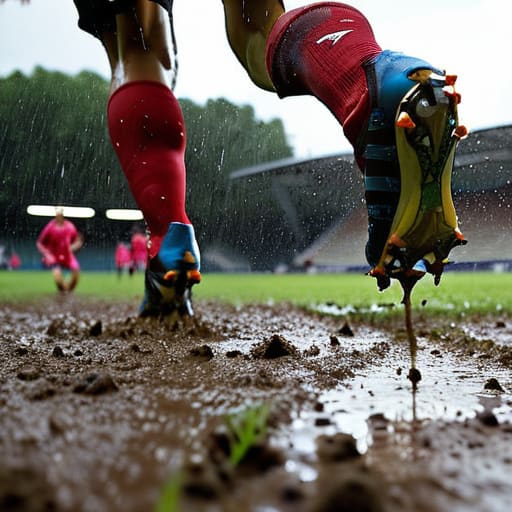
Look, if you think a single session in a sterile gym with a machine is going to save a player’s ACL, you’re dreaming. A leg machine doesn’t account for a muddy pitch, a heavy ball, or a player trying to change direction while being bumped by a defender. To actually see results, you need to focus on strengthening quadriceps and hamstrings in ways that mimic the chaos of a Saturday afternoon. I’ve seen too many lads build massive thighs in the gym only to have their knees buckle the moment they have to decelerate on uneven ground.
The secret isn’t just raw power; it’s about teaching the brain and the muscles to talk to each other under pressure. This is where neuromuscular training exercises come in. I don’t care if you call it fancy jargon; I call it teaching a player how to land without looking like a newborn giraffe. Incorporating simple, reactive movements—like jumping and landing on one leg or reacting to a whistle while maintaining balance—builds the kind of knee stability drills that actually translate to the pitch. If they can’t control their body weight while distracted, they aren’t ready for a ninety-minute battle.
Neuromuscular Training Exercises That Actually Work
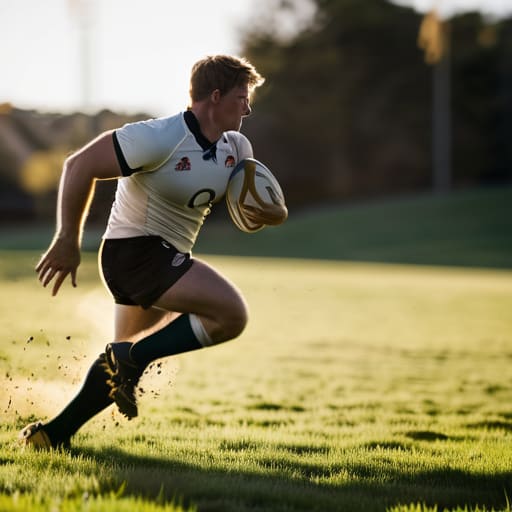
Now, don’t get me wrong—building muscle is fine, but if your brain isn’t talking to your legs properly, all that strength is just dead weight. I’ve seen plenty of lads with thighs like tree trunks who still go down like a sack of potatoes because their coordination failed them the moment they stepped into a tackle. That’s where neuromuscular training exercises come into play. We aren’t talking about lifting heavy weights in a sterile gym; we’re talking about teaching the nervous system to react when the pitch is uneven and a striker is bearing down on you.
You need to focus on knee stability drills that force the body to find its balance under pressure. I’m a big believer in single-leg stability work—things like lateral bounds or controlled landings where they have to stick the position without their knee wobbling inward like a compass needle. If they can’t control their own weight on a Tuesday afternoon training session, they certainly won’t do it during a frantic breakaway on a Saturday. It’s about building that instinctive, subconscious control so the body knows what to do before the brain even has time to panic.
Five Truths About Keeping Your Players on the Pitch
- Stop obsessing over the gym and start looking at the surface. If you’re training on a pitch that’s more mud than grass, or a concrete car park because the local council hasn’t mowed the lawn, no amount of weightlifting is going to save a player’s meniscus. You have to match the intensity of the drill to the quality of the ground.
- Watch the landing, not just the jump. I’ve seen countless kids go down because they land with their knees caving inward like a collapsing tent. If they can’t control their own body weight when they hit the turf, they aren’t ready for high-intensity match play. Fix the mechanics of the landing before you worry about how high they can jump.
- The “last fifteen minutes” rule applies to injury prevention too. Most non-contact ligament tears happen when a player is fatigued and their form goes to rot. If you see your players’ posture breaking down during a session, stop the drill. Pushing through technical fatigue is just an invitation for an ACL tear.
- Don’t ignore the ankles. A knee is a hinge caught between the hip and the ankle; if the ankle is stiff or the footwork is sloppy, the knee takes the brunt of the impact. If a player has “lazy” ankles, their knee is going to pay the price every time they have to change direction.
- Check their recovery, and I don’t mean a protein shake. I mean I want to know if they’re sleeping more than five hours and if they’re actually eating something other than crisps. A body that’s perpetually running on empty is a body that loses its structural integrity the moment a tackle gets heavy.
The Bottom Line for Your Players
Stop treating strength and balance as separate things; if a player can squat a mountain in the gym but can’t stabilize their knee when they hit a patch of mud on a Sunday morning, they’re still a walking injury risk.
Forget the fancy, high-tech equipment for a moment and focus on the basics of landing and deceleration—most ACL issues don’t happen because of a lack of muscle, but because a player doesn’t know how to absorb force when their legs are heavy in the 80th minute.
Consistency beats intensity every single time; five minutes of proper neuromuscular work at the start of every session is worth more than a two-hour “injury prevention” clinic once a month that the kids find boring and immediately forget.
The Long Game
Look, I’m not going to tell you that a few sets of lunges will make your players bulletproof. They won’t. But if you’ve actually taken the time to build up those quads and hamstrings, and you aren’t just skipping the neuromuscular work because it looks “boring” to a teenager, you’ve already done more than most. Preventing a knee injury isn’t about some magic supplement or a fancy new piece of equipment; it’s about the unglamorous, repetitive work that builds a foundation. You have to bridge the gap between gym strength and the chaotic, uneven reality of a muddy pitch on a Sunday morning. If you focus on the stability and the strength that actually translates to a sudden change of direction, you aren’t just training athletes—you are protecting their future in the game.
At the end of the day, coaching is about more than just teaching a kid how to strike a ball or hold a defensive line. It’s about making sure they are still around to play the game they love when they’re twenty, thirty, or even forty. I saw too many talented lads walk away from the sport because they treated their bodies like they were invincible, only to find out they weren’t when their ACL decided it had had enough. Don’t be the coach who only cares about the result on Saturday. Be the one who cares about the longevity of the player. Build them right, train them smart, and let them play.
Frequently Asked Questions
I’ve got the strength and the drills sorted, but how do I know if the pitch conditions or the boots they’re wearing are actually making the injury risk worse?
Look, you can have the strongest hamstrings in the county, but if they’re playing on a frozen, rutted pitch in heavy, mud-caked boots, you’re asking for trouble. If the ground is rock hard or turning into a bog, the impact changes. Watch their footing. If they’re sliding or struggling to plant a foot firmly during a turn, the gear or the surface is failing them. Don’t let ego get in the way—if the pitch is rubbish, play it safe.
How much of this is down to actual physical training versus just being tired and losing focus in the final ten minutes of a match?
It’s both, and that’s the trap. If a player’s legs are heavy because they haven’t done the foundational strength work, their mechanics break down. But if they’re physically prepared and still losing their shape, it’s mental fatigue. When they get tired, they stop scanning, they stop checking their shoulders, and they stop bracing for impact. You can’t train focus in a gym, but you can build the physical reserve that keeps them sharp enough to actually use it.
If a player is already feeling a bit of "niggle" in the joint, do I push them through it to build resilience, or is that just asking for a season-ending tear?
Listen to me: if you push a “niggle” to “build resilience,” you aren’t building a player; you’re building a patient. There is a massive difference between the discomfort of a heavy training session and the sharp, localized warning of a joint that’s unhappy. If they’re limping or guarding the knee, pull them. I’ve seen too many lads try to be heroes in October only to spend February on a physio table. Rest, assess, and fix the cause.
