I’ve spent enough time on muddy touchlines to know that most of the “expert” advice you find online is absolute rubbish. They’ll sell you a flashy, high-tech recovery program filled with expensive gadgets and complex jargon, but they never mention the sheer, grinding boredom of it all. I remember sitting on the bench during my own recovery, watching a lad play through a Grade 2 tear just because he was too proud to admit he wasn’t right, only to see him snap three weeks later. If you’re looking for a magic pill or a way to bypass the hard graft, you’ve come to the wrong place; a real complete guide to returning from injury isn’t about fancy tech, it’s about the slow, unglamorous work of rebuilding the foundation before the house falls down again.
I’m not here to give you a motivational speech or a list of supplements. What I am going to give you is the truth about how you actually get back to your best without betraying your body the moment you hit top speed. We are going to talk about the practicalities: the strength work that actually matters, the mental trap of rushing the timeline, and how to know when you’re truly ready for contact. This is the straight talk you need to ensure that when you finally step back onto that pitch, you stay there.
Navigating the Brutal Reality of Sports Injury Rehabilitation Phases

Most people treat rehab like a waiting room—you sit there, you get bored, and you wait for the clock to run out so you can get back to the pitch. That is a recipe for a second, nastier injury. Real progress happens in stages, and you have to respect the sports injury rehabilitation phases if you want to survive them. You don’t go from a week on the sofa to a full-throttle training session. You move from basic mobility to strength, then to power, and finally to the chaotic, unpredictable movements that actually happen in a match.
The danger lies in the “grey area” between feeling fine and being ready. You’ll feel great during a light jog, but the second you try to change direction at pace, that old weakness will scream at you. This is why I’m a stickler for gradual loading protocols. You cannot skip the boring stuff—the heavy, slow, controlled movements—just because you’re itching to get back under the lights. If you haven’t built the foundation, you aren’t returning to play; you’re just waiting to break again.
Respecting the Physical Therapy Milestones That Actually Matter
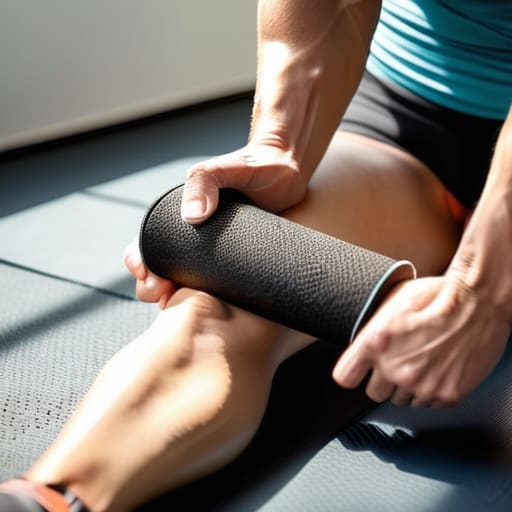
Now, listen. You’ll see plenty of people online talking about “crushing it” or “grinding through the pain,” but if you want to actually play football again, you need to stop treating your body like a machine that just needs a bit of oil. You have to respect the physical therapy milestones that your physio sets out for you. These aren’t suggestions; they are the guardrails keeping you from a catastrophic relapse. If you’re supposed to be working on isometric holds but you’re already trying to sprint through cones because you’re bored, you aren’t being “tough”—you’re being reckless.
The real work happens in the transition from the treatment table to the pitch, specifically through gradual loading protocols. You can’t go from walking a straight line to playing a ninety-minute league fixture overnight. You have to build the capacity to handle the chaos of a match—the sudden changes of direction, the contact, the uneven turf. I’ve seen too many lads skip the boring, repetitive strength work only to have their knee buckle the moment they try a sharp turn in a real game. Build the foundation first, or the house will fall down.
Five Hard Truths to Keep You from Making a Mess of Your Comeback
- Stop checking the clock and start checking your mechanics. I don’t care if the physio gave you the green light for a light jog; if your gait looks like a wounded duck, you aren’t ready. You can have all the strength in the world, but if your movement pattern is broken, you’re just rehearsing your next injury.
- Don’t let your ego outrun your actual capacity. The biggest mistake I see is a player coming back after six weeks off and trying to play at 100% intensity on day one because they “feel fine.” Feeling fine in a warm room is not the same as being ready to sprint into a heavy tackle on a Tuesday night in November.
- Rebuild the engine before you try to win the race. You can’t skip the boring stuff. If you haven’t spent time on the stability, the core, and the small, nagging muscles that support the joint, your body will betray you the second you hit top speed. You wouldn’t build a house on sand, so don’t build a comeback on a weak foundation.
- Watch what you’re doing in the seventy-two hours before training. If you’re telling me you’re “rehabilitating” but then spending your evenings sitting on a sofa for ten hours straight or eating like a teenager at a birthday party, don’t expect your body to respond to the gym work. Recovery isn’t just what happens on the treatment table; it’s what you do when no one is watching.
- Learn to listen to the difference between “work pain” and “bad pain.” There is a certain ache that comes with training hard—that’s just the body adapting. But if you feel a sharp, sudden, or localized sting, you stop. Immediately. I’ve seen too many lads try to “tough it out” only to turn a three-week setback into a six-month nightmare.
The Hard Truths to Carry With You
Don’t mistake the absence of pain for the presence of strength; just because the swelling has gone down doesn’t mean your muscle is ready to handle the torque of a sudden change of direction.
Respect the boring stuff—the isometric holds and the basic stability work—because if you try to skip the foundation to get back to the ball, you’ll just end up right back in the physio’s office three weeks later.
Listen to your body’s warning signs instead of your ego; there is a massive difference between the “good” ache of hard work and the “bad” sharp twinge that tells you you’re about to make a very expensive mistake.
The Final Whistle on Your Recovery
Look, if you’ve followed this through, you know it isn’t about magic pills or some fancy high-tech recovery pod. It’s about the unglamorous, repetitive work of respecting the milestones, rebuilding that foundation from the ground up, and having the sense to listen to your body when it screams. You can’t shortcut the biology of healing, and you certainly can’t trick a ligament into being ready before it’s ready. If you try to skip the boring bits of physiotherapy to get back to the Saturday afternoon kickoff, you aren’t being “tough”—you’re just being reckless. Real progress is measured in the small, invisible wins: the first time you can sprint without a twinge, or the moment you realise you aren’t thinking about your knee every time you plant your foot. Build the foundation correctly, or the whole structure will collapse the moment the game gets intense.
I’ve seen plenty of players walk back onto the pitch too early, looking like they’ve regained their shape, only to see them limp off ten minutes later because they lacked the patience to do it right. This process is a mental battle as much as a physical one, and I know how much it stings to sit on the sidelines watching your teammates run while you’re stuck doing calf raises in a gym. But remember, the goal isn’t just to get back on the pitch; the goal is to stay on the pitch. Take the time you need, do the work when nobody is watching, and when you finally do step back into that matchday atmosphere, you’ll do it with the confidence that you aren’t just a passenger, but a player.
Frequently Asked Questions
How do I know if I’m actually ready for contact training, or if I’m just being stubborn and ignoring a warning sign?
Listen, there’s a fine line between mental toughness and sheer stupidity. You’ll know you’re being stubborn if you’re “managing” the pain with ibuprofen just to get through a session. If you’re hesitating or subconsciously protecting that limb during a simple drill, your brain hasn’t cleared you yet. Real readiness isn’t just the absence of pain; it’s the presence of confidence. If you’re flinching before the contact even happens, stay on the sidelines.
If my physio says I’m cleared to play, but I still feel a twinge when I try to change direction, do I trust the professional or my own gut?
Listen, I’ve seen plenty of lads walk back onto the pitch because a man in a white coat ticked a box, only to see them clutching their hamstring ten minutes later. The physio is looking at clinical benchmarks; your body is looking at the reality of a match. If that twinge is there, your mechanics are compensating for something. Don’t be a hero. Trust the twinge. Go back, refine the movement, and don’t risk a six-month layoff for a twenty-minute cameo.
What’s the best way to keep my match sharpness and mental edge while I’m stuck doing boring, isolated gym work?
Look, the gym is a means to an end, not the destination. If you’re just staring at a wall on a stationary bike, you’re losing the game. You need to bridge the gap. Watch film—not highlights, but actual tactical breakdowns—to keep your brain scanning the pitch. More importantly, once your physio gives the nod, get on the grass for low-impact, high-speed technical work. If you don’t feel the ball, you won’t feel the game.
