I’ve sat through enough committee meetings in drafty community halls to know that most people approach how to run a football club committee like they’re planning a moon landing. They come in with three-ring binders, complex organizational charts, and a vocabulary full of “synergy” and “strategic frameworks” that wouldn’t help you find a lost football in a hedge. It’s all a bit much, isn’t it? If your committee spends every Tuesday night arguing about the exact shade of navy for the new training bibs instead of fixing the leaking clubhouse roof or sorting the pitch drainage, you aren’t running a club—you’re running a very expensive, very loud debating society.
I’m not here to give you a corporate seminar or a list of buzzwords that sound good on a LinkedIn profile. What I’m going to give you is the unvarnished truth about what actually keeps a club breathing when the rain is lashing down and the bank balance is looking thin. I’ll show you how to divide the heavy lifting so one person doesn’t burn out by October, and how to handle the inevitable personalities that try to hijack your sessions. We’re going to focus on the practicalities that actually matter to the players and the parents, not the paperwork that gathers dust.
The Sports Club Management Structure That Actually Holds
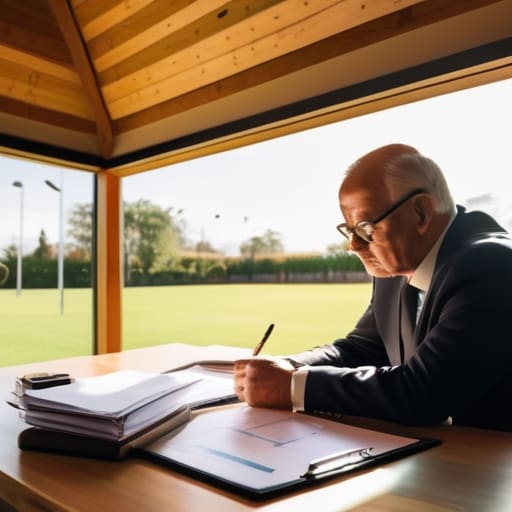
Most clubs I’ve seen fall apart because they treat their hierarchy like a suggestion rather than a framework. You don’t need a complex corporate ladder; you need a sports club management structure that distinguishes between people who make decisions and people who actually do the work. If your Chairman is also the one scrubbing the mud off the kits and trying to fix the pitch drainage, you haven’t built a committee—you’ve built a suicide pact. You need clear sports organization leadership roles where the Secretary handles the paperwork and the Treasurer keeps the eyes on the books, so the people on the touchline can actually focus on the football.
A solid structure is anchored by a clear football club constitution and bylaws. Now, I know that sounds like something only lawyers care about, but without those rules, your club is just a collection of loud opinions. When a disagreement breaks out over whether to buy new goals or invest in a better training pitch, you don’t want a shouting match; you want a document that tells you how the decision is made. It’s about creating a system that survives when the current leaders eventually move on to other things.
Why Most Sports Organization Leadership Roles Are Empty Vessels

The problem I see most often isn’t a lack of people willing to stand in a room; it’s a lack of people actually doing anything once the meeting ends. You’ll see a perfectly drafted sports organization leadership roles list on a piece of paper, with a Chairman, a Secretary, and a Treasurer, but when you look closer, those titles are just empty vessels. They are names on a website that serve no purpose other than to satisfy a league registration requirement. A title doesn’t mean a thing if the person holding it treats the role like a social club rather than a responsibility.
If your Secretary only shows up to take minutes but never actually follows up on the broken floodlights or the missing insurance papers, you don’t have a Secretary; you have a spectator. This is where the illusion of management starts to erode the club’s foundation. People think that having a structure is the same thing as having a functioning system. It isn’t. Without clear accountability and a bit of actual graft, your committee is just a group of people sitting in a drafty clubhouse, talking about things that don’t matter while the real work goes undone.
Five Ways to Stop Your Committee from Becoming a Social Club for People Who Like to Argue
- Stop appointing the loudest person in the room to the Chair. Just because someone can shout over a referee doesn’t mean they can manage a budget or mediate a dispute between two parents over a parking space. You need someone who can listen, keep a minute, and stop the meeting from drifting into a debate about the quality of the post-match pies.
- If your Treasurer isn’t a stickler for the small stuff, you’re asking for trouble. I’ve seen clubs go under not because they lacked sponsorship, but because someone “forgot” to record a bag of oranges or let a coach take a handful of cash from the gate for “emergency kit.” Treat the club’s pennies like they’re your own, because if you don’t, the bank eventually will.
- Define the line between the committee and the dugout. A committee member shouldn’t be wandering onto the pitch during a Saturday morning match to tell a coach his 4-3-3 is rubbish. If the committee starts meddling in tactical decisions or player selection, you haven’t got a club; you’ve got a circus, and the coaches will be the first to walk.
- Get a written rulebook, even if it’s just a single sheet of paper. You can’t have “unwritten rules” that change depending on who is having a good week. If you don’t have a clear way to handle a grievance or a disagreement over kit colours, you’ll end up with a civil war before the winter frost has even set in.
- Build a succession plan so you aren’t left holding the bag. I’ve seen committees collapse overnight because one man—who had been doing everything for twenty years—decided to retire, and nobody else even knew where the keys to the equipment shed were kept. If you aren’t training the next generation of committee members, you aren’t building a club; you’re just delaying an inevitable funeral.
The Bare Essentials for Survival
Stop appointing people just because they’ve been at the club for twenty years; a long history of drinking tea in the clubhouse doesn’t mean they know how to manage a budget or fix a broken pitch.
If your committee roles don’t have a clear, written list of what needs to be done every single month, you aren’t running a committee—you’re just hosting an expensive monthly grievance meeting.
Focus your energy on the roles that keep the gates open and the lights on, rather than letting the loudest voices in the room hijack every meeting to debate things that don’t actually affect the players on the pitch.
The Final Whistle
Look, running a committee isn’t about having a fancy organizational chart or a glossy handbook that sits gathering dust in a filing cabinet. It’s about ensuring the roles you’ve created actually have teeth. If your treasurer is just a name on a spreadsheet and your secretary is a ghost until the AGM, you don’t have a committee; you have a collection of people who happen to share a postcode. You need structure that serves the players on the pitch, not the egos in the boardroom. Stop chasing the illusion of order and start focusing on the practicalities—the pitch maintenance, the kit, and the volunteers who actually show up when it’s raining. Build a foundation of accountability, or don’t bother building one at all.
At the end of the day, we aren’t here to manage a corporation; we are here to keep a community alive. Every minute you spend fixing a broken process or settling a dispute fairly is a minute that allows a kid to fall in love with the game without worrying if their club will still exist next season. It is a heavy lift, and most of it goes entirely unthanked, but it is the essential work that keeps the lights on and the boots laced. Don’t do it for the prestige—there isn’t any. Do it because the game deserves better than a club that collapses under its own weight. Now, get back to work.
Frequently Asked Questions
What do I do when the same three people end up doing ninety percent of the work while everyone else just shows up to argue?
It’s the same story I see on the touchline: three people hauling the heavy bags while the rest just stand around critiquing the drill. If your committee is a collection of spectators rather than workers, you haven’t got a committee; you’ve got a grievance committee. Stop asking for “help” in general terms. Assign specific, bite-sized tasks with deadlines. If they won’t take the ball, stop letting them sit on the sidelines shouting at the players.
How do we stop the committee from becoming a group of parents who just want to complain about pitch bookings instead of actually building a club?
You stop it by setting a boundary between ‘having an opinion’ and ‘having a job.’ A committee isn’t a venting session for disgruntled parents; it’s a working group. If someone wants to moan about pitch bookings, tell them to join the sub-committee for facilities. If they aren’t prepared to pick up a clipboard or balance a spreadsheet, they shouldn’t be in the room. You need builders, not critics. Keep the complaints for the pub.
When a long-standing committee member refuses to step down or change how things have been done since 1994, how do you handle it without causing a civil war?
Look, I’ve seen this more times than I’ve seen a clean sheet on a muddy Tuesday. You’ve got the “Founding Father” who treats the club’s constitution like a suggestion and his own memory like gospel. Don’t go in swinging; you’ll just trigger a schism that’ll split the club in two. Instead, tie the change to the club’s survival, not his ego. Frame it as “evolving for the next generation,” not “fixing what you did wrong.”
