I’ve seen enough “experts” on the internet trying to sell you a high-tech, data-driven complete guide to walking football that involves GPS trackers and complex physiological metrics. Give me a break. If you’re playing walking football, you aren’t training for the Champions League; you’re trying to keep your joints moving and your competitive spark alive without ending up in a physiotherapy clinic by Tuesday. Most of the advice out there is written by people who think “tactics” means drawing pretty arrows on a whiteboard, completely ignoring the fact that gravity and aging are your two biggest opponents on the pitch.
I’m not here to give you a lecture or a list of expensive gadgets you don’t need. What I am going to give you is the truth from someone who has spent decades watching players lose their shape the moment their breathing gets heavy. I’ll show you the specific drills that actually improve your positioning and the simple tactical shifts that keep a team solid when the legs start to heavy. This isn’t about hype; it’s about the practical, grit-under-the-fingernails reality of playing the game the right way.
Walking Football vs Traditional Football Stripping Away the Chaos

Look, if you come into a walking football session expecting the frantic, lung-bursting chaos of a Sunday League match, you’re going to be disappointed—and probably injured. In traditional football, you can rely on a bit of raw pace or a desperate sprint to bail you out of a poor positional decision. You can’t do that here. When you strip away the running, you’re left with the pure mechanics of the game: passing lanes, body positioning, and spatial awareness. It’s a game of chess played with your feet rather than a track meet.
Because it’s one of the premier low impact sports for older adults, the physical demands shift from aerobic capacity to technical precision. You aren’t winning games by outrunning the opposition; you’re winning them by outthinking them. The walking football vs traditional football debate isn’t about which is “better,” but about what the game asks of your brain versus your hamstrings. Without the ability to sprint, every touch matters more, and every pass needs to be intentional. If you’re lazy with your positioning, there is no “recovery run” to save you. You simply have to be smarter.
Walking Football Pitch Dimensions Space Is Your Only Real Teammate
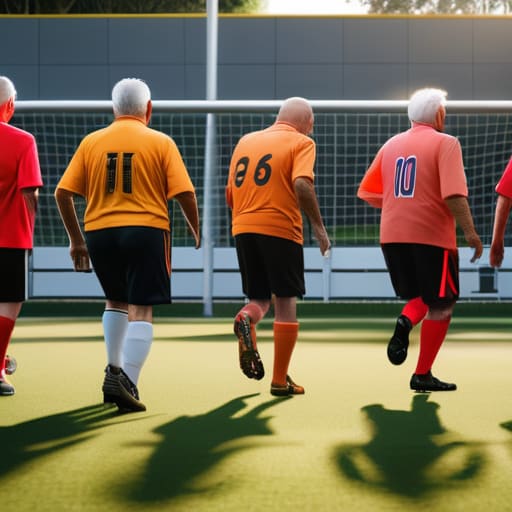
Now, don’t go thinking you can just take a standard eleven-a-side pitch and shrink the players. If you try to play walking football on a full-sized expanse, you’ll end up with a lot of tired men wandering around aimlessly, waiting for a ball that never arrives. When we talk about walking football pitch dimensions, we aren’t just talking about smaller boundaries; we are talking about managing the density of the game. You want a space that is tight enough to force quick decision-making but large enough that players aren’t constantly bumping into one another.
In a standard game, space is something you exploit with a long ball; here, space is something you earn through positioning. Because you aren’t sprinting to cover ground, the pitch needs to be scaled down—often to a size more akin to a futsal court or a small-sided training area—to ensure the ball stays in play. If the area is too vast, the game loses its rhythm and becomes a slow-motion slog. If it’s too cramped, you’re just inviting collisions. You need that perfectly balanced pocket of space where the tactical shape actually matters.
Five Hard Truths for the Walking Football Pitch
- Stop chasing the ball like a pack of hungry hounds. In traditional football, you can sometimes get away with sheer lung-bursting energy, but in walking football, if you’ve sprinted ten yards to win a ball you had no business winning, you’re effectively a spectator for the next three minutes. Position yourself to intercept, not to hunt.
- Master the “One-Touch Release.” Because you can’t use pace to beat a man, your feet have to be smarter than your legs. If you take three touches to settle the ball, you’ve already given the opposition time to close the gap and shut your options down. Pass it, move it, and keep the ball moving faster than the defenders can walk.
- Respect the ‘No Running’ rule or don’t bother showing up. I’ve seen plenty of lads try to sneak a trot when they think the ref isn’t looking, thinking they’re being clever. You aren’t. It breaks the rhythm of the game and, more importantly, it ruins the tactical shape of the match. If you can’t play at the walking tempo, you aren’t playing walking football; you’re just playing traditional football badly.
- Communication is your substitute for speed. When you can’t rely on a quick burst to recover a lost position, you have to use your voice. If you see a gap opening up behind your midfielder, shout it out. If you’re being marked tight, tell your teammate where the space is. A quiet team is a team that’s about to concede.
- Protect the middle of the park at all costs. In a game where there’s less chaotic running, the team that controls the central corridor usually controls the match. If you let the opposition sit in your central zone, they will pick you apart with short, sharp passes. Stay compact, stay disciplined, and don’t let them play through your heart.
What You Actually Need to Take Away
Forget the sprint; in walking football, your brain has to do the running. Since you can’t rely on pace to bail you out of a bad position, your positioning and your ability to read the game become your most valuable assets.
Space isn’t just a concept—it’s your lifeline. Because the pitch is smaller and the pace is slower, the moment you stop moving into pockets of space, you’re essentially inviting the opposition to walk right over you.
Discipline beats intensity every single time. If you try to play this like a standard Sunday League match and start lunging or breaking the walking rule, you aren’t being “competitive,” you’re just handing the referee a reason to penalise your entire team.
The Final Whistle
At the end of the day, walking football isn’t just a slower version of the game we grew up with; it’s a different beast entirely. We’ve looked at how the pitch dimensions change the way you hunt for space and why you can’t just rely on raw athleticism when the rules stop you from sprinting. If you try to play it like a Sunday League scrap, you’ll find yourself out of position and out of breath before the first half is done. Success in this format comes down to positional discipline and the ability to see the pass before the defender even knows they’ve stepped out of line. It’s about working smarter, not harder, and remembering that geometry is more important than pace when the game slows down.
I’ve spent thirty-five years on touchlines, and if there is one thing I’ve learned, it’s that the game doesn’t belong to the fastest players—it belongs to the ones who still love it. Walking football is a way to keep that competitive spark alive without wrecking your knees in the process. Don’t get bogged down in trying to recreate the glory days of your twenties; instead, embrace the tactical chess match that this version offers. Get out there, find your shape, and keep the ball moving. The game might be slower, but the satisfaction of a well-worked team goal feels exactly the same as it did forty years ago.
Frequently Asked Questions
If I can't run to recover my position, how do I stop my team from being carved open by a quick passing move?
If you can’t sprint to cover, you have to stop thinking about running and start thinking about shifting. You’re not chasing the ball; you’re closing the passing lanes. If your teammate moves left, you move left. It’s about collective movement, not individual recovery. If you let one man drift out of position to “hunt” the ball, you’ve already lost. Stay compact, keep the gaps between you small, and force them to play around you, not through you.
What are the specific drills that improve ball control without requiring the kind of explosive movement that's going to end up in a physio's office?
You don’t need a shuttle run to improve your touch. In walking football, if your first touch is heavy, you’re dead in the water because you can’t rely on a burst of pace to recover. Focus on stationary technical work: tight-space ball mastery, using the inside and outside of the foot to manipulate the ball in a one-yard square, and receiving on the half-turn. It’s about precision and weight of pass, not how fast you can sprint.
How do you manage the tactical shift from a high-intensity game to one where positioning and patience are more important than sheer lung capacity?
You have to stop treating it like a sprint and start treating it like a game of chess. In a high-intensity match, you can mask a tactical error with a bit of frantic running. In walking football, you can’t. If you chase the ball like a headless chicken, you’ll leave gaping holes that any decent player will exploit. It’s about discipline: hold your line, stay compact, and wait for the opening rather than trying to force it.
