I’ve spent more time on damp touchlines than most people spend in their own living rooms, and if there’s one thing I’ve learned, it’s that the sports science industry loves to overcomplicate the simple truth. They’ll throw spreadsheets and biometric data at you, trying to quantify exactly how ageing affects football performance as if it’s some complex mathematical equation. It isn’t. You don’t need a laboratory to tell you that the half-step you used to find effortlessly is suddenly a mile away, or that your recovery time has gone from a quick shower to a three-day ordeal. It’s not a mystery to be solved by an app; it’s just the reality of the clock ticking.
I’m not here to sell you a new supplement or a high-tech recovery gadget that promises to turn you back into a nineteen-year-old. What I am going to do is tell you how to actually manage the decline. We’ll look at how to adjust your positioning so you aren’t chasing shadows, how to train for the body you have now rather than the one you used to have, and why your tactical intelligence has to become your new competitive edge. No hype, no nonsense—just the practicalities of staying on the pitch.
Declining Aerobic Capacity and the Midfield Collapse
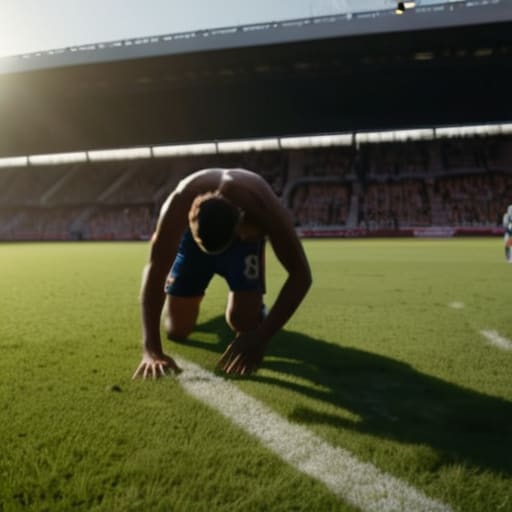
I’ve seen it a hundred times on a Sunday morning. You’ve got a side that looks sharp for sixty minutes—compact, pressing well, winning the second balls—and then, suddenly, the middle of the park just evaporates. It isn’t usually a lack of desire; it’s the declining aerobic capacity in football catching up to them. When that engine starts to sputter, players stop making the recovery runs that keep a formation intact. They start standing still, watching the game go past them, and suddenly your two central midfielders are playing a game of keep-away while the opposition exploits the massive gaps left behind.
It’s a physiological reality that you can’t coach away with a motivational speech at half-time. As the years tick by, the body’s ability to clear lactic acid and sustain high-intensity bursts drops off a cliff. You’ll notice your midfielders aren’t just slower; they’re less efficient with every stride. They start taking the easy route, opting for a lateral pass rather than the vertical run that breaks the line, simply because the tank is empty. If you aren’t accounting for this shift in your tactical setup, you’re essentially asking them to run a marathon in heavy boots.
Neuromuscular Adaptation in Aging Athletes

It isn’t just about the lungs; it’s about the connection between the brain and the muscle. When you’re twenty, your nervous system is like a high-speed fibre optic cable—you think “sprint,” and your legs are already halfway there. But as the years pile up, that signal gets a bit more static. You start to notice it in those split-second moments: the half-yard lost when turning a defender, or that millisecond of hesitation when a ball bobbles awkwardly in the mud. This neuromuscular adaptation in aging athletes means your body isn’t quite as efficient at recruiting those fast-twitch fibres that make the difference between a clean tackle and a lunging mistake.
The danger here isn’t just being a second slower; it’s the loss of coordination that leads to the dreaded “snap.” When the brain and the muscle aren’t communicating perfectly, you lose the ability to stabilize your joints during sudden changes of direction. If you aren’t intentional about maintaining explosive power in older age through specific, controlled strength work, you aren’t just losing your pace—you’re inviting a hamstring tear or a rolled ankle. You can’t just out-run the decline anymore; you have to out-train the rust.
Five Ways to Keep the Engine Running When the Parts Get Old
- Stop training for ninety minutes and start training for the moments that matter. When you’re twenty, you can afford to waste energy jogging aimlessly; when you’re older, every unnecessary sprint is a debt you’ll have to pay back in the 80th minute. Focus on high-intensity, short-duration bursts that mimic the actual game.
- Prioritise “pre-hab” over rehab. I’ve seen too many lads wait until something snaps before they see a physio. You need to spend more time on stability and balance work—the boring stuff—than you do on the ball, because if your ankles and knees aren’t stable, your technical ability won’t matter a bit.
- Respect the recovery window. You can’t just play a hard session on a Tuesday and expect to be right on Saturday like you used to. If you aren’t sleeping properly and eating like you actually care about your body, you aren’t “training,” you’re just breaking yourself down.
- Use your head to save your legs. As the explosive pace drops off, your positioning has to become elite. You can’t win a race to the ball anymore, so you’d better be standing where the ball is going to be before the opponent even thinks about running. Intelligence is the best substitute for a fast twitch.
- Don’t ignore the “hidden” fatigue. If a player tells me they’re fine but they’ve been working ten-hour shifts or haven’t had a proper night’s sleep in three days, I don’t believe them. Ageing players have much less “buffer” for life’s stresses; if they’re tired off the pitch, they’re useless on it.
The Bottom Line: Managing the Decline
Stop training for ninety minutes and start training for the moments that matter; if your lungs can’t handle the constant running anymore, you better ensure your positioning is so sharp that you aren’t forced to chase shadows in the first place.
Respect the recovery time, not because you’re being soft, but because your nervous system isn’t the same machine it was at twenty; if you don’t give the body the window it needs to reset, you’re just inviting a hamstring tear that’ll keep you on the sidelines for six weeks.
Focus on efficiency over effort; as the raw speed fades, your game has to become about reading the play two steps ahead so you’re standing in the right place before the ball even arrives, rather than trying to outrun a nineteen-year-old who hasn’t learned how to use his brain yet.
The Reality of the Long Game
Look, I’m not going to sugarcoat it: the math of the human body eventually catches up to you. We’ve talked about how that aerobic engine starts to sputter in the final twenty minutes and how those split-second reactions—the ones that used to be instinct—start to feel a fraction of a second behind the play. When your capacity to recover drops and your nervous system isn’t firing quite as sharply as it did when you were twenty, you can no longer rely on purely outrunning the opposition. If you try to play the same high-octane, end-to-end game you played a decade ago, you aren’t just going to lose; you’re going to end up in my physio’s office with a torn hamstring. You have to stop fighting the decline and start adapting your game to fit the tools you actually have left in the shed.
But don’t go thinking the end is in sight just because your sprint speed has dipped. Some of the best players I’ve ever coached were the ones who realized that when you can’t run more, you have to think more. Ageing forces you to trade chaos for composure. It turns you into a player who reads the game two passes ahead, someone who uses positioning to cheat the clock and intelligence to bypass the need for a sixty-yard dash. You might not be the fastest man on the pitch anymore, but if you learn to master the geometry of the game, you can still be the most influential. The legs might get heavy, but the brain is where the real football happens.
Frequently Asked Questions
If my players are losing their sharpness, is it a fitness issue or have they just lost that split-second instinct for the game?
It’s usually both, but you’re looking at the wrong side of the coin. If they’re gasping for air, that’s your conditioning. But if they’re standing still while the ball rolls past them, that’s the nervous system slowing down. When the brain takes a millisecond longer to process the pass, the body reacts late. Don’t just run them laps; you need to sharpen their reaction times under fatigue, or they’ll never find that edge again.
How do I adjust my training drills to keep the intensity high without breaking their bodies before the match even starts?
Stop trying to replicate a ninety-minute slog in a Tuesday night session. You aren’t training for a marathon; you’re training for football. Switch to shorter, high-quality intervals with longer recovery windows. Instead of constant running, use small-sided games with specific constraints—tight spaces, quick transitions. It keeps the heart rate up and the brain engaged, but it’s the difference between a controlled burn and a forest fire that leaves your players’ legs useless by Saturday.
Can a player actually compensate for declining physical speed with better positioning, or is that just something we tell ourselves to feel better?
It’s a bit of both, isn’t it? If you’re just telling yourself that to mask the fact that you’re getting bypassed, you’re lying. But if you actually use your head, it’s a legitimate survival tactic. You can’t win a footrace against a twenty-year-old anymore, so you stop running the race. You read the pass before it’s played. It isn’t a magic fix, but smart positioning buys you the seconds your legs can no longer provide.
