I’ve sat through enough “team-building” seminars in drafty community halls to know that a group of lads doing trust falls in a gymnasium has absolutely nothing to do with how to build team cohesion on a pitch. You can spend a fortune on fancy retreats and psychological workshops, but none of that matters when you’re two goals down, the wind is whipping sideways, and your center-back decides he’s too tired to track a runner. Real connection isn’t forged in a classroom; it’s built in the uncomfortable moments when the lungs are burning and the players have to decide whether to look for their teammate or just protect themselves.
I’m not here to sell you on some expensive, high-concept theory that falls apart the moment a heavy tackle lands. I’m going to tell you how we actually do it on the training ground—through drills that demand communication and shared responsibility. I’ll show you the practical, unvarnished truth about creating a squad that doesn’t just play alongside one another, but actually plays for one another when the pressure is on.
Why Psychological Safety in Teams Prevents Mid Game Meltdowns
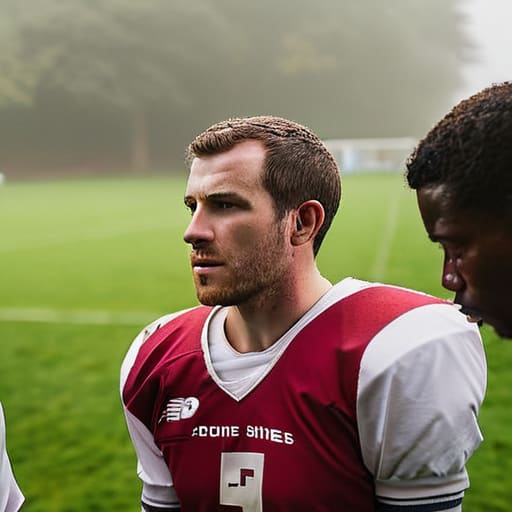
I’ve seen it a hundred times on a Sunday morning: your team is playing well, the shape is solid, and then one lad makes a heavy touch or misses a simple interception. Suddenly, the air goes out of the balloon. Instead of a quick word of encouragement, you get finger-pointing, heavy sighs, or—worst of all—dead silence. That’s not a fitness issue; that’s a failure of psychological safety in teams. When a player is terrified of being berated by his teammates or the gaffer for a single mistake, he stops taking risks. He plays “safe,” which in football terms means he plays small, stays static, and waits for something bad to happen rather than trying to make something good happen.
If you want to stop those mid-game meltdowns, you have to realize that improving group dynamics starts with how much grace you allow for error. A squad that trusts one another won’t crumble when the pressure mounts in the second half. They’ll pick each other up because they know the mistake isn’t a death sentence. If your players are too busy looking over their shoulders to see who’s judging them, they aren’t playing the game—they’re playing for their own reputation.
Improving Group Dynamics When the Rain Starts Pouring
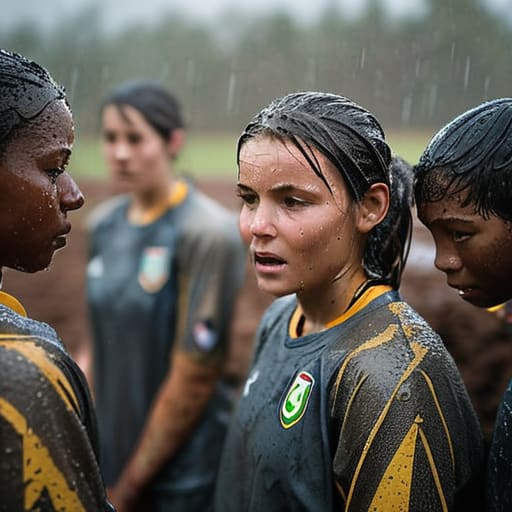
Look, I’ve spent more Sunday mornings standing in freezing sleet than I care to admit, watching a group of talented kids fall apart simply because the conditions turned sour. When the pitch turns into a swamp and the wind is cutting through your layers, that’s when the cracks show. You’ll see the talented striker stop tracking back because he’s frustrated, or the defender stop talking because he’s too busy shivering. This is where improving group dynamics moves from a theoretical concept in a coaching manual to a matter of survival. You cannot manufacture unity when things are easy; you find it when things are miserable.
If you want to see if your players actually have each other’s backs, wait for the weather to turn. Real team trust building exercises don’t happen in a heated sports hall with music playing; they happen when you demand a winger sprint sixty yards through a puddle to cover a teammate. I’ve learned that a squad’s true character isn’t found in their technical drills under the sun, but in how they communicate when they are cold, wet, and losing. If they stop talking when the rain starts, you haven’t built a team; you’ve just assembled eleven individuals in the same colored shirts.
Five Ways to Stop Your Players From Playing Like Strangers
- Stop the “I” in training. If your drills are just individual skill circuits where kids stand in a line waiting for their turn, you aren’t building a team; you’re running a collection of soloists. Every drill should require a pass, a call, or a movement to support a teammate. If they aren’t forced to interact to succeed, they won’t interact when the pressure is on.
- Demand communication that isn’t just shouting. I don’t care if they’re screaming “Man on!”—that’s the bare minimum. I want to see them giving directions, offering encouragement when a mate misses a sitter, and talking through the shape. If they can’t talk to each other in a controlled session on a Tuesday, they certainly won’t find the words when they’re gasping for air in the 75th minute.
- Shared suffering builds more than a lecture ever will. You don’t need to run them into the ground—I’m a coach, not a drill sergeant—but there is something to be said for a session that is genuinely difficult. When a group of players works through a grueling, high-intensity block together, they develop a silent understanding. They learn that the person next to them isn’t going to quit, and they won’t either.
- Fix the hierarchy of blame. In my experience, the moment a player points a finger at a teammate for a mistake, the cohesion is dead. You have to set the standard early: we win as a unit, and we lose as a unit. If a defender gets turned, the midfielder should be looking at how they failed to cover, not how the defender failed to tackle.
- Know who is actually in your squad. You can’t build cohesion if you don’t know what makes your players tick. I’ve spent thirty years learning that the quietest kid in the group is often the one who holds the spine of the team together, provided you give them the right role. Don’t just coach the loudest players; coach the whole group, or you’ll find yourself with a team of stars and no actual team.
The Hard Truths of Holding a Squad Together
Stop looking for magic drills; cohesion is built in the small, boring moments when things are going well, not just when you’re trying to fix a crisis at half-time.
If your players are too afraid of making a mistake to actually try a pass, you haven’t built a team—you’ve built a group of individuals playing to avoid blame.
Real communication isn’t about tactical shouting; it’s about whether your players are actually checking in on each other when the lungs are burning and the energy is gone.
The Reality of the Long Game
Look, we’ve covered a lot of ground, from the mental safety required to stop a meltdown to the sheer grit needed when the pitch turns into a swamp. But if you take nothing else away, remember this: cohesion isn’t something you can manufacture with a single “fun” drill or a fancy team-building afternoon in a hotel lobby. It is built in the small, unglamorous moments—the way your players pick each other up after a heavy touch, or how they communicate when they’re absolutely spent in the dying embers of a match. You can have all the tactical sophistication in the world, but if your players don’t trust the person standing next to them, your formation is just a collection of individuals running in different directions.
At the end of the day, coaching isn’t about being the smartest person on the touchline; it’s about creating an environment where players feel they can fail without being cast out. You won’t see the results of your hard work in a single training session, and you certainly won’t see them in a shiny spreadsheet. You’ll see them in that split second when a defender tracks back to cover a teammate’s mistake instead of pointing a finger. Build the bond first, and the football will follow. Now, get out there, stop overthinking the jargon, and go lead your lot.
Frequently Asked Questions
How do I build this kind of connection with a squad of players who only see each other once a week for ninety minutes?
You can’t manufacture brotherhood in ninety minutes, so stop trying to force it with “icebreakers” that make everyone roll their eyes. Connection comes from shared struggle. If you want them to care about each other, make them work for it. Use high-intensity drills where they have to rely on a teammate to succeed—passing under pressure, or a small-sided game where a goal only counts if everyone is across the halfway line. Shared sweat builds more than small talk ever will.
If I have one or two "star" players who think they're bigger than the club, how do I stop them from poisoning the group dynamic?
Look, I’ve seen it a hundred times. You’ve got one lad who’s twice as good as everyone else, and suddenly he thinks he’s the manager. The problem isn’t his talent; it’s his attitude. You have to make it clear: the badge is bigger than the name on the back of the shirt. If they refuse to press or stop tracking back because they’re “above it,” they sit on the bench. Talent gets you on the pitch, but character keeps you there.
At what point do these "social" or "cohesion" drills actually become a waste of time that should have been spent on ball work?
If you’re standing there watching them play a game of “name three things you like about your teammate” while the ball sits idle in the corner, you’ve lost the plot. Cohesion drills are a waste of time the moment they stop involving a football. If the drill doesn’t require them to communicate while under physical or technical pressure, it’s just a circle of chat. If they aren’t talking because they’re trying to solve a problem with the ball, you’re just wasting daylight.
