I’ve spent half my life standing on waterlogged pitches in November, watching “expert” coaches walk around with clipboards and expensive iPads, lecturing kids about ‘spatial awareness’ and ‘cognitive load’ while the players look like they’d rather be anywhere else. If you think you can solve the mystery of how to coach teenagers by downloading a fancy tactical app or reciting a PhD thesis on sports psychology, you’re wasting your time and theirs. The truth is, those kids don’t care about your jargon; they care about whether you’ve actually seen them play and whether the session is worth the effort of getting off the sofa.
I’m not here to sell you a revolution or a new way to reinvent the wheel. What I am going to do is give you the stuff that actually works when the rain is coming down sideways and your star midfielder is more interested in his phone than the ball. I’ll tell you how to command respect without being a tyrant, how to keep them moving when their brains start to wander, and how to build a team that actually stays disciplined in the final ten minutes. This is the unvarnished reality of the job.
Effective Communication With Adolescents When Theory Fails

You can read all the books you want on adolescent psychology in sports, but none of them will prepare you for the look a sixteen-year-old gives you when you try to explain a tactical shift for the fifth time in ten minutes. At that age, they aren’t just resisting your instructions; they’re resisting the feeling of being managed. If you stand there with a whistle and a clipboard acting like a headmaster, they’ll tune you out before you’ve even finished your first sentence. The trick isn’t about having the perfect lecture; it’s about building rapport with teen athletes by showing them you actually see the game the way they do.
Stop treating them like children who need direction and start treating them like players who need context. If a drill isn’t working, don’t just bark a correction. Ask them why they think the space opened up or why the pass went astray. You aren’t there to be their best friend, but you do need to be someone they respect enough to listen to when the rain is coming down and their legs are heavy. Real mentorship happens in the gaps between the drills, not during the scripted speeches.
Building Rapport With Teen Athletes in the Rain
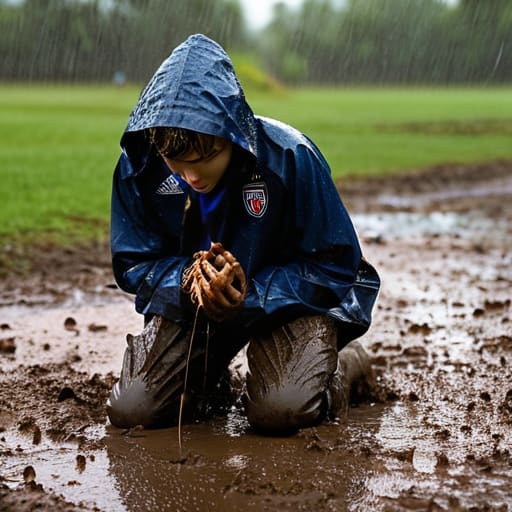
You can read all the books you want on adolescent psychology in sports, but none of them will tell you how to handle a fifteen-year-old who is shivering, soaked to the bone, and convinced his life is over because he missed a sitter in the previous game. When the weather turns foul and the pitch becomes a swamp, your authority doesn’t come from a clipboard or a whistle; it comes from being in the trenches with them. If you’re standing under a massive umbrella while they’re battling the elements, you aren’t a coach—you’re a spectator.
Building rapport with teen athletes isn’t about being their best mate or joining their group chats; it’s about showing them that you value the effort more than the outcome. When the wind is biting, I don’t start with a lecture on tactical positioning. I start by acknowledging that it’s miserable out there. A bit of shared misery goes a long way. If you can show them that you’re willing to get your boots muddy and stand in the same freezing rain, they’ll actually start listening when you tell them to tighten up their defensive line.
Five Truths for the Touchline: What Actually Works When the Whistle Blows
- Stop the lectures and start the repetitions. If you’re standing there for ten minutes explaining the nuances of a transitional phase while fifteen teenagers are picking at the grass or looking at their watches, you aren’t teaching; you’re just making noise. Keep your instructions to thirty seconds or less. If they haven’t grasped it by then, they won’t grasp it in five minutes, so just get the ball moving and correct them while they’re actually playing.
- Give them a “why” that isn’t academic nonsense. Don’t tell them they need to “maintain structural integrity in the mid-block”—they’ll tune out immediately. Tell them that if the midfielder doesn’t step up to close that gap, the opposition’s number ten is going to have a field day and they’ll be chasing shadows for the rest of the half. They need to understand how a drill affects their actual ability to win the ball or keep it.
- Manage the social hierarchy, not just the players. In a group of teenagers, there’s always a social engine driving the session. If you ignore the influential kid who’s being a distraction, the rest of the group will follow his lead. You don’t need to be their best friend, but you do need to win their respect by being the most prepared person on the pitch. If you’re organized, they’ll settle.
- Demand accountability for more than just their skill. I don’t care if a kid can’t hit a forty-yard diagonal pass on a Tuesday night, but I do care if he hasn’t bothered to warm up properly or if he’s walking through a drill because he thinks it’s “boring.” You can coach technique, but you can’t coach a lack of effort. Set the standard for the small things—punctuality, kit, and attitude—and the rest usually follows.
- Use mistakes as data, not as a lecture. When a player misses a simple interception or loses their shape, don’t immediately blow the whistle and call them out in front of the group. That’s the quickest way to make a teenager shut down. Instead, ask them a question: “Where was your cover when that pass went through?” Let them find the error themselves. If they own the mistake, they’ll actually learn how to fix it next time.
The Reality Check: What Actually Sticks
Stop the lecture. If you’re standing there with a clipboard talking about ‘spatial awareness’ for ten minutes, you aren’t coaching; you’re a narrator. Give them a problem to solve in a drill, let them fail, and then show them the solution. They’ll remember the correction if they’ve actually felt the frustration of getting it wrong first.
Respect the person, not just the player. A teenager isn’t just a set of legs and a lungs capacity; they’ve got exams, broken hearts, and bad moods. If you ignore the human being to focus solely on the athlete, they’ll stop giving you their best on the pitch. You can’t coach a kid who feels like you’re just another authority figure barking orders.
Consistency beats charisma every single time. You don’t need to be the “cool coach” who lets them skip fitness to be liked. You need to be the one who shows up at 7:00 AM in a downpour, follows the same principles every Tuesday, and keeps your word. They might roll their eyes at your drills, but they’ll trust a coach who is predictable and principled.
The Long Game
At the end of the day, coaching teenagers isn’t about mastering some complex tactical periodization model or having the perfect answer to every question they throw at you. It’s about the basics we’ve discussed: talking less and showing more, building a rapport that survives a Tuesday night session in the wind, and knowing when to stop lecturing and start letting them play. If you can manage to communicate clearly without sounding like a textbook, and if you can earn their respect by being as consistent as the rain, you’ve already done more than most. Remember, if they aren’t engaged, you aren’t coaching; you’re just making noise in a car park.
I’ve stood on those touchlines for thirty-five years, and I can tell you that the players who leave a lasting impression aren’t always the ones with the most talent. They are the ones who felt seen by their coach when they were struggling with something far more complicated than a missed tackle. You might feel like you’re shouting into a void sometimes, but the truth is that consistency is your greatest tool. Keep showing up, keep being honest, and keep focusing on the person as much as the player. You aren’t just building footballers; you’re helping them navigate the most difficult years of their lives, and that is work worth doing.
Frequently Asked Questions
How do I stop them from treating a tactical drill like a social hour when they're clearly more interested in who's texting them?
You can’t out-lecture a smartphone. If you try to win a shouting match against a group chat, you’ve lost. The trick is to make the drill so physically or mentally demanding that they don’t have the breath to check a notification. If they’re drifting, your drill is too static. Stop the session, bring them in close, and explain exactly how that lack of focus will cost them the game on Saturday. Then, get them moving.
When a player starts sulking because they've been moved from centre-forward to fullback, do I lecture them on the team's needs or just let them stew?
Don’t lecture them. If you start preaching about “the greater good of the squad,” you’ll lose them to the back of the bus before the whistle even blows. They don’t care about your tactical philosophy; they care about their ego. Instead, give them a specific, selfish reason to do it. Tell them the fullback role is where the game is won or lost on the transition. Make it a challenge, not a demotion.
How do you keep the intensity up in a session when you can see their energy flagging halfway through because they've spent all week in a classroom?
You can’t lecture them out of a slump. If they’ve been sat in a classroom for six hours, their brains are fried and their legs feel like lead. Don’t throw a complex tactical drill at them then; they won’t process it. Switch to something high-tempo and competitive—small-sided games with immediate stakes. If you see that glazed look in their eyes, stop the talking, tighten the pitch, and make them play. Movement cures lethargy.
