I’ve spent more Sunday mornings than I care to count standing on waterlogged pitches, watching coaches set up these ridiculous, expensive ladder drills that look more like a circus act than a football session. They’ll have kids dancing through plastic sticks, thinking they’ve mastered agility, only to watch them turn like a heavy-duty lorry the moment a real opponent puts a bit of pressure on them in the final ten minutes. If you want to know how to improve change of direction, you have to stop training for the Instagram reel and start training for the actual game. A ladder won’t help a player plant their foot on a patch of mud and pivot to win a 50/50 ball; only real, reactive movement will do that.
I’m not here to sell you on some fancy new scientific metric or a piece of equipment that requires a PhD to use. What I am going to give you is a set of practical, battle-tested methods that actually work when the players are tired, the pitch is uneven, and the game is on the line. We are going to focus on the mechanics that survive the chaos of a real match, ensuring your players aren’t just fast in a straight line, but deadly when they have to turn.
Mastering Lateral Movement Mechanics Under Pressure

Most coaches make the mistake of treating a change of direction like a sprint in a straight line, just with a little bend in the middle. They’ll have their players dancing through a forest of plastic cones in a perfectly controlled environment, but that’s not football. In a real match, nobody is waiting for you to finish your little pattern before they step into your space. To get this right, you have to focus on lateral movement mechanics while the brain is actually busy. If a player can’t find their center of gravity while someone is breathing down their neck, all the fancy footwork in the world won’t save them.
I’ve seen too many lads lose their footing because they haven’t mastered the art of the brake. You can’t turn if you can’t stop. This is where most sessions fail; they focus on the acceleration but ignore the eccentric strength for deceleration. If your players can’t absorb the force of their own momentum, they’ll just skid across the grass like a car on ice. You need to move away from predictable patterns and into reactive agility training, where the movement is dictated by a stimulus—a whistle, a color, or an opponent—rather than a pre-planned route.
The Truth About Footwork Drills for Speed and Stability
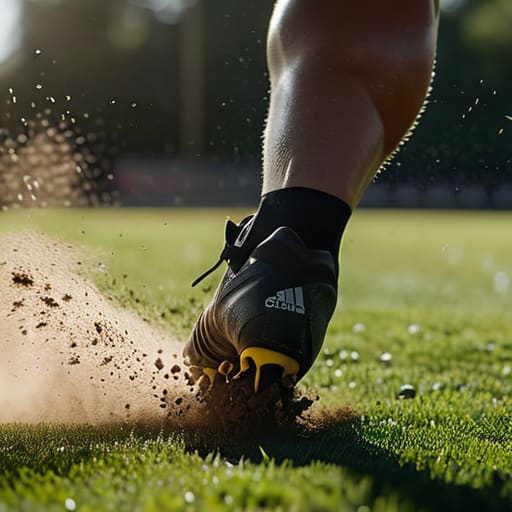
I’ve spent more hours than I care to admit watching kids sprint through ladders like they’re trying to escape a swarm of bees. It looks impressive, and it makes for a decent bit of footage for the club’s website, but let’s be honest: nobody wins a match by dancing through plastic rungs. If you want real results, you have to stop treating footwork as a rhythmic gymnastics exercise and start treating it as a way to manage force. Most of these sessions lack any real focus on eccentric strength for deceleration, which is the actual science of why a player can stop on a dime instead of sliding ten yards past the ball.
If you aren’t teaching them how to absorb the impact of their own momentum, you aren’t coaching; you’re just entertaining them. I’ve seen too many talented lads blow a ligament because they had the speed to get to the ball, but lacked the stability to plant their foot and turn. You need to move away from the rhythmic nonsense and into reactive agility training. Give them a stimulus—a whistle, a color, a movement from an opponent—that forces them to adjust their center of gravity mid-stride. That is where the real work begins.
Five rules for when the pitch turns into a swamp
- Stop chasing the ‘perfect’ line. I see coaches setting up these beautiful, geometric cone patterns that look lovely on a sunny afternoon, but the moment a player has to pivot while a striker is breathing down their neck, they fall apart. You need to train the transition, not the shape. If your drill doesn’t include a reactive element—like a whistle, a shout, or a changing direction based on a partner’s movement—you aren’t training change of direction; you’re just training a dance routine.
- Check the center of gravity, not just the feet. You can have the quickest feet in the county, but if a player tries to turn while standing tall like they’re waiting for a bus, they’ll lose their balance every single time. I don’t care how fast they are; if they haven’t learned to drop their hips and get that weight low before the turn, they’re useless in a real match. Teach them to get low before they go fast.
- The ‘Deceleration’ secret. Everyone wants to talk about the burst of speed after the turn, but nobody talks about the braking. If a player can’t stop themselves effectively, they can’t change direction. I spent years watching lads blow their hamstrings because they tried to pivot while moving at full tilt without any ability to absorb the force. If they can’t decelerate, they can’t maneuver.
- Stop ignoring the surface. If you only train on pristine, flat artificial turf, your players are going to be lost when they hit a heavy, waterlogged grass pitch in November. I’ve seen perfectly good technical players look like they’ve never seen a football before because they don’t know how to adjust their footing on uneven ground. Mix it up. If the pitch is a bit dodgy, use it as a training tool rather than a reason to cancel the session.
- Watch the last seventy-two hours. Before you label a player ‘clumsy’ or ‘slow to react’ during a change-of-direction drill, ask yourself what they’ve actually been doing. If they’ve spent the last two days playing video games until 2 AM or running around a shopping centre, their proprioception—their body’s sense of where it is in space—is going to be shot. You can’t coach agility into a player who is fundamentally fatigued by lifestyle, not just lack of training.
The bottom line for your next session
Stop obsessing over how many cones a player can weave through in a straight line; if they can’t maintain their center of gravity while a defender is breathing down their neck, the drill is a waste of your Saturday morning.
Real agility isn’t about being “quick on your feet” in a vacuum—it’s about how much force a player can absorb and redirect when the pitch is heavy and their lungs are burning in the 80th minute.
If you aren’t adding a reactive element—a whistle, a visual cue, or a moving opponent—you aren’t training football players, you’re just training gymnasts, and gymnasts don’t win matches.
Getting it right when the whistle blows
At the end of the day, improving change of direction isn’t about how many colourful cones you can weave through in a straight line while everyone is fresh. It’s about the mechanics of how a player drops their centre of gravity and plants a foot when their lungs are burning and the opposition is breathing down their neck. We’ve looked at why you need to ditch the Instagram-friendly patterns in favour of functional, reactive movements and why stability matters more than raw speed when the pitch turns into a swamp. If you focus on the foundation—the body position, the deceleration, and the ability to pivot under actual pressure—you won’t find yourself watching your midfielders stumble and lose their shape every time they have to turn on a dime.
I’ve spent three decades on sidelines where the wind bites and the players are more interested in their hair than their footwork, and I can tell you this: results don’t come from the easy sessions. They come from the gritty, repetitive, unglamorous work that builds a player’s confidence in their own limbs. Don’t look for a magic pill or a secret drill that will turn a sluggish winger into a lightning bolt overnight. Just focus on making them robust and decisive. If you train them to handle the chaos of a real match, the agility will follow. Now, get off the computer, get out onto the grass, and actually run the session.
Frequently Asked Questions
My players look sharp in drills, but as soon as there’s an actual opponent in front of them, they lose their balance—how do I bridge that gap?
Because your drills are too polite. In a training session, a cone doesn’t try to shoulder them off the ball or step in their path. To bridge that gap, you have to stop coaching in a vacuum. Introduce “reactive” elements—don’t tell them where to go; make them react to a teammate’s movement or a defender’s shadow. If they aren’t fighting for space or adjusting to a body in their way during Tuesday’s session, they won’t do it on Saturday.
Do I really need to worry about specific strength work, or can I get everything they need just by running more shuttle drills?
If you think a few more shuttles are going to replace a proper strength programme, you’re setting your players up for a trip to the physio. Shuttles build capacity, sure, but they don’t build the structural integrity needed to absorb a sudden change in direction. You can run until you’re blue in the face, but if the glutes and core aren’t strong enough to anchor that pivot, they’ll just fold when the pressure hits.
How do I know if my players are actually getting better at changing direction, or if they're just getting better at running around cones in a straight line?
If they’re only fast when the cones are set up in a perfect grid, they aren’t getting better; they’re just learning a dance routine. You’ll know they’ve actually improved when you see it happen in a small-sided game when they’re gasping for air. Look for that split-second decision to drop a hip and plant a foot to cut inside an opponent, rather than just following a line you drew in the dirt.
