I’ve sat through enough coaching seminars in drafty community halls to know that most “tactical experts” love to use fifty-pound words to describe something that is, at its heart, about simple discipline. They’ll hand you a glossy iPad presentation full of heat maps and complex geometric shapes, claiming they’ve unlocked the secret to how to defend as a compact block, but they’ve never actually had to fix a back four that’s playing twenty yards apart in a driving rainstorm. You don’t need a PhD in spatial geometry to stop conceding goals; you need to stop your midfielders from wandering around like they’re looking for their car keys while the opposition slices right through the middle.
I’m not here to sell you on some revolutionary new theory that will be obsolete by next season. My promise is much more grounded than that. I am going to show you the practical, gritty reality of squeezing the pitch, focusing on the specific movements that actually work when your players are tired and the pressure is on. We are going to strip away the jargon and focus on the fundamental connections between your lines, so you can finally stop watching your team collapse every time the opposition finds a pocket of space.
Mastering Defensive Line Spacing Before the Gaps Kill You
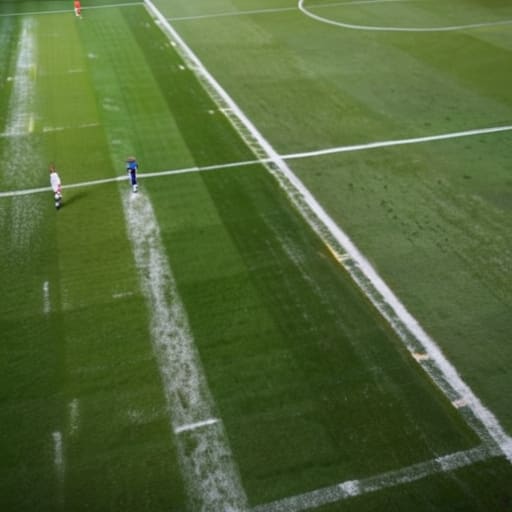
The problem isn’t that your players are lazy; it’s that they’re playing in silos. I’ve seen it a thousand times on a wet Tuesday night: your center-backs are glued to the penalty spot while your midfielders are wandering around the halfway line like they’re looking for their car keys. When you lose that connection, you aren’t defending a block; you’re just defending four separate islands. To stop this, you have to obsess over defensive line spacing. If the gap between your back four and your midfield becomes a highway, the opposition’s number ten is going to live there, and they’ll feast on your mistakes.
You cannot achieve maintaining vertical compactness if your players are terrified of being out of position. I tell my lads: if the ball moves up, you move up. If the ball drops, you squeeze. It’s about reducing space between lines so that the opponent feels like they’re playing in a phone box rather than an open field. If you can’t control the distance between your units, you’ll spend the entire ninety minutes chasing shadows instead of dictating where the game is played.
Maintaining Vertical Compactness When Your Midfield Loses Focus
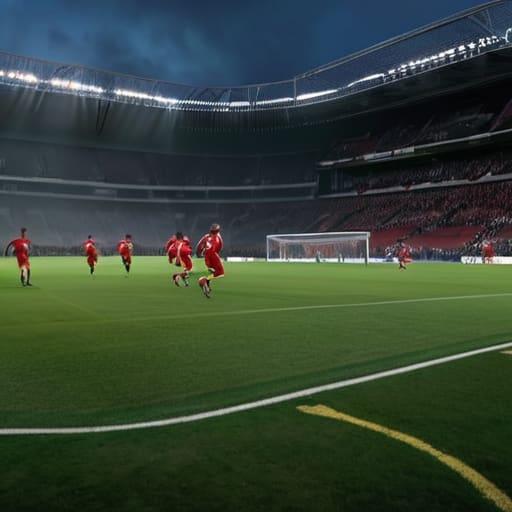
The problem isn’t usually your back four; it’s the cavernous hole between your defenders and your strikers that opens up the moment your midfielders get distracted. I’ve seen it a thousand times on a Sunday morning: the opposition wins the ball, your midfielders drop their shoulders, and suddenly there is enough room in the middle of the pitch to host a local village fete. Maintaining vertical compactness isn’t about everyone running in a straight line; it’s about the distance between your highest and lowest player. If that gap stretches beyond thirty yards, you aren’t a team anymore—you’re just eleven individuals playing separate games.
When the midfield loses focus, you lose the ability to control the tempo of the game. You cannot rely on zonal marking principles alone if the players occupying those zones are twenty yards apart. You need to teach your players that when the ball moves, the entire structure must breathe together. If the striker presses, the midfield must step up. If the midfield retreats, the defensive line cannot stay parked at the halfway line. You have to stop the “stretching” effect before the opposition finds that pocket of space and exploits it with a single vertical pass.
Five Hard Truths for Keeping Your Shape When the Pressure Rises
- Stop the “Ball-Chasing” Disease. I’ve seen it a thousand times: your center-back sees a loose ball and sprints out of position like he’s trying to win a 100m sprint, leaving a gaping hole behind him. A compact block isn’t about winning the ball immediately; it’s about staying in your zone and forcing the opposition to play around you, not through you.
- Trust Your Midfield to Squeeze. You can have the best defensive line in the county, but if your midfielders are standing ten yards behind the strikers, you don’t have a block—you have two separate teams. Your midfield has to move in relation to the ball and the defensive line. If the ball goes deep, they push up. If the ball is in their face, they drop. No exceptions.
- Communicate Before the Crisis. If I hear a coach shouting “Get back!” during a transition, he’s already lost. By then, the damage is done. Your players need to be talking about the gaps before the opponent enters them. “Step up,” “Drop,” or “Watch the runner”—if they aren’t talking in the 60th minute, they’ll be silent and lost in the 80th.
- Learn to Defend with Your Brain, Not Just Your Lungs. A compact block fails when players try to win every tackle. If you’re constantly lunging in and getting bypassed, you’re making it easy for the other side. Teach your players to jockey, to delay, and to shepherd the play into “dead” areas like the touchline. It’s about controlling the space, not just the man.
- Discipline Over Ego. Every player wants to be the hero who makes a sliding tackle in front of the fans. In a compact block, the hero is the player who stays disciplined, holds his position, and refuses to be drawn out of the shape. It’s not always glamorous, and it’s often boring, but it’s the only way you stop getting carved open by a simple diagonal pass.
The Three Things You’ll Actually Use on Sunday Morning
Compactness isn’t a magic spell; it’s a discipline of distance. If your back four are playing on the edge of the penalty area while your midfielders are still halfway across the halfway line, you aren’t a “block”—you’re just a group of players running in different directions.
Stop treating the ball like a magnet. A compact block works by controlling space, not by chasing the player on the ball. If your players are constantly lunging in and leaving their positions, they are creating the very gaps they’re trying to close.
Communication must be constant, not occasional. Your players need to be talking to each other about the distance between the lines long before the opposition starts their transition, otherwise, the collapse happens the moment someone gets tired.
The Hard Truth About Staying Compact
At the end of the day, a compact block isn’t some magical tactical formation you draw on a whiteboard and expect to work by osmosis. It is a matter of discipline. We’ve talked about why you can’t let your defensive line drift into no-man’s land and why your midfield can’t afford to go on a stroll when the ball is on the opposite flank. If you lose that vertical connection, you aren’t defending a space; you are just inviting the opposition to play through you. You have to respect the distance between your lines, keep the gaps small, and—most importantly—stop chasing the ball like headless chickens when the pressure starts to mount.
Look, I know it isn’t glamorous. No one gets a standing ovation for a well-executed ten-minute period of disciplined, narrow defending. It’s tiring, it’s mentally draining, and it’s much easier to just sprint toward the ball and hope for the best. But if you want to stop conceding those late goals that turn a hard-earned point into a bitter loss, you have to embrace the grind. Build that structure, trust the players standing next to you, and remember that true defensive solidity is earned in the details. Now, get back out there and make them work for every single inch of grass.
Frequently Asked Questions
What do I do when my defenders are playing a high line but my midfielders are too lazy to squeeze up with them?
You’ve got a recipe for a disaster. If your back four are playing high and your midfielders are strolling around the center circle, you aren’t “playing a high line”—you’re just handing the opposition a massive, unoccupied highway to your goal.
How do I stop the team from panicking and dropping too deep the moment the opposition starts playing long balls?
The moment they go long, your players stop playing football and start playing “survival.” They see a ball in the air and their instinct is to retreat to their own six-yard box. You have to teach them that the danger isn’t the long ball itself; it’s the space left behind it. Tell your midfielders to step up and meet the second ball rather than turning tail. If you drop too deep, you’re just inviting them to camp in your half.
If we’re playing with a single pivot, how do we keep the block compact without leaving the center-backs completely exposed?
The problem with a single pivot is that if he gets bypassed, your centre-backs are left standing in no man’s land. You can’t just tell them to “stay deep.” You need your two central midfielders to act like a protective screen, sitting just five yards in front of that pivot. If they’re wandering off to chase wide players, the block is broken. Keep the distances small; if the gap between your pivot and your back four grows, you’re dead.
