I’ve spent thirty-five years watching coaches buy expensive, high-tech agility ladders and specialized rebound nets, thinking they’ve found the holy grail of player development. They treat goalkeeping like a physics equation, all about angles and launch velocities, but they forget one thing: a goalkeeper is a human being standing in a freezing puddle while a striker is charging at them like a bull. If you’re looking for a complete guide to goalkeeping that promises you’ll turn your keeper into a Premier League star by next Tuesday using some fancy software, you’ve come to the wrong place. I don’t care about the theoretical mechanics of a dive; I care about whether your lad can actually catch a wet, heavy ball when his fingers are numb and the wind is whipping across a muddy pitch.
I’m not here to feed you the usual textbook nonsense that works perfectly in a climate-controlled gym but fails the moment the clouds break. Instead, I’m going to give you the unvarnished truth about what actually keeps the ball out of the net. We’ll talk about the positioning that saves energy, the mental grit required to forget a mistake, and the simple, repetitive drills that actually survive a Saturday morning kickoff. This is about building reliability, not highlight reels.
Mastering Diving and Catching Mechanics Under Pressure
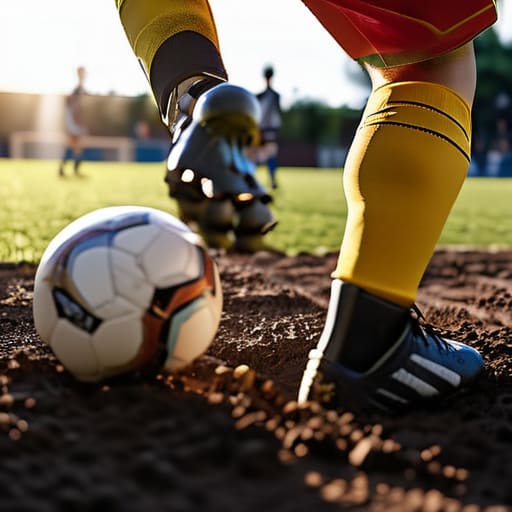
You can spend all afternoon watching YouTube clips of Premier League keepers making acrobatic saves, but that’s not how you learn diving and catching mechanics. In a real match, you aren’t diving on manicured grass; you’re hitting a patch of mud or a hard, uneven surface. I’ve seen too many young lads try to fly through the air like they’re in a movie, only to land awkwardly and end up with a bruised hip or a lost sense of confidence. The secret isn’t the flight; it’s the setup. If your footwork for soccer goalkeepers is lazy—if you’re flat-footed when the striker makes his move—you’re already beaten. You need that explosive, lateral step to create the angle before you even think about leaving your feet.
Once you’re in the air, the goal isn’t just to touch the ball; it’s to secure it. I tell my keepers that a save is only half a job if the ball spills right back into the danger zone. You need to focus on smothering the ball with your body, pulling it into your chest the moment your hands make contact. We don’t do fancy drills for the sake of it; we use goalkeeper reaction training drills that force you to make those split-second decisions while your lungs are burning and the wind is whipping through the goalmouth. If you can’t catch a heavy, wet ball under pressure, you aren’t a keeper—you’re just a spectator with a different jersey.
Footwork for Soccer Goalkeepers That Survives the Mud

I’ve seen more goals conceded because a keeper was “flat-footed” than because they lacked the actual hands to save them. You can have all the diving and catching mechanics in the world, but if your feet are stuck in the mud, you’re just a spectator in a different colored shirt. Most kids think goalkeeping is all about the spectacular leap, but it’s actually about the tiny, frantic adjustments made two seconds before the shot is even taken. If you aren’t constantly adjusting your set position, you’re already beaten.
When I run sessions, I don’t care how high they can jump; I care about how quickly they can move from a lateral shuffle to a controlled set. Proper footwork for soccer goalkeepers isn’t about dancing; it’s about economy of movement. You need to be able to navigate a crowded six-yard box without tripping over your own laces or, worse, your own defender. If you can’t master the short, sharp steps required to stay balanced on a slick surface, you’ll find that positioning becomes a guessing game rather than a science. Stop practicing standing still and start moving.
Five Truths They Don't Teach You in the Coaching Manuals
- Stop obsessing over the “perfect” dive and start teaching them how to land. I’ve seen more keepers end up in the treatment room because they were trying to look like a professional on TV instead of tucking their elbows and absorbing the impact. If they can’t land safely on a Tuesday afternoon, they won’t be diving at all come Saturday.
- The hands are useless if the feet are stuck in the mud. I don’t care how good their reflexes are; if they spend the whole game flat-footed, they’re just reacting to the ball rather than anticipating it. A keeper’s real strength is in their small, sharp steps that get them into position before the shot is even taken.
- Communication isn’t about shouting; it’s about being heard. I’ve sat through sessions where kids are screaming nonsense, and it’s just noise. Teach them to give short, sharp instructions—”Man on,” “Away,” “Left shoulder”—so the defenders actually have something to act on when the pressure is on.
- Don’t let them become specialists in nothing. A goalkeeper who only knows how to stay on their line is a liability. They need to understand the game from the perspective of a defender. If they don’t know where the space is or where the danger is coming from, they’re just a spectator with a different colored shirt.
- Mental toughness is built in the rain, not in the sunshine. You can’t coach a kid to bounce back from a mistake if they’ve only ever played in perfect conditions. They need to learn how to shake off a conceded goal and reset immediately, because the next attack isn’t going to wait for them to finish sulking.
What to Carry With You When the Whistle Blows
Stop chasing the perfect technique in a vacuum; if your handling isn’t sharp enough to deal with a ball that’s been sitting in a puddle for twenty minutes, your textbook mechanics are useless.
Footwork isn’t about looking agile or dancing through cones; it’s about being in the right position so you aren’t reaching desperately when the striker actually decides to shoot.
Mental toughness in a keeper isn’t some vague concept—it’s the ability to forget the goal you let in during the first ten minutes so you don’t let in three more in the second half.
The Last Line of Defence
At the end of the day, goalkeeping isn’t about mastering some complex, high-concept theory you read in a glossy magazine. It’s about the basics surviving the chaos. If you’ve spent any time on this guide, you know that it all boils down to how you handle the ball when it’s heavy with rain, how your feet move when the striker is bearing down on you, and how you stay composed when the pitch turns into a bog. You can have all the theoretical knowledge in the world, but if your mechanics are sloppy and your footwork is hesitant, you’ll find yourself picking the ball out of the net every single Saturday. Focus on the fundamentals, keep the drills practical, and for heaven’s sake, don’t neglect the repetition that builds true muscle memory.
Being a keeper is a lonely business, and I’m not talking about the tactical isolation, but the mental weight of it. You will make mistakes; you will concede goals that feel entirely undeserved. But the difference between a good keeper and a great one is what they do in the five minutes after a blunder. You don’t have time to sulk in the mud. You have to reset, find your line, and be ready for the next shot. It’s a test of character as much as it is a test of skill. So, get out there, embrace the cold, and remember that the game is won in the moments when nobody else is watching.
Frequently Asked Questions
How do I stop my keeper from freezing up when a striker is bearing down on them in a one-on-one?
It’s rarely a lack of talent; it’s a lack of decision-making speed. When a striker is charging, your keeper is busy thinking about the “what ifs” instead of the “what is.” Stop running drills where they just stand there. You need to train them to close the angle early and commit to a decision. If they hesitate, they’ve already lost. Get them comfortable with the physical contact, or they’ll keep shrinking when it matters.
Is it worth spending time on distribution drills if my kids can barely catch a basic cross?
Look, I’ll give it to you straight: no. If your keeper is treating a basic cross like a live grenade, don’t waste your Tuesday morning teaching them how to launch a forty-yard volley. You can’t build a roof on a house that hasn’t got any foundations. Get them catching, getting comfortable with the ball in their hands, and learning to command their box first. Distribution is useless if they aren’t even standing in the right place to start.
How do I manage a goalkeeper who has the talent but lacks the temperament to lead a back four?
Look, talent is easy; you can find a kid with reflexes in any park on a Sunday morning. But a keeper who stays quiet while his defenders wander off like lost sheep is a liability. Stop coaching his hands and start coaching his lungs. He needs to be the loudest person on the pitch. If he isn’t barking orders, he isn’t playing the position. Make him own the box, or he’s just a glorified shot-stopper.
