I’ve sat through enough coaching seminars to know that most people treat set-piece design like they’re trying to crack a government code. They’ll show you fancy heat maps, iPad animations, and spreadsheets that look like they belong in a bank, but they’ll never mention the fact that your winger is too exhausted to sprint and your center-half is staring at the clouds. I’ve seen plenty of “tactical geniuses” spend hours on a whiteboard, only to watch their entire plan fall apart because they didn’t understand the fundamental reality of how set pieces are planned when the players are shivering, the referee is a nightmare, and the opposition is playing dirty.
I’m not here to sell you on some expensive software or a “revolutionary” new way to stand in a crowd. I’m going to tell you how we actually build routines that work—the kind that survive when the lungs are burning and the pressure is on. We’re going to strip away the jargon and focus on the practical mechanics of movement, positioning, and intent. If you want a theoretical lecture, go find a university; if you want to know how to actually score from a corner on a Tuesday night in November, read on.
The Game Model Set Pieces That Actually Work
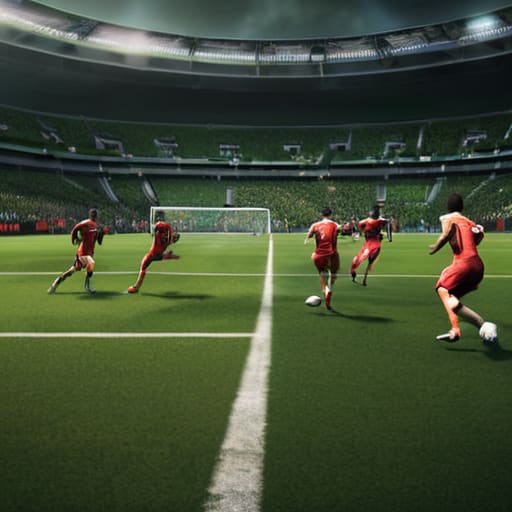
Most coaches treat set pieces like a separate little island, something you tack on at the end of a session when everyone is already looking at their watches. That is your first mistake. If your set pieces don’t fit your overall way of playing, they will fall apart the moment a player misses a header or a ball gets cleared. You need game model set pieces—routines that feel like a natural extension of your team’s movement during open play. If you play a high-pressing, aggressive game, your corner routines shouldn’t be a static line-up of players waiting for a whistle; they should be an extension of that aggression.
I’ve seen too many lads spend hours on complex, choreographed movements that look great on a whiteboard but vanish the second a defender gets a bit physical. Realistically, you want to focus on positional clarity and instinctive reactions. Instead of teaching a twenty-step routine, focus on your dead ball specialist roles and ensuring every player knows their primary zone and their secondary movement. If the first ball is headed out, your players shouldn’t be standing there looking at the referee; they should already be moving to squeeze the space.
Why Your Attacking Corner Routines Die in the Mud
The reason most attacking corner routines die in the mud isn’t because your players lack talent; it’s because your plan is too fragile. I’ve seen coaches spend an entire Tuesday afternoon perfecting a complex, choreographed movement that looks brilliant on a whiteboard but falls apart the second a defender breathes on your winger. If your routine requires five players to move in perfect synchronicity to work, you haven’t built a tactic, you’ve built a house of cards. When the ball hits a patch of uneven grass or a defender gets aggressive, the whole thing collapses because there is no “Plan B” baked into the movement.
You have to stop treating corners like a rehearsed dance and start treating them like a battle for space. Real set piece coaching drills should focus on creating chaos, not order. I want to see your players winning their individual duels and understanding their specific dead ball specialist roles regardless of whether the initial run is blocked. If your players are standing around waiting for the “perfect” delivery to execute a pre-planned move, they’ve already lost. You need to train them to react to the scrap, not just the script.
Five Truths About Planning Before You Ever Pick Up a Cones Bag
- Stop designing routines for players who don’t exist. I’ve seen coaches spend three weeks perfecting a complex “blocker” routine only to realize their tallest lad has a turning circle like a tractor and your quickest winger is too terrified of contact to make the run. Plan for the eleven people standing in front of you on Sunday morning, not the dream team you wish you had.
- Focus on the ‘Second Ball’ rather than the ‘Perfect Delivery’. You can spend all day practicing a whip into the six-yard box, but if you haven’t planned where your midfielders are positioned to react when that ball is headed out, you’ve wasted your breath. A set piece isn’t a single moment; it’s a sequence, and most teams fail because they stop playing the second the ball leaves the kicker’s foot.
- Identify your ‘Chaos Creators’ early. In every squad, there is one player who is rubbish at everything but possesses a terrifying ability to cause a nuisance in a crowded box. Don’t try to turn him into a tactical mastermind; just give him a specific job—disturbing the keeper or standing in the goalkeeper’s line of sight—and build your plan around the mess he’s going to make.
- Build your plan around ‘Trigger Points’, not scripts. If you give a kid a ten-step choreographed routine, he’ll freeze the moment a defender bumps him. Instead, teach them triggers: “If the ball is low, we attack the near post; if it’s high, we drop to the edge of the area.” Give them a framework that allows them to react to the reality of the pitch rather than a mental script.
- Test your defensive shape when the players are exhausted. If you only practice your defensive wall and zonal marking during the first ten minutes of a session when everyone is fresh, you are lying to yourself. A set piece plan is only as good as it is when your players are sixty minutes deep into a match, their lungs are burning, and they just want to go home.
The Reality Check: What You Actually Need to Take Away
If your set-piece routine relies on perfect timing and a “perfect” delivery, you’ve already lost; plan for the chaos, the heavy ball, and the inevitable mistake.
Stop treating set pieces as a separate event from the game; if your players aren’t physically prepared to fight for a second ball when they’re exhausted in the 80th minute, no amount of clever movement will save you.
A set-piece plan is only as good as its simplicity—if your players have to think too hard about their positioning while they’re shivering in the wind, they’ll miss their mark every single time.
The Reality of the Final Whistle
At the end of the day, planning a set piece isn’t about drawing a complex web of arrows on a whiteboard that looks impressive in a quiet video analysis room. It’s about knowing that your players will be exhausted, their lungs will be burning, and their concentration will be shot by the eightieth minute. If your plan relies on a player making a perfect, choreographed sprint while they’re shivering in a muddy half because they haven’t had a decent meal in six hours, you haven’t planned a routine; you’ve planned a fantasy. You need to build systems that rely on spatial awareness and simple, repeatable movements rather than magic tricks. If the drill doesn’t survive a heavy pitch and a tired squad, it isn’t worth the breath you used to explain it.
Don’t get caught up in the pursuit of the “perfect” routine that only works once every ten games. The best coaches I’ve known—the ones who actually moved the needle—didn’t win by inventing some revolutionary tactical masterstroke. They won because they taught their players how to read the chaos and react when the initial plan inevitably fell apart. Set pieces are often the most disorganized moments in football, so stop trying to engineer perfection and start training for adaptability. Get out there, get the cones out, and make sure your players know exactly what to do when the ball hits the ground and the rain starts coming down sideways.
Frequently Asked Questions
How much time should I actually spend on set-piece drills during a standard midweek session without neglecting the basics?
Look, if you’re spending forty minutes on corners and leaving the kids without a single ball at their feet for passing patterns, you’ve lost them. You’ll have a team of specialists who can’t play a five-yard pass under pressure. Aim for fifteen, maybe twenty minutes tops. Use the end of the session when the legs are heavy. If they can’t execute the routine while they’re tired and shivering, they won’t do it on a Saturday.
If I only have a handful of players who show up for training, how do I plan routines that won't fall apart when the full squad isn't there?
Stop trying to rehearse a choreographed dance routine with five people. You can’t practice a complex ten-man block if half the block is at home doing homework. Instead, focus on the principles: positioning, timing, and the “trigger.” Work on the individual mechanics—how the near-post runner moves or how the back-post player finds space. If the fundamentals are sound, the routine will survive the missing bodies. Build the habits, not the script.
How do I decide whether to teach specific, rehearsed movements or just teach the players how to react to where the ball lands?
Look, if you’re teaching rehearsed patterns, you’re teaching them how to play a video game, not football. The moment a defender deviates by six inches or the wind catches the ball, your “perfect routine” is dead. Teach them the principles—where to stand, how to attack the space, and how to react to the second ball. If they can’t react to the chaos of a landing ball, they aren’t playing football; they’re just following choreography.
