I’ve lost count of how many times I’ve seen a coach spend three weeks trying to teach a kid how to hold a defensive line, only to watch the whole thing crumble the moment a striker puts a bit of shoulder into them. They think it’s a tactical failure, but it’s usually just a physical one. People love to throw around expensive jargon about “functional stability” and “kinetic chains,” but they miss the point entirely. If you want to understand how core training helps football, stop looking at it as a way to get a six-pack for the summer and start seeing it for what it actually is: the only thing keeping a player upright when the game gets heavy.
I’m not here to sell you on some fancy, high-tech gym circuit that requires a subscription and a prayer. I’m going to tell you exactly what works when you’re standing on a muddy pitch in November and your midfielder is getting bullied off the ball. I’ll show you why a strong middle is the difference between a player who dictates the tempo and one who spends the last twenty minutes fighting for balance instead of fighting for the ball. No fluff, no hype—just the practical truth.
Why Trunk Stability Is Your Only Defense Against Fatigue

I’ve seen it a thousand times on a Sunday morning. You’ve got a team that looks sharp for forty-five minutes, but as soon as the legs get heavy, their posture goes to rot. They start leaning, their hips drop, and suddenly they’re playing the game upright like they’re waiting for a bus rather than competing for a ball. This isn’t just a lack of “fitness” in the way people usually mean it; it’s a failure of the chassis. If the trunk isn’t stable, every bit of energy your players expend is being leaked through a wobbly middle. You can have the best lungs in the league, but if you can’t maintain your shape, you’re just wasting effort.
When the game gets physical in those final fifteen minutes, athletic performance and trunk stability become the only things separating a winner from a player who’s just stumbling around. A solid core ensures the efficient transfer of force from the legs through the rest of the body. Without it, your players will lose every shoulder-to-shoulder battle and every contested header, simply because they can’t hold their own ground.
The Real Link Between Athletic Performance and Trunk Stability
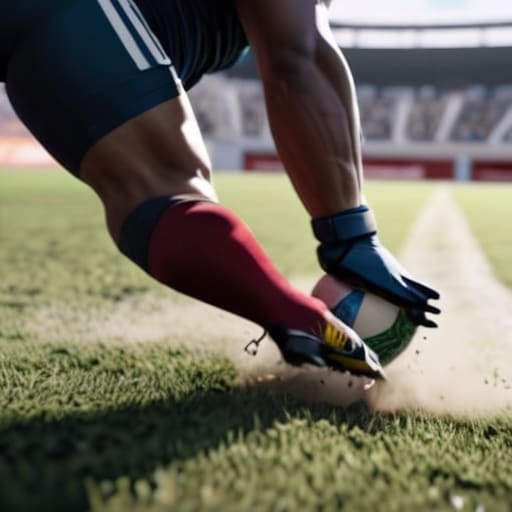
Look, I’ve seen it a thousand times. You’ve got a winger with lightning pace, but the moment he tries to cut inside or shield the ball from a defender, he looks like a newborn calf on ice. That isn’t a lack of speed; it’s a lack of connection. If your midsection is soft, you’re leaking energy. You can have the strongest legs in the county, but if your torso can’t act as a rigid bridge, you’ll never achieve a proper transfer of force in contact sports. Every ounce of power your legs generate just dissipates into a wobbly spine instead of being driven into the ball or the opponent.
To get real results, you have to understand that athletic performance and trunk stability are two sides of the same coin. It’s about how well you can move your limbs while keeping your center of gravity under control. When a player can maintain a solid frame, they can turn sharper, jump higher, and—most importantly—take a hit without losing their footing. If you aren’t training the core to handle these sudden, violent shifts in direction, you aren’t training a footballer; you’re just training a sprinter who’s waiting to get knocked off the ball.
Five Ways a Strong Midsection Actually Changes the Game
- Stop chasing the ball and start holding your ground. If a player gets bumped in the middle of a transition and ends up on the grass, that’s not a foul—that’s a lack of stability. A strong core means when they collide with an opponent, they stay upright and keep the ball, rather than becoming a spectator for the next thirty seconds.
- Better balance leads to cleaner touches. I’ve seen plenty of talented kids lose the ball simply because they were leaning too far forward or backward when the pass arrived. If your trunk is stable, your center of gravity stays controlled, which means you aren’t fighting your own body just to make a simple five-yard pass.
- It’s the engine room for your power. You don’t kick a ball with just your foot; you transfer energy from the ground, through your hips, and out through your leg. If there’s a “leak” in the middle—meaning a weak core—all that power evaporates before it ever hits the ball. A solid midsection makes every strike more efficient.
- Deceleration is where the real skill lies. Anyone can sprint, but the players who make it in this game are the ones who can stop on a dime and change direction without stumbling. That ability to brake suddenly and pivot requires a core that can handle the sudden shift in force without your torso collapsing.
- It protects your players from the inevitable. Football is a game of repetitive, violent movements. If a player’s core is a sieve, their lower back and hips will eventually start paying the price. We train the trunk not just to win more tackles, but to ensure they aren’t spending their twenties in a physio’s office.
The Bottom Line for Your Next Training Session
Stop treating core work like a secondary chore to be squeezed in at the end of a session; if your players can’t hold their shape, they can’t hold their position, and all the tactical instructions in the world won’t stop a player from drifting out of the game when they’re physically spent.
Real stability isn’t about how many sit-ups a lad can do in a row—it’s about whether he can take a shoulder to the chest in a challenge and stay on his feet, or whether he’s going to fold like a deckchair the moment contact is made.
If you want to stop that inevitable collapse in the final fifteen minutes, you need to build a body that can maintain its structural integrity when the lungs are burning; a strong trunk is the bridge that allows the strength in their legs to actually reach their feet.
The Bottom Line
Look, we can talk about tactical shapes and passing lanes until we’re blue in the face, but if your players are physically crumbling before the whistle blows, none of it matters. We’ve established that a strong core isn’t about having six-pack abs for the cameras; it’s about building a functional anchor that allows a player to shield the ball under pressure and maintain their technical precision when the lungs are burning. If you ignore the trunk, you aren’t just inviting fatigue—you are actively inviting injury and tactical chaos. You can’t build a house on a foundation of sand, and you certainly can’t build a winning football team on a group of players who can’t hold their own shape when the game gets heavy.
My advice is simple: stop looking for the magic tactical tweak and start looking at the work being done when no one is watching. The difference between the kid who collapses in the 80th minute and the one who makes the winning tackle isn’t just “heart”—it’s the structural integrity they’ve built in training. Don’t be the coach who spends all Sunday morning shouting about positioning while your players are fundamentally too weak to execute it. Do the hard, boring, unglamorous work of building strength from the middle out. That is how you win games that are decided in the mud and the rain, long after the flashy players have gone home.
Frequently Asked Questions
Do I really need to spend time on planks and deadbugs, or can I just focus on more ball work and running?
Look, I get it. You want more touches on the ball and more miles in the lungs. And you’re right—those matter. But if you’re only doing ball work, you’re building a high-performance engine on a chassis held together by duct tape. You can have all the skill in the world, but if your trunk is weak, you’ll lose every shoulder-to-shoulder battle and your technique will fly out of bounds the moment you get bumped. Do the planks. Do the deadbugs. They aren’t “extra”—they’re the foundation.
How much time should I actually be carving out of a training session for this stuff before it starts eating into our tactical work?
Look, I’ve seen coaches turn a Tuesday night session into a glorified gym class, and it’s a waste of everyone’s time. You aren’t training for the Olympics; you’re training for football. Give me fifteen minutes of high-quality, focused work at the start of the session when they’re fresh. If you try to do it at the end, they’ll be too tired to do it right, and you’ll have lost the tactical window entirely.
If my players are already doing plenty of match play and running, is adding specific core drills actually going to make a difference, or is it just more noise?
Look, I’ve seen it a thousand times. You think because they’ve spent ninety minutes chasing a ball, they’ve done enough. They haven’t. Running is just moving from A to B; core work is about how much energy you leak while doing it. If they’re wobbling under a tackle or losing their shape when they’re tired, they’re wasting fuel. Match play builds the engine, but core stability is the chassis that keeps the car from falling apart.
