I’ve sat on enough freezing touchlines to know that when a team goes up by one, the coaching manuals suddenly start talking about “low blocks” and “compact defensive transitions” like they’re teaching rocket science. It’s nonsense. I once watched a lad—talented, but far too fond of his own hair—completely lose his head in the final ten minutes of a cup tie because he’d been told to “sit deep” without actually being told why. He spent the whole half staring at his boots, terrified of making a mistake, and ended up gifting the opposition a goal because he’d forgotten how to actually play. If you’re looking for a way to teach how to defend a one goal lead, stop looking at fancy tactical diagrams and start looking at the mental state of your players.
I’m not here to give you a lecture on theoretical positioning that won’t work when the wind is blowing sideways and your centre-back is gasping for air. I’m going to tell you how to manage the clock, how to organise your midfield so they don’t turn into spectators, and most importantly, how to keep your players from panicking when the pressure mounts. This isn’t about being defensive; it’s about being disciplined.
Establishing a Low Block Defensive Strategy That Holds
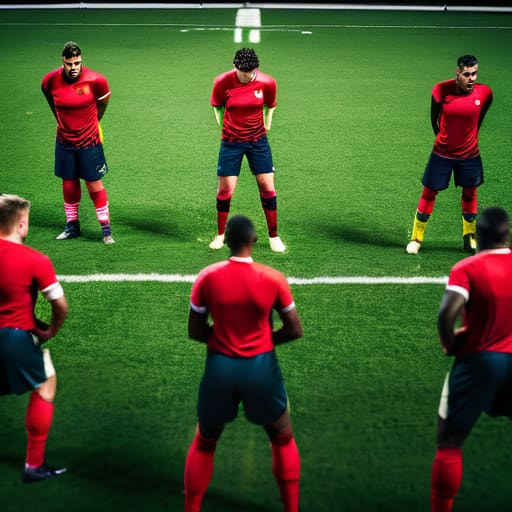
Now, let’s get one thing straight: a low block isn’t about parking a bus and praying to the gods of football. If you just sit there and let them pass the ball around your perimeter, you aren’t defending; you’re just spectators with better views. A proper low block defensive strategy requires discipline. I’m talking about your back four staying compact enough that the opposition can’t play a ball through the middle, even if they have all the time in the world. You need to shrink the pitch. If the gap between your midfield and your defense is wide enough to drive a transit van through, you’ve already lost.
The real trick to managing game pressure is ensuring your players don’t panic when the ball gets close to the box. You aren’t trying to win the ball back in their half anymore; you are simply denying space. This means your priority shifts from hunting the ball to preventing counter-attacks by ensuring your shape remains unbroken. If one of your center-halves gets pulled out of position because they’re chasing a ghost, the whole structure collapses. Stay narrow, stay patient, and for heaven’s sake, keep your eyes on the ball, not the crowd.
Managing Game Pressure When the Crowd Gets Loud

When the sidelines start getting vocal—whether it’s a partisan crowd or just a parent with a megaphone—the biggest threat isn’t the opposition; it’s the noise in your own players’ heads. I’ve seen it a hundred times. You’ve got a one-goal cushion, the tension rises, and suddenly your center-half is playing like he’s wearing lead boots because he’s too busy listening to the shouting. At this stage, managing game pressure isn’t about a tactical masterclass; it’s about emotional regulation. You need to tell your players to shrink the pitch. If they start looking at the spectators or the referee, they’ve already lost the battle.
The way you combat that frantic energy is by controlling the tempo through simple, boring football. If the atmosphere is boiling over, don’t ask your midfielders to play the line-breaking pass that they’ve been practicing all week. That’s how you gift them a counter-attack. Instead, tell them to find a teammate, take a touch, and breathe. If you can’t find a way to keep the ball moving safely, you aren’t defending; you’re just surviving, and survival is a very poor way to win a game.
Five Ways to Stop the Bleeding When the Clock Starts Ticking
- Stop chasing the ball like it’s a lost puppy. When you’re up by one, your priority isn’t winning the ball back in their final third; it’s making sure they don’t have space to breathe in yours. If your midfielders are sprinting aimlessly every time the opposition touches it, they’ll be spent by the 80th minute, and that’s when the gap opens up.
- Force them wide and make them take the long way around. I don’t care if they have the ball for sixty percent of the game; if they’re playing it into the channels and crossing from deep rather than cutting through the middle, you’re winning. Make them work for every inch of grass. If they want to score, they should have to earn it through a series of controlled, predictable movements, not a sudden burst of chaos in your box.
- Manage your “energy budget” with some common sense. I’ve seen too many coaches tell their players to “press high” until the legs go. If you’re defending a lead, you have to be selective. You don’t press every clearance; you press when you can actually win the ball and kill the momentum. Otherwise, you’re just running for the sake of running, and you’ll be gasping for air when the counter-attack hits.
- Keep your center-backs talking, even if they’re tired. The biggest reason leads evaporate is because the communication breaks down. It’s never a tactical failure; it’s usually just a defender forgetting to shout “step up” or “watch the runner” because he’s too busy looking at his boots. If the back four stops talking, the whole house comes down.
- Use your substitutions to bring on “game managers,” not just “fresh legs.” Don’t just swap a tired winger for a fast one. Bring on the player who knows how to hold the ball, how to draw a foul, and how to slow the tempo down. You need someone on that pitch who understands that the most important thing in the final ten minutes isn’t a spectacular dribble, but making sure the ball stays in the corner until the whistle blows.
The Bottom Line: Don't Let the Lead Go to Your Head
Stop obsessing over perfect tactical shape and start focusing on individual accountability; a perfect low block means nothing if your midfielders are too busy looking at the clock to track a late runner.
Communication isn’t about shouting tactical instructions; it’s about the constant, repetitive noise that keeps your players’ heads in the game and prevents them from drifting into a mental fog.
Manage your energy, not just the ball; if you’re sitting deep, you have to be prepared to sprint when the inevitable transition happens, or you’ll find yourself chasing shadows in the final five minutes.
Holding the Line
At the end of the day, defending a lead isn’t some mystical art reserved for the Premier League; it’s about discipline and refusing to let your shape turn into a mess of panic. You’ve got to keep that low block compact, ensure your midfield isn’t just watching the ball like it’s a cinema screen, and keep your head when the noise from the sidelines starts getting heavy. It comes down to the basics: staying connected as a unit and making sure nobody is wandering off on a solo mission when they should be covering a runner. If you try to play pretty football when you’re ten minutes from the whistle, you’ll get punished. Stop chasing the game and start managing the space.
I’ve stood on enough freezing touchlines to know that the hardest part isn’t the tactics—it’s the mental fatigue. Your players will want to sit on their heels and pray for the whistle, but that’s exactly when they concede. You have to teach them that defending is an active job, not a passive one. It’s about the grit to win one more header and the intelligence to keep the ball in the corners. If you can instill that sense of responsibility, you won’t just be winning games; you’ll be building a team that knows how to finish the job properly. Now, get back out there and make sure they actually do it.
Frequently Asked Questions
My players are physically exhausted and starting to make mental errors; do I change the tactics or just tell them to grit their teeth?
Neither. If they’re making mental errors, their brains have already left the building. You can’t “grit teeth” your way out of a lack of oxygen. If they’re gassing out, your tactical demands are likely too high for their current state. Stop asking for high-intensity pressing and simplify. Move the lines closer together, shorten the passing distances, and give them fewer decisions to make. Manage the fatigue by reducing the workload, not by shouting at the exhaustion.
When the opposition starts playing long balls and bypassing our midfield, how do I stop my defenders from panicking and hoofing it aimlessly?
When the long balls start flying, your defenders aren’t panicking because they’ve forgotten how to pass; they’re panicking because they feel hunted. If they feel like they’re under siege, they’ll hoof it just to get the ball away from their own goal. Tell them: “Don’t look at the ball, look at the space.” Teach them to drop five yards earlier so they aren’t sprinting backward blindly. If they have time to breathe, they’ll have time to play.
If I pull my wingers back to help the defense, aren't I just inviting even more pressure by giving up any chance of an outlet pass?
You’re right to be worried, because if you just park them in the box, you’re effectively playing with eight men. You aren’t “defending” if you’ve given the opposition zero way to play through you. The trick isn’t to make them full-backs; it’s to make them outlets. They need to stay wide enough to stretch that pressure, giving your keeper a target to bypass the chaos. If they can’t breathe, your defense won’t either.
