I once watched a young coach—bright lad, clearly well-read—spend forty minutes in a heated changing room trying to explain “long-term developmental milestones” to a group of twelve-year-olds who were mostly just worried about their damp socks. He had these laminated sheets with colorful charts, trying to teach them how to set goals with players as if they were preparing for a corporate merger rather than a Sunday morning kickabout. It was a total waste of breath. You can’t lecture a teenager into ambition using a spreadsheet; if they don’t feel the purpose of the target, they’ll forget it before they’ve even finished their post-match orange slices.
I’m not here to give you a management seminar or a list of buzzwords that sound good in a coaching manual but fall apart when the wind starts biting. I’m going to tell you how to sit them down on the grass and find out what actually matters to them. We’ll skip the fluff and focus on the kind of practical, honest targets that actually stick when the legs get heavy in the final fifteen minutes.
Forget Smart Goals for Athletes Aim for Grit
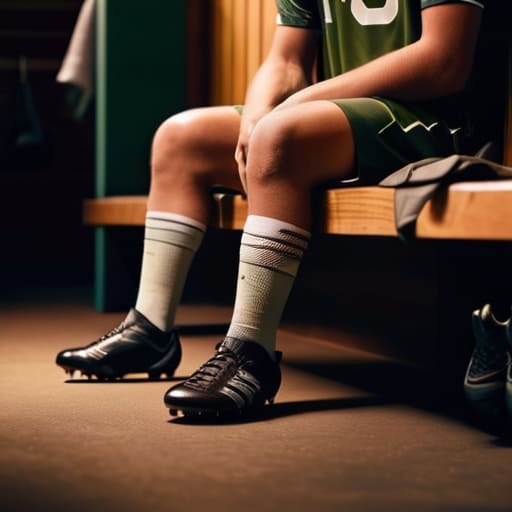
You’ll see plenty of textbooks preaching about SMART goals for athletes, telling you to make everything specific, measurable, and achievable. On paper, it looks tidy. In practice, it’s often a recipe for a kid who only cares about the numbers and forgets how to actually play the game. If a player’s only metric is “scoring ten goals this season,” they’ll stop running for the team the moment they hit a dry spell. They stop playing for the badge and start playing for a spreadsheet.
I’ve always found that the best coaching strategies for player development focus less on the target and more on the capacity to endure the struggle to get there. Instead of obsessing over a perfect end product, I want them focused on the grit required to win a second ball in the 89th minute when their lungs are screaming. We need to shift the conversation from what they want to achieve to how they intend to behave when things go wrong. If you can teach a player to find pride in a hard tackle or a disciplined defensive shape, the results usually take care of themselves.
Short Term vs Long Term Athletic Goals That Matter

Most coaches make the mistake of trying to bridge the gap between a kid’s Sunday morning performance and their professional dreams in one single leap. They talk about the Premier League when the player is still struggling to find their footing in a local division. If you want to succeed, you have to understand the tension between short term vs long term athletic goals. Long-term goals are the North Star—the “why” that keeps them coming back when the weather turns foul—but they are too far away to provide any real fuel on a cold Tuesday night.
The real work happens in the small, gritty increments. I’m not interested in a player’s dream of playing for England; I’m interested in their goal to improve their scanning frequency by ten percent in the next three sessions. When you focus on these immediate, digestible wins, you aren’t just teaching football; you are building an athlete mindset and goal achievement habit that sticks. If they can’t master the small stuff, the big stuff will never happen. Keep the long-term vision in the back of their minds, but keep their eyes fixed firmly on the next drill.
Five ways to make goals stick when the weather turns
- Stop talking about the trophy and start talking about the tackle. A kid might not be able to wrap their head around winning the league in May, but they can understand being the first one to press when they lose the ball. Set goals for the actions they can actually control, not the results that depend on a lucky deflection or a referee with a grudge.
- Keep the conversation on the grass, not in a classroom. If you try to sit a group of teenagers down in a circle to discuss ‘personal development objectives,’ you’ve lost them before you’ve finished your first sentence. Talk to them while they’re tying their laces or walking to the changing rooms. It needs to feel like a chat, not a lecture.
- Watch out for the ‘all or nothing’ trap. I’ve seen too many players crumble because they didn’t hit their target perfectly. If a player’s goal was to complete eighty percent of their passes and they hit seventy-five, don’t tell them they’ve failed. Tell them they’re nearly there and find out why that last five percent slipped away.
- Make sure the goal survives the first fifteen minutes of a match. If a player sets a goal to ‘play calm,’ but they’re sprinting like a headless chicken the moment the whistle blows, the goal is useless. Give them a practical trigger—like ‘check your shoulder before every pass’—that actually works when the lungs are burning and the pressure is on.
- Don’t set a goal for the player; set a goal for the process. Instead of telling a defender to ‘be better at positioning,’ tell them to ‘stay within five yards of the striker.’ One is a vague wish; the other is a job description. Give them something they can physically measure against the person standing in front of them.
The Bottom Line for Your Next Session
Stop chasing perfection on paper; a goal is only worth something if the player can actually visualise themselves hitting it when their lungs are burning in the 80th minute.
Keep the conversation grounded in what they can control—you can’t coach a player to “win more,” but you can coach them to win their individual duels and keep their shape.
Check in on their progress when things are going wrong, not just when they’ve scored a screamer, because that’s when the goal actually matters.
The Final Whistle
At the end of the day, setting goals isn’t about filling out a spreadsheet or making sure every kid has a fancy laminated target to carry home. It’s about the distinction between chasing a trophy and building the character required to win one. We’ve talked about why those rigid, corporate SMART goals usually fall apart when the weather turns, and why you need to balance those big, distant dreams with the small, gritty wins that happen on a Tuesday night training session. If you focus too much on the destination, you’ll miss the fact that your players are stumbling on the way there. Keep your eyes on the process, not just the podium, and make sure the goals you set are actually grounded in what they can do when their lungs are burning and the referee has lost control of the game.
I’ve stood on many sidelines, watching coaches try to engineer perfection through sheer willpower and complex planning. It doesn’t work. What works is helping a player understand that a goal isn’t just a scoreline; it’s the decision to sprint back into position when they’d rather stand and complain. Don’t be afraid to let them fail, and don’t be afraid to let them set a goal that seems a bit too big for them—as long as you give them the tools to chip away at it one inch at a time. Now, get off the computer, get down to the pitch, and go see what they’re actually capable of when the boots are laced up.
Frequently Asked Questions
What do I do when a player sets a goal that’s clearly rubbish or completely unrealistic for their level?
Look, if a lad tells you he wants to be playing for England by Christmas, don’t laugh, but don’t nod like a fool either. If you validate nonsense, you’re teaching him that dreaming is the same as working. Instead, pull him aside and ask him what his first step looks like tomorrow morning. If he can’t tell you how he’s improving his first touch or his scanning, his goal isn’t a target—it’s just a daydream.
How much of this should I be doing in the middle of a training session versus sitting them down properly?
Don’t confuse a tactical adjustment with a life goal. If you try to discuss their long-term ambitions while they’re panting and dripping sweat mid-drill, you’ve already lost them. Use the training pitch for the “how”—quick, sharp corrections to keep them focused. But if you want to talk about the “why”—the real stuff that builds character—sit them down properly. Do it when the boots are off and the adrenaline has settled.
If we’re focusing on grit and short-term wins, how do I stop the kids from losing interest when they don't see immediate results?
You stop them by changing what you’re measuring. If you only celebrate the trophy or the clean sheet, they’ll burn out by November. You have to start rewarding the “invisible” wins—the player who tracked back sixty yards in the 80th minute, or the lad who finally used his left foot once in a drill. If they see that you’re noticing the effort, not just the outcome, they’ll keep showing up.
