I’ve sat through enough committee meetings in drafty community halls to know exactly what you’ve been handed: a glossy, twenty-page “strategic partnership proposal” filled with words like synergy, brand activation, and leveraging assets. It’s enough to make you want to walk straight into the rain and stay there. Most of these documents are written by people who think a football club is a corporate entity rather than a collection of muddy boots and unpaid electricity bills. If you are looking for a complete guide to club sponsorship that involves hiring a marketing consultant to draft a manifesto, you’ve come to the wrong place. I don’t care about brand alignment; I care about whether the local garage will pay for the new training bibs so we aren’t playing in rags come November.
I’m not here to sell you on a dream or teach you how to use fancy PowerPoint templates. What I am going to give you is the unvarnished truth about how to actually get a local business to open their wallet. I’ll show you how to talk to the man behind the counter at the hardware shop, how to prove your value without sounding like a salesman, and how to build relationships that actually last longer than a single season. No jargon, no fluff—just the practicalities of keeping your club afloat.
Securing Local Business Partners Without Losing Your Dignity
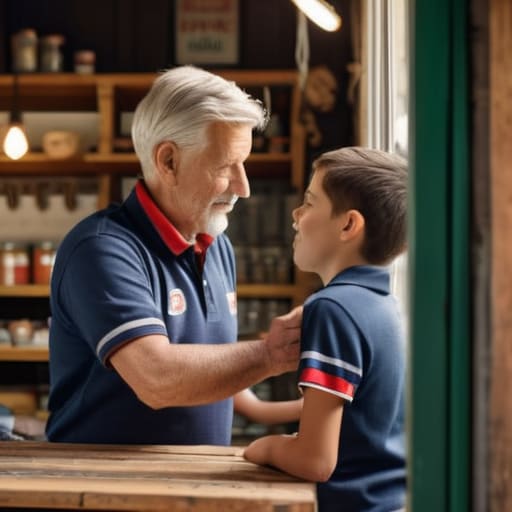
Look, I’ve seen too many young club secretaries walk into a local butcher’s or a hardware shop clutching a stack of generic sponsorship proposal templates like they’re handing out flyers for a supermarket discount. It’s embarrassing. You aren’t a multinational corporation looking for a tax write-off; you’re a community football club that needs new training bibs and a working pump for the water bottles. If you approach a business owner with a polished, corporate pitch about “synergy,” they’ll smell the nonsense from across the counter. Instead, walk in there and talk about the actual community you serve. Tell them exactly how their support keeps the kids on the pitch and off the streets.
The secret to securing local business partners isn’t about selling a logo on a shirt; it’s about showing them that their money isn’t disappearing into a black hole. Most people fail because they don’t understand that a local cafe doesn’t care about “global brand awareness.” They care if the parents at Saturday morning training actually walk into their shop for a coffee. If you can show them that your players and their families are their future customers, you aren’t begging for a handout—you’re offering them a seat at the table.
Why Your Sponsorship Proposal Templates Are Getting Thrown Away

I’ve seen enough of them to fill a skip. You know the ones—those polished, overly professional sponsorship proposal templates you download from the internet that look like they were written by a bank manager in a suit. They’re full of hollow promises about “synergy” and “community engagement,” but they lack the one thing a local business owner actually cares about: reality. When you send a document that feels like a generic corporate brochure, you’ve already lost. You aren’t a multinational corporation; you’re a football club. If your paperwork doesn’t reflect the grit and the actual faces of the people on your sidelines, it’s going straight into the bin.
The mistake most people make is focusing entirely on what the club needs, rather than what the partner gets. They treat it like a charity donation rather than a business transaction. If you want to stop being ignored, you have to move away from begging and start talking about sponsorship ROI for clubs. A plumber or a local cafe owner doesn’t want to hear about your “visionary mission”; they want to know that when their logo goes on your training tops, people in the village are actually going to notice it. Stop sending fluff and start sending facts.
Five Rules for Keeping Your Sponsors and Your Sanity
- Stop selling “exposure” and start selling community. A local plumber doesn’t care if ten thousand people see his logo on a digital flyer; he cares that fifty local parents see his name on the training bibs every Tuesday night and remember him when their boiler packs up in January. Sell him the connection, not the eyeballs.
- The “One-and-Done” trap is how clubs die. If you only talk to a sponsor when you need a cheque for new goal nets, they’ll stop answering your calls. You need to show them the impact of their money halfway through the season—send a photo of the kids in the new kits or a quick note about how the new lights changed the training sessions.
- Match the ask to the business. Don’t go to the local cafe asking for five hundred pounds for a stadium sign; they don’t have it. Ask them to sponsor the post-match oranges or the kit laundry instead. It’s better to have three small, reliable partners than one big one who thinks you’re a charity case.
- Be brutally honest about what you can actually deliver. If you promise a sponsor their logo will be on every social media post, but you haven’t posted on Facebook since 2022, you’ve already lost them. It is far better to promise a single, well-placed banner and actually deliver it than to over-promise and look like an amateur.
- Treat the sponsorship like a tactical session—it requires structure. Keep a simple spreadsheet of who gave what, when it expires, and when you last spoke to them. If you’re winging it, you aren’t running a club; you’re running a hobby, and businesses don’t invest in hobbies.
The Bottom Line: What Actually Stays in the Club's Pocket
Stop selling “exposure” to the local butcher or the plumber; they don’t care about impressions or digital reach, they care about being seen as the man who keeps the local kids on the pitch and out of trouble.
If your pitch looks like a corporate brochure instead of a conversation about community, you’ve already lost; show them the muddy boots and the empty kit bags that their money will actually fix.
A sponsorship isn’t a one-off donation to be forgotten by Christmas—it’s a relationship that requires you to actually show up, say thank you, and prove that their investment didn’t just vanish into a pile of referee fees and lost footballs.
The Long Game
At the end of the day, securing sponsorship isn’t about mastering some complex marketing algorithm or drafting a thirty-page manifesto that no one will read. It’s about moving away from those generic, soul-crushing templates and actually showing a local business owner that you are a reliable partner, not just another person asking for a handout. We’ve covered the essentials: ditch the jargon, stop sending out mass emails that look like spam, and focus on the real-world value you provide to the community. If you can prove that their support keeps the kits clean and the training lights on, you aren’t just asking for money; you are inviting them to be part of something that actually matters in this town.
Look, I know it feels like a chore, and I know it’s a far cry from what you signed up for when you decided to coach or run a club. You wanted to focus on the football, not the balance sheets. But remember this: every pound that comes through the door is a brick in the foundation of what your players are building. When you secure a partner, you aren’t just funding a season; you are protecting the future of the game for the kids who haven’t even tied their boots yet. Get out there, be direct, be honest, and stop apologizing for needing the support that keeps the club alive.
Frequently Asked Questions
How do I actually track and prove to a local business that their money is making a difference instead of just disappearing into the club's black hole?
Stop sending them a generic “thank you” email at the end of the season; that’s where money goes to die. You need a paper trail of impact. If they paid for new training bibs, send them a photo of the kids actually using them on a Tuesday night. If they funded the lights, show them the match report from a game that stayed lit because of them. Proof isn’t a spreadsheet; it’s seeing their investment in action.
What do I do when a sponsor starts trying to tell me which players to pick or how to run my training sessions?
Look, you need to draw a line in the mud immediately. A sponsor buys your kit and your visibility; they don’t buy your tactical decisions or your selection headache. If they start chirping about who starts on Saturday, you tell them straight: “You’re funding the club, not coaching the team.” If you let them into the dugout, you’ve lost the dressing room. Keep the relationship professional, keep the boundaries firm, and keep the football on the pitch.
Is it worth chasing small, one-off donations from parents and local shops, or should I be spending all my time hunting for one big "main shirt" sponsor?
Look, if you spend all your time chasing one “big fish,” you’re one bad business decision away from a dry season. I’ve seen clubs fold because their main sponsor pulled out and the whole house of cards collapsed. You need a foundation. Chase the big shirt sponsor for the prestige, sure, but don’t ignore the local butcher or the parents. A hundred small donations are harder to lose and they build a community, not just a balance sheet.
