I’ve spent half my life watching coaches trot out expensive GPS vests and high-tech data spreadsheets, acting as if a fancy graph is going to stop a midfielder from collapsing in the mud. Most of what you read online claiming to be a complete guide to football fitness is nothing more than glorified gym nonsense that has never seen the inside of a real match. I once had a lad—talented as they come—who could run a sub-six-minute mile in a controlled setting, yet he was completely useless by the seventy-fifth minute of a rainy Sunday league fixture because he hadn’t trained for the chaos of a changing game.
I’m not here to sell you on supplements or some revolutionary “science” that requires a laboratory to implement. My promise to you is simpler: I am going to give you the practical, grit-under-the-fingernails truth about building an engine that actually works when the lungs are burning and the legs feel like lead. We are going to skip the fluff and focus on drills that survive contact with reality, ensuring your players don’t just look fit on paper, but actually stay in the fight until the final whistle blows.
Building Aerobic and Anaerobic Capacity That Survives the Rain
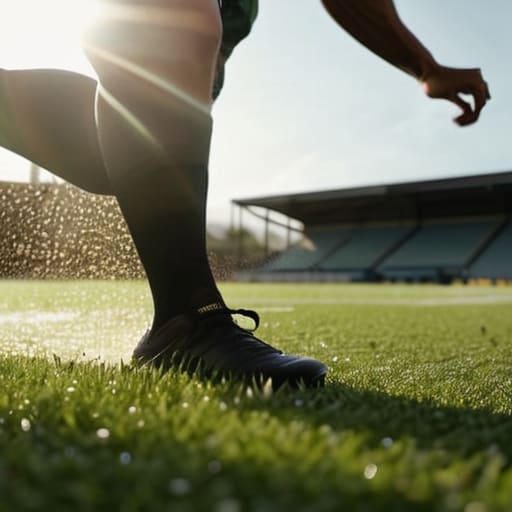
Most coaches make the mistake of thinking fitness is just about running laps until the players look like they’re about to pass out. If you spend your entire Tuesday session doing steady-state jogging, you aren’t preparing them for a match; you’re preparing them for a long walk in the park. To build real aerobic and anaerobic capacity, you have to mimic the stop-start, frantic nature of the game itself. A player doesn’t run at 60% capacity for ninety minutes; they sprint, they jog, they jump, and they lunge. If your drills don’t force them to switch between those gears, they’ll be useless when the game actually gets frantic.
I’ve seen too many lads with “great fitness” on paper who vanish the moment they have to make a sudden, sharp movement under pressure. This is where you need to integrate soccer conditioning drills that actually involve a ball or a decision. Don’t just have them run through cones; have them react to a whistle or a teammate’s movement. You want to build that engine while simultaneously teaching them how to handle the physical demands of the pitch. If you aren’t training the body to recover quickly between those high-intensity bursts, you’re just waiting for the inevitable collapse in the final quarter.
Soccer Conditioning Drills That Actually Work in Real Matches

Most of the soccer conditioning drills you see on YouTube involve a player running laps around a pristine pitch in perfect weather. That’s fine for a fitness influencer, but it’s useless for a midfielder trying to track a runner in the 80th minute. If you want to build something that actually transfers to a Saturday afternoon, you have to stop running in straight lines. Real football is a series of chaotic, jagged movements. I’ve always found that working on explosive power for athletes through short, sharp shuttle runs—interrupted by a change of direction or a simulated tackle—does more for a player’s match readiness than ten miles of steady jogging ever will.
You also need to address the mechanics of how they land and turn. This is where a bit of football plyometrics training comes in, but don’t go overboard with the fancy equipment. Use small hurdles or even just markers on the grass to force them to absorb force and spring back into action. The goal isn’t just to get them fast; it’s to ensure they are stable enough to prevent a rolled ankle when the pitch is slick. If they can’t control their body during a drill, they certainly won’t control it when a striker is bearing down on them.
Five Hard Truths About Keeping Your Players From Collapsing
- Stop treating fitness like a separate chore. If you’re running laps around the pitch for forty minutes on a Tuesday night, you’re wasting everyone’s time and nobody’s learning football. You build the engine by making the drills harder, not longer. Every sprint should be followed by a decision—a pass, a turn, or a tackle—because a player who can run a marathon but can’t find a teammate when they’re breathless is just a very fast spectator.
- Watch what they do in the seventy-two hours before match day. I’ve seen “unfit” midfielders who are actually just sleep-deprived or living on junk food because they’ve got exams or a social life they aren’t managing. Before you overhaul their conditioning, check their recovery. You can’t coach fitness into a kid who hasn’t had a decent meal or six hours of sleep.
- Respect the recovery as much as the work. I see too many young coaches thinking that if a player isn’t gasping, they aren’t working. But if you redline them every single session, they’ll hit a wall by mid-November and you’ll spend the rest of the season nursing hamstrings. You build strength in the quiet moments, not just the shouting ones.
- Train for the specific demands of your system. If you play a high press, your players need to be able to explode, recover, and explode again. If you sit deep and counter, they need the discipline to hold a shape while their lungs are screaming. Don’t give them a “general fitness” session; give them the specific physical tools their role in your formation requires.
- Test them under pressure, not just on the stopwatch. A stopwatch doesn’t tell you if a player can keep their head when they’re down 2-0 with ten minutes left. I want to see their technical execution when they are physically spent. If their touch goes to hell the moment they get tired, that’s where your training needs to focus—skill under fatigue, not just running for the sake of running.
The Bottom Line for Your Next Training Session
Stop running laps for the sake of running laps; if your drills don’t mimic the stop-start, high-intensity chaos of a real match, you’re just wasting time and making your players bored.
Fitness isn’t just about how much air they have in their lungs, it’s about how well they can make a clean, decisive pass when their legs feel like lead in the 80th minute.
You cannot coach fitness in a vacuum—if you aren’t accounting for their sleep, their diet, and what they’ve been doing for the seventy-two hours leading up to kick-off, you aren’t coaching, you’re just guessing.
The Reality of the Final Whistle
At the end of the day, fitness isn’t about how many laps of the pitch your players can run while they’re fresh and looking at you for approval. It’s about whether they can still find the discipline to hold their shape and make the right pass when their legs feel like lead and the wind is cutting right through them. We’ve talked about building that engine through proper aerobic work, and we’ve looked at drills that actually mimic the stop-start, chaotic nature of a real match. If you focus on functional conditioning rather than just mindless running, you aren’t just training athletes; you are building players who can actually execute your tactics when the pressure is at its highest.
Don’t get distracted by the fancy new gadgets or the latest high-tech training programmes that promise overnight results. Most of that is just noise designed to sell subscriptions. Real fitness is built in the mud, in the cold, and through the repetitive, often boring work of doing the right things correctly, time and time again. If you give your players the tools to endure, you give them the confidence to compete. My advice? Stop looking for the magic pill and start focusing on the fundamentals of grit. If you do that, they won’t just survive the ninety minutes—they’ll own the game.
Frequently Asked Questions
My players are getting stronger in the gym, so why are they still looking heavy-legged and slow during the actual match?
Because your players are training for a lifting competition, not a football match. A heavy deadlift doesn’t mean a damn thing if they can’t transition from a sprint to a lateral shuffle without their hamstrings screaming. They’re building “static” strength in a controlled environment, but football is a game of repeated, chaotic, multidirectional movements. If you aren’t teaching them to apply that gym strength while their heart rate is red-lining, you’re just building expensive statues.
How much of this conditioning work should we be doing during our Tuesday night sessions versus just leaving it for match day?
Look, if you’re waiting until match day to test their lungs, you’ve already lost. Tuesday is for the heavy lifting. That’s when you build the engine. You use your mid-week sessions to push the intensity—the anaerobic stuff that makes them want to quit. Match day isn’t for conditioning; it’s for execution. If they’re gasping for air in the first twenty minutes on a Saturday, it’s because you were too polite on a Tuesday.
If we're focusing on fitness, how do we stop the lads from losing their technical touch when they're actually tired?
The mistake most coaches make is separating “fitness” from “football.” They run laps until the kids are spent, then try to teach passing in a sterile environment. That’s useless. If you want to stop the technical collapse, you have to train under fatigue. Run your high-intensity drills, and then—immediately while their lungs are still burning—make them execute a precise, weighted pass or a tight turn. If they can’t do it when they’re exhausted, they won’t do it in the 80th minute.
