I’ve sat through enough seminars in drafty community halls to know that most people trying to sell you a “complete guide to player psychology” are actually just selling you expensive, hollow jargon. They’ll talk to you about “cognitive load” and “neurological pathways” while you’re standing on a waterlogged pitch at 8:00 AM, watching your center-back freeze up because he’s terrified of making a mistake in front of his dad. Psychology in football isn’t found in a textbook or a fancy PowerPoint presentation; it’s found in the look in a boy’s eyes when he loses his confidence after a misplaced pass, and it’s found in the way a squad reacts when they’re two goals down with ten minutes to play.
I’m not here to give you a lecture on academic theories that won’t hold up when the wind is blowing sideways. Instead, I’m going to give you the practical, hard-won truth about what actually moves the needle on the training ground. This is my own version of a complete guide to player psychology—one built on thirty-five years of watching kids crumble and others rise to the occasion. I’ll show you how to build genuine resilience and how to manage the temperaments of your players without needing a degree in clinical psychology.
Mastering Sports Psychology Fundamentals Under Pressure

You don’t need a degree in psychology to understand that when a lad’s legs go heavy in the 80th minute, his head has usually checked out ten minutes prior. Most people think mental toughness in sports is some mystical quality you’re either born with or you aren’t. That’s rubbish. It’s a muscle, just like the quadriceps, and if you aren’t training it, you can’t expect it to hold up when the rain is lashing down and the scoreline is against you.
To get there, you have to stop treating “the mental side” as a separate conversation you have in a quiet room. You need to bake resilience training for competitors directly into your Tuesday night drills. If your training sessions are always easy, controlled, and predictable, you aren’t coaching football; you’re running a choreographed dance. You need to introduce artificial stressors—make them work while they’re tired, make them make decisions while they’re frustrated, and force them to solve problems when the conditions are rubbish. That is how you build a player who doesn’t crumble when the game actually gets real.
Building Real Resilience Training for Competitors
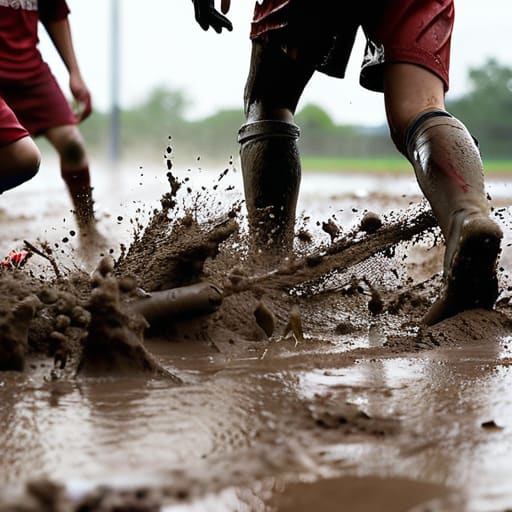
You don’t build resilience by sitting a group of teenagers in a circle and asking them how their feelings are. That’s not football; that’s a therapy session, and you’ve got a ball to play with. Real resilience training for competitors happens when the conditions are miserable. It happens when the wind is whipping across a muddy pitch, the score is 1-0 down, and your best player has just missed a sitter. You build that grit by intentionally introducing “controlled chaos” into your drills—making them play with a disadvantage, or forcing them to reset after a mistake. If they only ever train in perfect, sunny conditions with every pass clicking, they’ll crumble the moment a referee makes a bad call or a striker gets physical.
I’ve seen too many talented lads lose their heads because they haven’t practiced failing under pressure. To combat this, you need to bridge the gap between a simple drill and the actual stress of a match. This isn’t about complex cognitive behavioral techniques for athletes found in a textbook; it’s about teaching them to find their center when things go wrong. If a player makes a mistake, don’t let them dwell on it. Force them to make an immediate, decisive action. You aren’t just training their legs; you’re training their ability to ignore the noise and get back into the contest.
Five Ways to Stop Your Players from Losing Their Heads
- Stop talking about ‘mindset’ and start talking about ‘focus’. If you tell a teenager to ‘be positive’ when they’ve just missed a sitter, you’ve lost them. Instead, give them a job to do—a specific, technical task like ‘find the next pass’ or ‘get into your defensive shape’. Psychology in a match isn’t about feeling good; it’s about having a job so intense they don’t have time to dwell on their mistakes.
- Manage the ’emotional contagion’ in your squad. I’ve seen a single player throw their arms up in frustration after a bad whistle and watch the whole team’s energy evaporate in thirty seconds. You need to identify those ‘leaks’—the players whose body language tells a story of defeat—and coach them privately on how to keep their heads up, because the others are watching them more than they’re watching the ball.
- Build ‘controlled frustration’ into your training sessions. If your training is always smooth, perfect, and controlled, your players will crumble the moment a referee makes a bad call or a pitch turns into a mud bath. Throw a curveball in a drill—change the rules halfway through or make it unfairly difficult—so they learn to react to chaos without looking at the sidelines for permission to keep playing.
- The ‘Next Action’ rule. Most players get stuck in a loop of regret, replaying a mistake they made five minutes ago. You have to train them to live in the ‘next action’. In my sessions, we don’t dwell on the error; we focus on the immediate recovery. If you can’t fix the mistake you just made, your only psychological responsibility is to make sure the next movement is correct.
- Don’t mistake silence for concentration. I’ve spent years watching kids stand on a pitch looking like they’re contemplating the meaning of life when, in reality, they’ve just mentally checked out. If a player goes quiet after a setback, they are in danger. You need to teach them that communication—even if it’s just shouting ‘man on’ or ‘turn’—is the simplest way to keep their brain engaged with the game.
The Bottom Line: What Actually Matters When the Whistle Blows
Stop looking for a magic phrase to say in the changing room; resilience isn’t built during a halftime pep talk, it’s built in the way you structure your drills to force players to solve problems when they’re tired and frustrated.
If a player’s head goes under pressure, don’t just blame their “mindset”—look at whether you’ve actually given them the tactical clarity to know where to stand when the game gets chaotic.
Psychological strength is a muscle, not a personality trait; you don’t “find” it in the 80th minute, you develop it by making your training sessions uncomfortable enough that the match feels easy by comparison.
The Reality of the Mental Game
Look, we’ve covered a lot of ground, from the basics of staying calm under a high press to the grit required to keep running when your lungs feel like they’re filled with broken glass. But let’s be clear: you won’t find these mental breakthroughs in a textbook or a fancy app on your phone. They are built in the small, unglamorous moments—the way a player responds to a missed sitter in the tenth minute or how they hold their shape when the opposition starts playing direct. Psychology in football isn’t about positive affirmations; it’s about building a mental framework that can withstand the chaos of a rainy Sunday afternoon when everything that can go wrong, does.
At the end of the day, you can have the most sophisticated tactical setup in the league, but if your players’ heads aren’t right, you’re just rearranging deckchairs on the Titanic. My advice is to stop looking for the “magic pill” and start focusing on the character of your squad. Teach them to embrace the discomfort and to trust the process you’ve put in place during training. If you do the work now, when the pressure mounts and the crowd gets loud, they won’t just survive the match—they will command it. Now, get off the computer and go check on your players.
Frequently Asked Questions
How do I actually teach mental toughness to a ten-year-old without sounding like a motivational speaker?
Stop talking about “mindset” and start fixing their reactions. A ten-year-old doesn’t need a pep talk; they need a way to handle a mistake. When they miss a sitter or lose the ball, don’t give them a lecture on ‘resilience.’ Instead, give them a physical trigger—a clap, a shout, or a specific movement—to reset. Teach them that the mistake happened in the past, and the only thing that matters is the next five seconds.
If a player's confidence has completely bottomed out after a bad game, how do I get them back on the pitch without forcing it?
You don’t force it. If you shove a kid back out there when they’re staring at their boots, you’re just teaching them that failure is something to be endured rather than learned from. Instead, give them a job. Not a big one—just a small, manageable task in training that they can’t possibly fail. Get them a bit of “micro-success.” Once they stop feeling like they’re walking through treacle, the confidence will follow the competence.
Can you actually see psychological fatigue in a training session, or do I have to wait until the match starts to know they've hit a wall?
If you’re waiting for the match to see it, you’ve already lost. You’ll see it in training, but it won’t look like a player gasping for air—that’s just physical. Psychological fatigue looks like a boy who’s usually sharp suddenly making a decision that makes no sense. It’s the missed communication, the heavy feet on a simple pass, and the way they stop looking for the space. If the mental focus drifts in February rain, it’ll vanish on Saturday.
