I’ve spent half my life standing on touchlines in the driving rain, watching coaches try to solve set-piece problems with fancy diagrams and “tactical” jargon that wouldn’t hold up in a Sunday league park. They’ll tell you that you need a complex zonal system or a highly choreographed movement pattern to stay safe, but let’s be honest: most of that is just noise. When you’re actually trying to figure out how to defend free kicks under pressure, you don’t need a PhD in geometry; you need players who aren’t looking at the referee for permission to move. If your wall is hesitating or your keeper is shouting instructions that no one can hear over the crowd, you’ve already lost the battle.
I’m not here to sell you on some revolutionary new theory that’ll be obsolete by next season. What I’m going to give you is the unvarnished truth about what actually works when the ball is stationary and the tension is rising. We’re going to strip away the nonsense and focus on the mechanics of the wall, the positioning of the markers, and the mental discipline required to stay organized. I’ll show you the practical steps that survive a muddy pitch in November, ensuring your team stops conceding cheap goals simply because they forgot how to stand their ground.
Mastering Defensive Wall Technique Without Losing Your Nerve
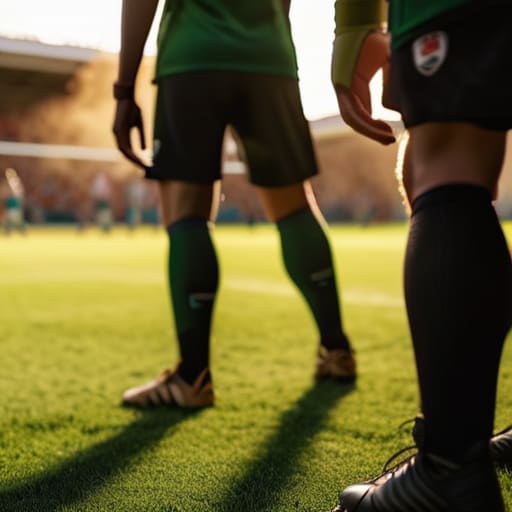
The biggest mistake I see in grassroots football isn’t that the players are too slow; it’s that they’re too nervous. You’ll see a group of lads standing there, eyes darting between the ball and the referee, waiting for permission to exist. That’s when you concede. Proper defensive wall technique isn’t about being a human shield; it’s about controlled aggression. If your players are hesitating or looking at the ref instead of the ball, they’re going to get hit, and you’re going to concede. I tell my players: don’t just stand there like a row of fence posts. You need to be a single, solid unit that moves as one.
When we work on defending set pieces in training, I don’t care about fancy tactical boards. I care about the man at the front of the line. He needs to be the anchor. If he’s flinching, the whole structure collapses. We run drills where the focus is on the physical connection between the players in the wall—shoulders touching, feet planted. You have to own that space before the kicker even approaches the ball. If you’re playing on the back foot, you’ve already lost the battle.
Marking Attackers on Free Kicks Before the Panic Sets in

Once the wall is set, the real chaos begins. I’ve seen too many teams focus so hard on the wall that they completely forget about the three lads lurking on the edge of the area. You can have the most solid defensive wall technique in the county, but if you leave a striker unmarked five yards out, you might as well just hand them the ball. When it comes to marking attackers on free kicks, it isn’t about fancy tactical shifts; it’s about basic accountability. Every player needs to know exactly who they are standing next to. If you’re playing a zonal system, you better be sure there isn’t a “grey area” between two players where a striker can park themselves and wait for the second ball.
The biggest mistake I see is players looking at the ball instead of the man. You’ll see them staring at the kicker like they’re watching a cinema screen, completely oblivious to the winger sprinting into their blind side. You need to teach them to feel the presence of the opponent. If they aren’t making physical contact or staying within an arm’s length of their mark, they aren’t defending; they’re just spectating. Don’t let them drift. If they lose their man, the whole structure collapses, and that’s when the panic sets in.
Five Real-World Rules for When the Ref Blows the Whistle
- Stop the ‘Ghosting’ Effect. I’ve seen too many teams where the players not in the wall or marking a man just stand there staring at the kicker like they’re watching a cinema screen. If you aren’t actively involved in the immediate area, you should be positioned to cover the space the ball is likely to land in. Idle feet lead to conceded goals.
- Command the Keeper. Your goalkeeper is under more pressure than anyone, and if they’re shouting into a vacuum, they’re useless. The players around them need to be the ones providing the noise—telling the keeper where the wall is, where the extra man is, and when to come for it. A silent box is a recipe for a disaster.
- The Wall Isn’t a Statue. A wall that just stands there waiting to be hit is a target; a wall that moves is a problem. If the kicker starts to run, the wall needs to adjust its width and height. If they’re too static, the kicker will just pick a corner and move on. You have to be proactive, not reactive.
- Watch the Feet, Not the Eyes. I tell my players all the time: don’t look at the kicker’s face to see if he’s smiling; look at his plant foot. The direction his non-kicking foot points tells you exactly where that ball is heading before it even leaves his boot. If you’re watching his eyes, you’re already too late.
- Discipline Over Desperation. The biggest mistake I see in grassroots football is a player lunging out of the defensive line to block a shot before it’s even been taken. You’ve just created a gap that’s bigger than the goal itself. Stay on your feet, maintain your shape, and only commit when the ball is actually in flight.
The Bottom Line: What to Carry Out to the Pitch
Stop obsessing over the perfect geometry of the wall; if your players are more worried about their spacing than the man taking the kick, they’ve already lost.
Marking isn’t about being a nuisance; it’s about making sure your players are looking at the ball and the man, not the referee or the sidelines.
Discipline in the final fifteen minutes is won in training, not through a motivational speech; if they haven’t practiced the positioning when they’re tired, they won’t do it when it matters.
The Final Whistle
At the end of the day, defending a free kick isn’t about some complex tactical masterstroke you read about in a glossy magazine; it’s about the fundamentals. It’s about having a wall that doesn’t crumble because they’re too busy looking at the referee, and ensuring your markers aren’t wandering aimlessly like they’ve lost their car keys in a car park. If you get the positioning right and keep the communication loud, you’ve already won half the battle. You have to stop the panic before the ball is even placed on the turf. If you can master the discipline of the wall and the focus of your man-marking, you aren’t just defending a set piece—you are denying the opposition their momentum.
I’ve seen countless teams throw away a hard-earned lead because they let a single dead-ball situation turn into a chaotic scramble. Don’t let that be you. Coaching these moments isn’t about perfection; it’s about building the mental toughness to stand your ground when the pressure is on and the crowd is breathing down your neck. Go back to the training pitch, run the drills until they become second nature, and make sure your players know that composure is a skill just like dribbling or shooting. If you do the work when no one is watching, you’ll be the one standing tall when the game is on the line. Now, get out there and do it right.
Frequently Asked Questions
What do I do when my players are too terrified of getting hit to actually stand in the wall?
Look, I’ve seen it a thousand times. You tell a kid to stand in a line, and they look like they’re walking to the gallows. You can’t coach bravery, but you can coach technique. Stop telling them to “be brave” and start showing them how to brace. Teach them to plant their feet, lock their knees, and keep their hands tucked. If they feel like they have a job to do rather than just being a target, the fear starts to fade.
How do I decide which players are better off marking a man versus staying in the wall?
Don’t just pick your tallest lads and shove them in the wall. If you’ve got a player who’s got a decent leap but lacks the spatial awareness to track a runner, put him in the wall. But if you have a player who’s quick, communicative, and actually understands the rhythm of the game, he belongs in the marking zone. I’ve seen too many sessions ruined because a coach put his best reader of the game inside a wall where he’s effectively blind.
When the ball is played quickly and my wall is still half-formed, how do I stop the immediate collapse?
If the ball is moving before your wall is set, you’ve already lost the tactical battle. Stop trying to build a perfect line and start shouting. Your players need to stop looking at you for permission and start reacting to the ball. If the wall is half-formed, the nearest two men must commit immediately—no hesitation, no checking with the keeper. It’s better to have a messy, aggressive wall than a polite, organized gap for a striker to exploit.
