I’ve spent more hours on muddy touchlines than I have in my own living room, and if there is one thing I’ve learned, it’s that most of the “expert” advice on how to plan a whole season of sessions is complete rubbish. You’ll see these glossy, colour-coded spreadsheets online that look like they were designed by a corporate accountant rather than a football coach. They promise a perfect, linear progression of skills, but they’ve never had to deal with a star striker catching chickenpox in November or a pitch that turns into a complete swamp by the second week of December. Those plans are built for a laboratory, not for a group of tired teenagers on a Tuesday night.
I’m not here to sell you a complicated curriculum or a subscription to a fancy app. What I am going to do is show you how to build a framework that actually holds up under pressure. I’ll give you the honest, unvarnished truth about how to structure your months so you aren’t just making it up as you go along, while still leaving enough room for the chaos that comes with real grassroots football. We are going to focus on the stuff that actually translates to the pitch, not the fluff.
The Skill Development Roadmap for Real World Results
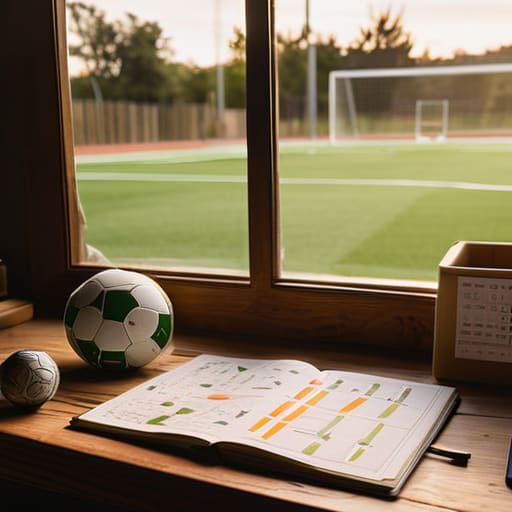
You don’t need a PhD in sports science to understand that a season isn’t just a collection of random Tuesdays. If you just turn up and run whatever drill you saw on Instagram that morning, you aren’t coaching; you’re babysitting with a ball. To actually see progress, you need a skill development roadmap that moves logically from the basics to the messy reality of a match. I’m talking about building a foundation of ball mastery in September so that by February, they aren’t panicking when a defender breathes on them.
Instead of getting lost in the weeds, I rely on thematic unit planning. This means you pick a concept—say, playing out from the back—and you stick with it for three or four weeks. You don’t just do one drill and move on; you layer the complexity. You start with a simple passing pattern, move to a pressured small-sided game, and eventually end with a full-pitch scenario. If you don’t have this kind of intentional progression, you’re just spinning your wheels while the kids get bored and the parents get restless.
Curriculum Mapping Strategies That Actually Stick

Now, don’t get me wrong—I’m not suggesting you sit down with a color-coded highlighter and a degree in pedagogy. When I talk about curriculum mapping strategies, I’m talking about making sure you aren’t just throwing random drills at a group of kids every Tuesday because you can’t remember what you did last week. You need a bit of a thread running through your weeks. If you spend three weeks obsessing over passing in tight spaces, don’t suddenly pivot to long-ball clearances the following session without a reason. It confuses them. You want to build a logical progression where each week feels like a stepping stone, not a random jump into a different sport.
The trick is to use thematic unit planning to keep your sanity. Instead of trying to teach “everything” at once—which is a fool’s errand—pick a theme for the month. Maybe it’s “defending as a unit” or “creating space in the final third.” This gives your sessions a consistent session structure and flow that players can actually grasp. If they know that for the next four weeks we are focusing on how to transition from defense to attack, they start to see the patterns. They stop playing like fourteen individuals and start playing like a team.
Five Hard Truths for Building a Season That Doesn't Fall Apart
- Stop planning for perfection and start planning for reality. Your season plan shouldn’t be a rigid document that breaks the moment a heavy rainstorm turns your pitch into a bog or three of your best players catch the flu. Build in “buffer weeks”—periods where you aren’t introducing anything new, but rather revisiting the basics or just playing small-sided games. If you try to force a complex tactical transition during a week when the squad is depleted, you aren’t coaching; you’re just shouting at kids who are cold and tired.
- Respect the physiological calendar. You wouldn’t try to teach a teenager how to play the cello while they’re mid-way through their final exams, so don’t expect them to master a new pressing trigger during a heavy period of schoolwork or mid-season fatigue. Map your intensity to the season’s rhythm. Early season is for building the engine; mid-season is for refining the gears; and as the weather turns and the legs get heavy, you scale back the volume and focus on sharpness.
- The “One Thing” Rule. A common mistake I see—usually from coaches who’ve spent too much time reading theory and not enough time on the grass—is trying to fix everything at once. If your season plan says “this month we work on defensive shape, passing accuracy, and corner routines,” you’ve already lost. Pick one primary technical or tactical theme for a block of four weeks. Let it sink in. If they can’t pass the ball ten yards accurately in a drill, they aren’t going to hold a high line in a match.
- Build your sessions around “The Golden Thread.” Every drill you plan from September to May should tie back to a central philosophy. If you want a team that plays on the front foot, don’t spend three weeks in November running slow, static passing lines that encourage players to stand still and wait for the ball. Every session, even the ones meant for conditioning, should feel like it belongs to the same footballing identity. Consistency in training is what creates instinct in a match.
- Audit your progress like a real coach, not a spectator. Every four weeks, sit down with a cup of tea and ask yourself: “Are we actually getting better, or are we just getting better at doing the same drills?” If the players are performing a drill perfectly but failing to apply the concept on Sunday morning, your plan is failing. A season plan isn’t a checklist of completed sessions; it’s a living map of player improvement. If the map doesn’t match the terrain, throw it out and adjust.
The Bottom Line for Your Season Plan
Stop trying to teach everything at once; pick one technical theme per month and hammer it until the kids can do it while looking over their shoulders, not just while standing still in a cone circle.
A plan is only as good as its ability to change; if you spend three weeks on passing but the team can’t keep possession under pressure, throw the spreadsheet in the bin and pivot to transition drills immediately.
Build your season around the players you actually have, not the players you wish you had—planning a high-pressing, high-intensity season for a squad that’s tired by the second half is just a recipe for a long, miserable winter.
The Long Game
Look, I’m not telling you that a well-mapped curriculum is a magic wand that will turn every kid in your squad into a Premier League winger. It won’t. But if you stop chasing the latest “innovative” tactical trends you saw on social media and instead focus on building a logical progression—moving from basic ball mastery to spatial awareness and eventually to game-specific decisions—you’ll stop wasting your Tuesday nights. You’ve learned that a season isn’t just a collection of random drills thrown together in a panic; it is a deliberate structure designed to build competence. When you align your training blocks with the actual developmental stages of your players, you aren’t just running sessions; you are building a foundation that won’t crumble the moment they face a real opponent in a real match.
At the end of the day, the spreadsheets and the periodisation models are just tools to help you stay upright when the wind is blowing and the players are tired. Don’t let the planning become more important than the people standing in front of you. A perfect plan that you’re too afraid to adapt because “it wasn’t in the curriculum” is a useless plan. Be prepared to pivot when the pitch turns into a swamp or when your star midfielder shows up with a heavy head. Plan with purpose, but coach with your eyes open. If you do that, you won’t just be a person with a whistle; you’ll be a coach who actually leaves something behind.
Frequently Asked Questions
How do I adjust my seasonal plan when half my squad is out with injuries or school trips halfway through the term?
Look, a plan is just a piece of paper until the first player pulls a hamstring or the school decides a Tuesday afternoon trip to the museum is more important than football. Don’t panic and scrap everything. If you’re short on numbers, stop running big-pitch tactical drills that require eleven bodies to function. Switch to small-sided, high-intensity technical work. If half the squad is gone, focus on the ones who showed up. Tighten the circle.
Should I stick to my planned technical focus if I notice the team is completely falling apart defensively in actual matches?
Look, I’ve seen it a thousand times. You’ve spent three weeks drilling tight passing triangles, only to watch your center-backs wander around like they’re looking for their car keys on Sunday morning.
How much variety do I actually need in my drills to keep them engaged without losing the core lesson I'm trying to teach?
Look, if you’re changing the setup every five minutes just to stop them from fidgeting, you’re not coaching; you’re running a circus. You don’t need a different drill every week; you need different ways to stress the same idea. If you’re teaching passing, don’t switch to dribbling just for the sake of it. Vary the constraints—add a defender, shrink the space, or limit their touches. Keep the lesson constant; change the difficulty.
