I’ve spent thirty-five years standing on touchlines where the wind bites harder than the players, and if there is one thing that gets my goat, it’s the nonsense sold by big brands about “technological revolutions” in footwear. You see these kids turning up to a Tuesday night session on a pitch that’s more mud than grass, wearing lightweight, carbon-plated miracles that cost more than my first car, thinking they’ve bought themselves an edge. They haven’t. They’ve just bought a way to slide around like they’re on ice or, worse, a way to wreck their ACLs because they don’t understand how football boots affect injury and performance on a real, uneven surface. A boot isn’t a magic wand; it’s a tool, and if you pick the wrong tool for the ground beneath your feet, you’re asking for trouble.
I’m not here to sell you on the latest shiny marketing gimmick or tell you which celebrity wears what. What I’m going to do is tell you why a specific stud pattern matters when the ground turns to concrete in January, and how the wrong fit can turn a simple pivot into a season-ending disaster. I’ll give you the straight truth about what actually works when the game gets physical and the weather turns foul.
Cleat Traction and Ankle Stability the Line Between Control and Chaos

I’ve spent enough years on sidelines to see a player’s face go pale the moment their foot catches in the turf while their body keeps moving. That’s the moment you realize that cleat traction and ankle stability aren’t just textbook terms; they are the difference between a winning goal and a six-month stint on the physio table. If a lad is wearing long, aggressive metal studs on a dry, hard surface, he isn’t “getting grip”—he’s essentially anchoring himself to the earth. When he tries to pivot to chase a through-ball, that stud refuses to let go, and his knee takes the full brunt of the torque.
It comes down to the football boot stud configuration matching the reality of the ground beneath them. I’ve seen too many youngsters insist on the latest high-performance gear designed for pristine European stadiums, only to take them onto a patchy, uneven local pitch in November. When the studs are too deep for the surface, you lose that crucial ability to move fluidly. You end up fighting the ground rather than playing on it, and that’s exactly when the unpredictable shifts in weight lead to the kind of ligament damage that ends careers before they’ve even started.
Footwear Biomechanics in Soccer Why Your Choice Matters More Than Price
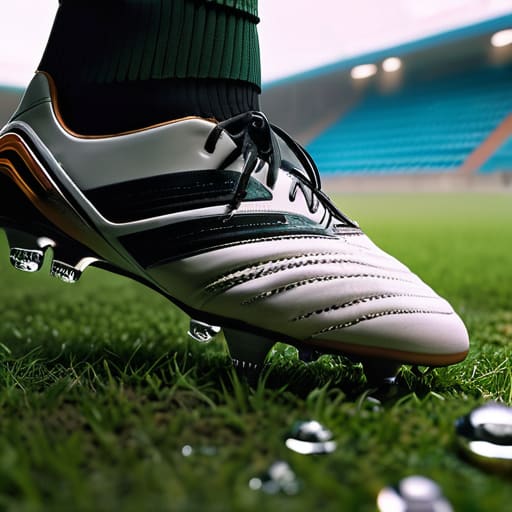
I’ve seen too many lads walk into my sessions wearing boots that look like they belong in a science fiction film—neon colours, impossibly thin soles, and more marketing fluff than actual substance. They think they’re buying an edge, but they’re actually buying a headache. When we talk about footwear biomechanics in soccer, we aren’t talking about how fast a player can sprint in a straight line; we’re talking about how the foot interacts with the ground during a sudden change of direction. A boot that is too rigid or too lightweight often lacks the structural integrity needed to support the foot when a player plants it to turn.
It isn’t about the price tag on the box, it’s about the football boot stud configuration and how it distributes weight. If the studs are too long for a dry, hard pitch, they act like anchors, locking the foot into the ground so firmly that the energy of a sudden movement has nowhere to go except up through the knee. That is exactly how you end up looking at a torn ligament instead of a clean tackle. You need a boot that works with the body, not one that fights against it.
Five Rules of Thumb Before You Click 'Buy'
- Stop chasing the ‘speed boot’ myth if you’ve got flat feet. Those ultra-lightweight, thin-soled boots are fine for a sprint on a carpet, but if you’re playing on uneven, heavy grass, you’re sacrificing the lateral support your ankles actually need to stay upright when a winger tries to shoulder you off the ball.
- Match your studs to the mud, not your ego. I’ve seen too many lads turn up to a waterlogged pitch in firm-ground SG studs because they look professional, only to spend ninety minutes sliding around like they’re on ice. If the ground is soft, get the longer studs; if you don’t have grip, you’ll overcompensate with your hips, and that’s how you end up with a strained groin by halftime.
- Don’t ignore the ‘break-in’ period. I don’t care if the shopkeeper says they’re ‘ready to play’—if they feel like stiff wooden planks in the changing room, they’ll feel like torture devices by the seventieth minute. A boot that doesn’t move with your foot is a boot that creates friction points, and friction points lead to blisters that’ll have you limping off before the game’s even decided.
- Check the heel lock, or don’t bother playing. If your heel is sliding up and down inside the boot every time you take a stride, you aren’t just losing power in your strike; you’re inviting a blister or a tendon issue. A secure fit isn’t about being tight; it’s about the boot becoming an extension of your foot, not a loose slipper you’re trying to wrestle with.
- Size for the sock, not the foot. I’ve seen plenty of players buy boots a size too small thinking it’ll give them a ‘tight feel’ for better control. All they’ve done is crush their toes and kill their circulation. You need enough room for your game socks and a bit of natural swelling during the match, otherwise, your performance will drop the moment your feet start throbbing.
The Bottom Line: Don't Let Your Gear Be the Weak Link
Stop chasing the latest colourway or the most expensive brand name; a boot that costs more won’t fix a lack of stability if the studs are wrong for the surface you’re actually playing on.
Match your footwear to the ground conditions—if you’re playing on heavy, sodden turf in November with firm-ground studs, you aren’t just asking for a slip; you’re asking for a twisted ankle.
Prioritize traction and support over aesthetics, because a player who feels secure in their footing will always make better technical decisions than one who is constantly fighting to stay upright.
The Bottom Line: It’s Not About the Brand
At the end of the day, you need to stop looking at the flashy colourways and start looking at the ground beneath your feet. We’ve covered how the wrong stud pattern can turn a simple change of direction into a season-ending ligament tear, and how chasing the most expensive boot in the catalogue won’t magically fix a lack of biomechanical stability. If you’re playing on heavy, sodden turf in November, those lightweight, bladed boots that look great in a showroom are nothing more than mechanical liabilities. You aren’t just buying a piece of kit; you are choosing the interface between your body and the pitch. Get it wrong, and you’re essentially inviting injury to the party.
I’ve seen enough players sidelined because they prioritized style over substance to last a lifetime. My advice is simple: listen to your feet and respect the conditions. A good pair of boots should feel like an extension of your movement, not a distraction or a danger. Don’t let a marketing campaign dictate your physical longevity. Invest your time in understanding what your specific playing surface demands, because the best player on the pitch isn’t the one with the most expensive gear—it’s the one who is actually fit to play the full ninety minutes without a limp.
Frequently Asked Questions
If I'm playing on a pitch that's half-mud and half-frozen, is there actually a single stud pattern that won't leave me sliding or snapping an ankle?
Look, if you’re staring down a pitch that’s half-frozen crust and half-sludge, you’re asking for a disaster. There is no magic boot that conquers both. If you go with long, aggressive studs for the mud, you’ll catch an edge on the frozen patches and snap an ankle. If you go short for the ice, you’ll be sliding like a penguin in the muck. My advice? Stick to a mid-length SG (Soft Ground) setup with a bit of versatility. It’s a compromise, but at least you’ll finish the game upright.
Does spending an extra hundred quid on the latest "pro" model actually give my players an edge, or am I just paying for better branding and lighter plastic?
Look, I’ve seen enough “pro” models to know that you’re mostly paying for a lighter weight and a bit more marketing fluff. If you’ve got a kid with genuine, explosive pace, that extra gram or two might matter over ninety minutes. But for the rest of the lot? That hundred quid extra isn’t going to fix a poor first touch or a lack of stamina. Buy decent, reliable boots that fit well; leave the carbon fiber nonsense to the professionals.
How do I know when a pair of boots has lost their integrity and is actually becoming a liability for my players' joints?
Look, you don’t need a lab report to spot a dying boot; you just need to pay attention. If the upper feels soft or “mushy” when you press it, the structural integrity is gone. If the soleplate flexes where it shouldn’t—sideways rather than along the natural line of the foot—that boot is a liability. Most importantly, if a player starts complaining of nagging aches in their arches or ankles after a session, stop blaming their fitness and check their kit.
