I’ve sat through enough coaching seminars to know that most of them treat the attacking midfielder like some sort of mystical, untouchable wizard. They’ll show you slow-motion clips of a player gliding through a pristine Champions League pitch, talking about “creative freedom” and “spatial exploitation” as if it’s some divine gift. It’s nonsense. In a real match—the kind played on a Tuesday night in November where the mud is up to your shins—understanding how a number ten operates isn’t about magic; it’s about finding a pocket of air when everyone else is suffocating. If you think your playmaker can just float around the pitch without contributing to the graft, you’re going to lose every battle in the middle of the park.
I’m not here to sell you on tactical theories that only work in a video game. I want to tell you what that position actually demands when your lungs are screaming and the referee has lost control of the game. I’m going to strip away the jargon and show you the uncomfortable realities of the role: the defensive discipline you can’t ignore, the timing of the run that actually matters, and why your “creative genius” is useless if they can’t handle a heavy tackle. This is the practical truth of the position, straight from thirty-five years on the touchline.
Mastering Playmaker Positioning and Vision Under Pressure
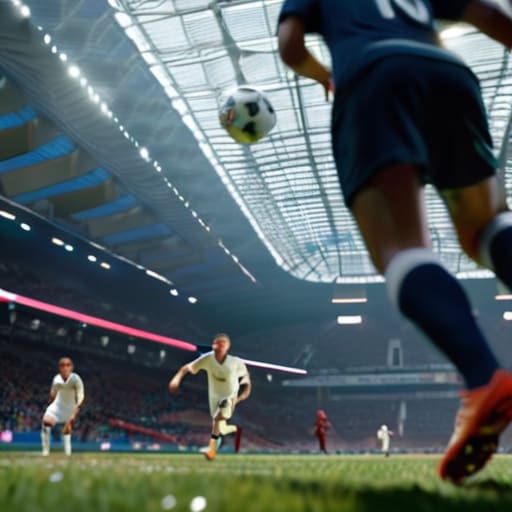
You can have all the technical ability in the world, but if you’re standing where the defender expects you to be, you’re just a target for a tackle. True playmaker positioning and vision isn’t about finding the pocket of space when the game is standing still; it’s about finding it when the opposition is breathing down your neck and the midfield is a scrap heap. I’ve seen countless youngsters struggle because they wait for the ball to come to them. If you wait, you’re dead. You have to learn to manipulate the lines before the pass even leaves the foot. That means moving into a gap not because it’s open, but because your movement forces a defender to make a choice.
When we talk about transitioning from midfield to attack, the biggest mistake I see is players turning into statues the moment they receive the ball. A real playmaker uses their body to shield the contact and their eyes to scan the field before the ball arrives. You aren’t just looking for a teammate; you’re looking for the seam that allows for immediate final third exploitation. If you can’t see the pass before you’ve even controlled the ball, you’re playing at the speed of the game, rather than making the game play at your speed.
Spatial Awareness in Football Finding Room in a Crowded Box
Everyone talks about the magic of a number ten, but nobody talks about how suffocating it feels when you’re standing in a crowded box with three defenders breathing down your neck. True spatial awareness in football isn’t about finding a nice, empty patch of grass—it’s about knowing exactly where that patch will be two seconds before the ball arrives. If you’re waiting for the space to open up before you move, you’re already too late. You have to move into the pockets of uncertainty, those tiny, uncomfortable gaps between the opposition’s midfield and defensive lines, before they have a chance to shut the door.
I’ve seen too many young players try to play like a classic trequartista tactical role by standing still and waiting for the game to come to them. That’s a quick way to get marked out of a match. Real final third exploitation happens when you use your body to shield the ball and your eyes to scan the horizon. You aren’t just looking for a pass; you are looking for the moment the defensive structure cracks. It’s about the subtle shimmy, the half-step into a blind spot, and the ability to turn in a space no larger than a biscuit tin.
Five Hard Truths for the Creative Engine
- Stop waiting for the ball to find you. A real number ten doesn’t stand there like a statue waiting for a handout; you have to move into the pockets of space before the passer even looks up. If you only move when you see the ball coming, you’re already too late and you’ll be swallowed up by a defensive midfielder who’s been waiting for you all afternoon.
- Learn to play with your back to the goal, not just facing it. Most young players want to face the net so they can see the target, but that’s how you get marked out of the game. You need to be able to receive the ball under pressure, feel where the defender is with your shoulder, and turn in one motion. If you can’t shield the ball, you’re just a liability in the middle.
- Master the “one-touch” reality. I see too many players who think they need three touches to settle the ball before they can make something happen. In a real match—especially on a heavy, muddy pitch—you don’t have that luxury. If you can’t play a crisp, one-touch pass to relieve pressure or switch the play, you’re going to lose it, and your team is going to pay for your indecision.
- Understand that your job is as much about the “pass before the pass” as the final ball. A killer through-ball is useless if the rhythm of the game is broken. You need to be the person who keeps the ball moving, recycling possession to the sideways players to draw the opposition out of shape. You aren’t just a magician; you’re the conductor.
- Don’t neglect the defensive transition. I’ve seen countless “talented” tens who spend the whole game strolling around while their midfielders run themselves into the ground. If you lose the ball, you are the first line of the counter-press. If you don’t hunt it back immediately, you’re effectively playing with ten men, and no amount of creative flair will make up for that lack of graft.
The Reality Check: What a Ten Actually Needs to Survive
Stop looking for the ‘magic pass’ and start looking for the pocket; a playmaker’s first job isn’t to play a killer ball, it’s to exist in the space where the opposition’s midfielders are too tired or too disorganized to track them.
Vision is useless if your engine is dead; you can have the best tactical brain in the county, but if you haven’t got the legs to move into a passing lane when the game hits the seventy-minute mark, you’re just a spectator with a fancy shirt.
A number ten must be a master of the ‘half-turn’; if you receive the ball with your back to the goal and your body facing your own keeper, you’ve already lost the advantage, regardless of how much talent you think you have.
The Reality of the Role
At the end of the day, being a number ten isn’t about the flashy nutmegs you see on a highlight reel or the fancy social media clips. It’s about the unseen work: the constant scanning of the horizon, the ability to find a pocket of space when your legs feel like lead, and knowing exactly when to demand the ball and when to let the game pass you by. If you can’t find that room in a crowded box or maintain your vision when the opposition starts breathing down your neck, then you aren’t a playmaker; you’re just another player wandering around the pitch. You have to master the geometry of the game before you can ever hope to master the ball itself.
I’ve stood on sidelines for thirty-five years, and I’ve seen plenty of talented kids crumble because they thought the role was a gift rather than a responsibility. Don’t fall into that trap. If you want to command that central space, you have to earn it through discipline and intelligence every single time the whistle blows. It’s a heavy burden to carry, and it’s often thankless work, but there is no greater feeling in this game than seeing a pass you carved out land perfectly on a teammate’s foot. So, stop looking for the easy way out and start learning how to control the chaos.
Frequently Asked Questions
If my number ten is constantly being marked out of the game by a defensive midfielder, do I change their role or change my formation?
You don’t change the player, and you don’t tear up your formation just yet. If a DM is sticking to your Ten like glue, it means your Ten is standing still. They’re becoming a stationary target. Instead of moving them, teach them to move away from the threat to drag that DM out of position. If they can’t find the space, they’re playing too safe. Make them hunt for the pocket, not wait for it to appear.
How much of the physical work should I actually expect from a playmaker when the game turns into a scrap in the middle of a wet Tuesday afternoon?
Look, if you’re expecting your playmaker to be a marathon runner in a swamp, you’ve misunderstood the job. On a wet Tuesday, they shouldn’t be chasing shadows; they should be finding the one patch of grass that isn’t a puddle. I don’t care how many kilometres they cover if they’re all wasted in useless sprints. I want them working their brains—positioning themselves to receive the ball when everyone else is too tired to think.
When do I stop asking my number ten to create and start asking them to actually help the team defend so we stop getting caught on the counter?
You stop asking them to create the second you realise your midfield is a sieve. If your number ten is floating around the final third like a tourist while your centre-backs are fighting for their lives against a counter-attack, you don’t have a playmaker; you have a passenger. You make the switch when the cost of their “creativity” is consistently higher than the goals they provide. If you’re losing more through transitions than you’re winning through brilliance, they’re a defender first.
