I’ve lost count of how many “elite” coaching manuals I’ve seen that claim you can master technical control by setting up pristine, colour-coded cones in a sunny training ground with nothing but a gentle breeze. It’s nonsense. If you want to learn how to improve first touch under pressure, you won’t find the answer in a static drill where a player has all the time in the world to settle a ball. Real pressure isn’t a theoretical concept; it’s the heavy breathing of a midfielder charging at you, the mud sucking at your boots, and the sudden, frantic realization that your teammate’s pass was two inches harder than you expected.
I’m not here to sell you on some expensive, high-tech academy method that falls apart the moment a real opponent steps into the tackle. I’m going to give you the practical, unvarnished truth about what actually works when the game gets tight and the space disappears. We are going to look at drills that actually survive a rainy Sunday morning—the kind that force your players to think, react, and settle the ball before the defender has even finished their stride. No fluff, just the reality of the pitch.
Why Scanning Frequency Is Your Only Real Safety Net

I’ve seen it a thousand times on a Sunday morning: a player receives the ball, looks down at their feet like they’re trying to solve a math equation, and then gets absolutely clattered by a midfielder they didn’t even know was there. The problem isn’t usually their footwork; it’s that they’re playing the game with their eyes glued to the leather. If you aren’t improving scanning frequency before the ball even reaches your boots, you aren’t playing football, you’re just reacting to it.
You can run all the ball control drills for tight spaces you like, but if a player arrives at the ball blind, they’ve already lost the initiative. Scanning isn’t some fancy tactical luxury; it is your only real safety net. It’s about building spatial awareness in football so that when that first touch goes slightly wrong—and let’s be honest, it usually does—you already know where the escape route is. You aren’t just looking for space; you’re looking for the threat. If you know where the defender is coming from, your body is already positioned to shield the ball before the contact even happens.
Mastering Ball Control Drills for Tight Spaces and Muddy Pitches
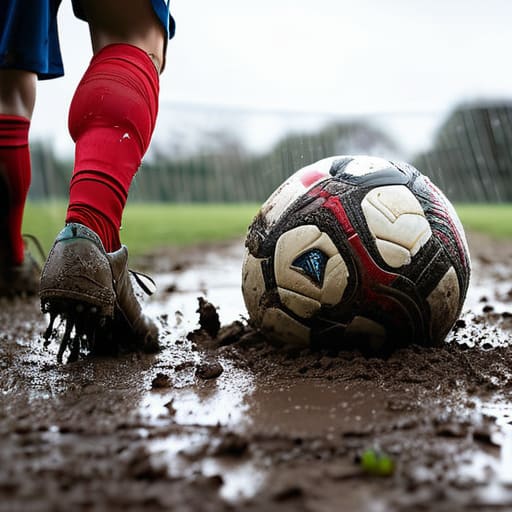
You can spend all day in a pristine, manicured academy facility running perfect patterns, but that isn’t where games are won or lost. Real football happens when the pitch is a sponge, the wind is biting, and you’ve got a lad half your size breathing down your neck. If you want to actually improve, you need ball control drills for tight spaces that mimic that chaos. I don’t care about fancy cone weaves that look good on Instagram; I want to see your players working in a three-yard box with two defenders constantly stepping in to disrupt their rhythm.
The goal isn’t just to keep the ball; it’s to master receiving technique under defensive pressure so the ball doesn’t become a dead object the moment it hits their boot. I always tell my players: if your first touch is heavy on a greasy surface, you aren’t just losing possession, you’re handing the opposition a gift. We focus on small-sided games where the boundaries are tight and the decision-making window is non-existent. If they can’t settle the ball while someone is actively trying to take it off them, they’ll never survive a Saturday afternoon in November.
Five Hard Truths About Keeping the Ball When the Heat Is On
- Stop teaching them to play on the carpet. If you only drill in pristine, dry conditions, your players will panic the moment they hit a patch of uneven grass or a heavy, waterlogged pitch. You need to force them to adjust their feet and their weight of touch to the reality of the ground they’re actually playing on.
- The touch shouldn’t just be about control; it’s about direction. A “good” touch that stops the ball dead under your feet is often a death sentence when a midfielder is charging at you. I tell my players: your first touch is your first pass. It should set you up to move, not just set the ball down for a spectator.
- Check the body shape before the ball even arrives. I see too many kids standing flat-footed, waiting for the ball to hit them like a car. If they aren’t slightly on their toes with their hips open to the pitch, they’re reacting to the ball rather than anticipating the pressure. You can’t fix a bad touch if you’re still facing the wrong way.
- Use the “soft foot” principle, but don’t let them be lazy. It’s about cushioning the impact, not just letting the ball roll away. If they’re hitting the ball like it’s a brick, it’ll bounce off them and straight to a defender. They need to learn how to absorb the energy of the pass, especially when it’s a hard, driven ball coming in fast.
- Embrace the chaos of the “second ball.” In a real match, a first touch is rarely perfect. Instead of berating a player because their touch wasn’t a work of art, look at what they do the split-second it goes wrong. If they’re already fighting for the recovery, they’re learning; if they’re standing there watching it roll away, that’s when we have a problem.
The Hard Truths to Carry Off the Pitch
Stop coaching the ‘perfect’ touch in isolation; if your drills don’t involve a defender breathing down a player’s neck or a ball moving at match speed, you aren’t training them for a game, you’re training them for a dance recital.
A player’s first touch is only as good as the information they have before the ball arrives—if they haven’t scanned the pitch to see where the pressure is coming from, they’ve already lost the ball before they’ve even touched it.
Focus on the weight of the touch rather than the flashiness of it; in a real match, a simple, directional touch that moves the ball out of a crowd is worth ten times more than a fancy flick that leaves them stranded when the tackle inevitably arrives.
The Reality Check
At the end of the day, you can’t coach your way out of a bad touch with a complicated tactical diagram or a fancy new training app. If your players aren’t scanning the pitch before the ball even arrives, they are essentially playing blindfolded, and no amount of technical wizardry will fix that. You have to bridge the gap between the sterile, perfect environment of a drill and the unpredictable chaos of a matchday. That means moving away from the easy passing lines and forcing them to work in the tight, uncomfortable spaces where the real football happens. If they can’t control the ball when the mud is thick and a defender is breathing down their neck, then they haven’t truly mastered the skill. Mastering the first touch is about managing the space and the time you have left.
Don’t get discouraged if your players struggle during the first few sessions; technical mastery under pressure is a slow burn, not a light switch. You won’t see it in one afternoon of drills, but you will see it in that split second on a Sunday morning when a midfielder takes a heavy touch, loses the ball, and the game is lost. My job—and yours—is to make sure that moment never happens. Keep them focused on the fundamentals of awareness, keep the drills demanding, and don’t be afraid to make things difficult. True competence is built in the uncomfortable moments, and that is exactly where the best players are made.
Frequently Asked Questions
My players can do the drills perfectly in a quiet session, so why does their touch fall apart the moment a defender actually steps toward them in a match?
Because you’re coaching them in a vacuum. In a drill, the ball is a predictable guest; in a match, it’s a projectile being launched by a teammate under duress. If they’re only practicing against cones, they aren’t learning control—they’re learning choreography. A defender doesn’t wait for them to settle; they close the gap and shrink the world. You need to stop giving them time to think and start forcing them to react.
How do I teach a player to cushion a heavy, bouncing ball on a pitch that’s more mud than grass without them constantly losing control?
Stop trying to teach them to “trap” it like they’re on a pristine carpet in the Premier League. On a mudheap, a heavy ball isn’t a gift; it’s an assault. Tell them to stop meeting the ball with a stiff, dead foot. They need to catch it. I tell my lads to treat it like a falling egg—soften the limb, meet the ball slightly underneath its center of gravity, and let the foot recoil. If they fight the bounce, the bounce wins.
Is there a way to tell if a player's poor touch is a genuine technical flaw or if they're just panicking because they haven't looked over their shoulder?
It’s the oldest question in the book, isn’t it? Here’s how you tell: watch their eyes before the ball arrives. If their head is glued to their laces the moment the pass is played, they’re playing blind. They aren’t failing technically; they’re reacting to a ghost. A player with a genuine technical flaw will struggle even when they know exactly where the pressure is. If they panic, it’s a mental scramble. Fix the scanning, and the touch often follows.
