I’ve sat through countless coaching seminars where some lad in a designer tracksuit spends forty minutes waving his hands around a whiteboard, talking about “spatial occupation” and “defensive transitions” as if he’s explaining rocket science. It’s all well and good in a temperature-controlled classroom, but when you’re actually standing on a muddy touchline at 9:00 AM on a Sunday, none of that jargon helps you when a winger is about to tear your fullback apart. If you want to know how to coach defending one on one, you don’t need a PhD in geometry; you need to teach your players how to stop being afraid of the contact and how to use their bodies instead of just their eyes.
I’m not here to sell you a fancy tactical philosophy or a subscription to some high-tech analysis software. What I’m going to give you is the stuff that actually survives a heavy pitch and a tired set of legs. We are going to strip away the nonsense and focus on the physical reality of the duel—the stance, the timing, and the mental grit required to hold your ground. I’ll show you the drills that actually work when the pressure is on, so your players stop getting bypassed the moment the game gets serious.
Mastering Defensive Stance Fundamentals Before the Chaos Starts
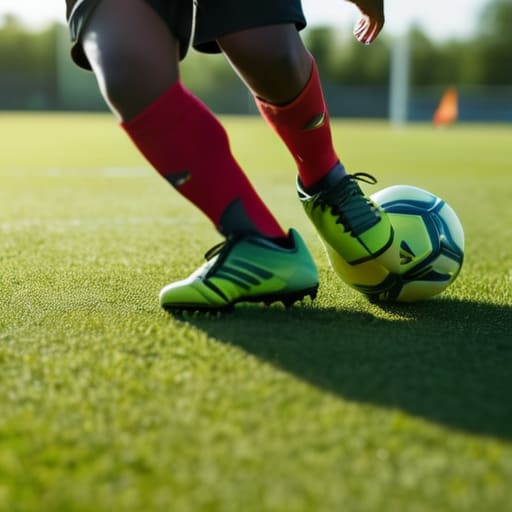
Before you ever think about running a high-intensity game scenario, you have to address the mechanics. I’ve seen too many young players dive into a tackle like they’re trying to win a prize, only to end up on the grass while the attacker breezes past. You cannot teach defensive positioning if their body shape is fundamentally broken. I tell my players: if your feet are parallel and your weight is on your heels, you’re already beaten. You need to be on the balls of your feet, knees bent, with a side-on stance that allows you to pivot.
It’s about geometry, not just grit. If they stand square to the attacker, they’re a sitting duck; the moment that player shifts direction, your defender is stuck in two minds. We focus on defensive stance fundamentals by making sure they can move laterally without crossing their legs. If they can’t shuffle effectively in a controlled environment, they’ll never manage it when there’s a crowd of shouting parents and a heavy pitch underneath them. Get the balance right first, or the rest is just wasted breath.
Teaching Defensive Positioning That Actually Holds Under Pressure
You can drill a kid on their stance until they’re blue in the face, but it means nothing if they don’t understand the geometry of the space they are protecting. When I’m teaching defensive positioning, I stop talking about “staying in line” and start talking about “closing the gate.” If your defender is flat-footed or, worse, lunging blindly, they aren’t defending; they’re just a spectator waiting to be bypassed. You have to teach them that the goal isn’t to win the ball immediately—it’s to delay the progress of the attacker until help arrives.
To make this stick, you need to move away from static lines and into 1v1 defensive decision making under actual stress. I’ve seen too many sessions where kids look great in a controlled circle, only to turn into statues the moment a real winger starts sprinting at them. I like to use small-sided games where the attacker has a clear direction of travel and the defender has to use constant, micro-adjustments in their footwork to steer them away from the central danger zone. If they can’t adjust their body shape while running at pace, they’ll never survive a real Saturday afternoon.
Five Hard Truths for When the Attacker Goes Past Your Midfield
- Stop teaching them to dive in. I’ve seen more goals conceded because a defender lunged like they were trying to catch a bus than because of poor positioning. Teach them to delay; if they can just stay between the ball and the goal, they’ve won the first battle.
- Watch the hips, not the feet. If your player is staring at the attacker’s boots, they’re going to get danced around. The feet can lie, they can step one way and go the other, but the hips don’t lie. If the hips turn, the player is moving.
- Distance is a sliding scale. You don’t stand three yards away like you’re waiting for a bus, but you don’t stand on their toes either. If you’re too close, they’ll spin you; too far, and they’ll pick a pass. It’s about finding that “buffer zone” where they have to work to get past you.
- The “Side-on” stance isn’t just for show. If they stand flat-footed and square, they’re a stationary target. They need to be on the balls of their feet, body angled, ready to pivot. If they aren’t ready to sprint the moment the attacker touches the ball, they aren’t defending, they’re just watching.
- Use the touchline as your extra defender. In training, don’t just let them defend in the middle of a wide-open park. Force them to shepherd attackers toward the touchline. It’s much harder to beat a man when you’ve run out of pitch to run into.
The Three Things They’ll Actually Remember on Match Day
Stop obsessing over the perfect textbook stance and focus on the hips; if they aren’t low and driving into the attacker, all the fancy footwork in the world won’t stop them from getting bypassed when the pitch turns heavy.
Distance isn’t a fixed number you pull from a manual; it’s a living thing that must change based on the attacker’s speed and the space behind your defensive line, or you’ll find yourself caught in no-man’s land.
Defending one-on-one is as much about mental stamina as physical positioning; if you haven’t prepared them for the fatigue of that final fifteen minutes, their technique will vanish the moment they start breathing hard.
The Bottom Line on the Front Line
At the end of the day, coaching one-on-one defending isn’t about memorising a series of perfect geometric shapes from a coaching manual. It’s about teaching your players how to manage the space and, more importantly, how to manage their own temperament when an attacker starts dancing around them. We’ve talked about the importance of that low centre of gravity, the necessity of keeping the hips engaged, and why staying goal-side is non-negotiable. If you focus on the fundamentals—the stance, the distance, and the timing of the tackle—you stop teaching them to react to the ball and start teaching them to control the attacker. You want them to be the ones setting the rhythm of the duel, not the ones being dragged into someone else’s game.
Don’t get discouraged if your players look a bit clumsy in training this week. Defending is an ugly, uncomfortable business that requires a specific kind of mental grit, and you can’t manufacture that overnight in a Tuesday night session. My advice is to keep the drills simple, keep the feedback direct, and refuse to accept laziness when it comes to their body positioning. You aren’t just training athletes; you are building the character of players who won’t blink when the game is on the line and the mud is flying. Get back on the pitch, get the cones out, and keep at it. That’s how champions are made.
Frequently Asked Questions
What do I do when my defender is technically sound but just gets bullied physically by a bigger, stronger striker?
Stop trying to teach them to win a wrestling match; they’ll lose it every time. If your player is getting bullied, it’s usually because they’re playing the striker’s game instead of their own. You need to teach them to use the striker’s momentum against them. Work on body positioning—getting that low center of gravity and using their shoulder to create a buffer. If they can’t outmuscle them, they must out-angle them.
How do I stop my players from "diving in" and getting bypassed the second they try to make a tackle?
They dive in because they’re chasing the ball instead of the man. It’s a rush of adrenaline, a desire to “win” the tackle, but it’s pure laziness. Stop telling them to “tackle” and start telling them to “delay.” If they lunged, they’ve lost. I tell my players: your job isn’t to take the ball; it’s to make the attacker regret having the space to turn. If you can’t win it, stay on your feet and stay in front.
How do I coach this effectively when I only have a handful of players at a midweek training session?
Look, don’t let a small group fool you into thinking you can’t work. If you’ve only got six players, stop worrying about big rondos and start running high-intensity isolation lanes. Set up two narrow channels and have them go 1v1 repeatedly. It’s repetitive, yes, but it forces them to actually use that stance we talked about. With fewer players, you can finally get close enough to actually correct their body shape in real-time.
