I’ve spent far too many Sunday mornings watching eighteen-year-olds trudge through mud, looking like they’re trying to sprint through a vat of thick porridge. Most of these lads have been told that the secret to speed is some expensive, high-tech plyometric program or a pair of carbon-plated boots that cost more than my first car. They’re chasing metrics and “explosive power” jargon while completely ignoring the basic mechanics of how to actually move their bodies. If you’re looking for a way to learn how to improve acceleration by following a flashy YouTube tutorial featuring a professional athlete in a temperature-controlled gym, you’ve come to the wrong place. Speed isn’t found in a lab; it’s found in the first three steps of a heavy-legged winger trying to beat a fullback on a pitch that’s more puddle than grass.
I’m not here to sell you on a dream or some complicated science that falls apart the moment the wind picks up. I’m going to give you the practical, grit-under-the-fingernails methods that I’ve used for thirty-five years to get players moving effectively. We’re going to focus on drills that actually survive a rainy Tuesday night fixture and teach you the mechanics that stay true when the lungs are burning. No hype, no nonsense—just the truth about how to build that initial burst.
Mastering Acceleration Phase Technique Under Real Pressure
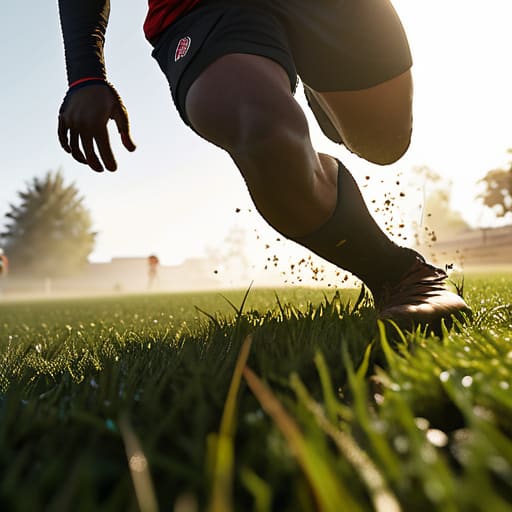
The problem with most coaching manuals is that they treat acceleration like a laboratory experiment. They have you running straight lines on a pristine track, but football isn’t played in straight lines, and it certainly isn’t played in a vacuum. If you want to see real progress in acceleration phase technique, you have to stop treating the sprint as a standalone event and start treating it as a reaction to a stimulus. I’ve spent too many Sunday mornings watching players look fast in a drill, only to stand like statues the moment a defender moves toward them.
To bridge that gap, you need to bake improving reaction time directly into your technical work. Instead of a whistle, use a visual cue—a ball played into space or a teammate’s movement—to trigger that first explosive step. You aren’t just looking for raw speed; you’re looking for the ability to transition from a standing start to a functional sprint under the chaos of a match. If they can’t find their drive while looking over their shoulder, all the fancy drills in the world won’t save them when the game actually gets heavy.
Why Plyometric Exercises for Speed Fail in the Rain

I’ve seen it a thousand times. A coach gets a bit of funding or a new manual, and suddenly every Tuesday session is a parade of box jumps and depth jumps. They think they’re building lower body power development, but they’re actually just building a group of players who are terrified of slipping. The problem with most plyometric exercises for speed is that they assume you’re performing them on a pristine, dry gym floor with high-grip trainers.
When you take those same movements to a waterlogged grass pitch in November, the physics change. If a player is trying to execute a maximal explosive jump on ground that feels like sponge, they aren’t training their nervous system to be fast; they are subconsciously altering their sprint mechanics to avoid a twisted ankle. You can’t develop true explosive strength training if the player is spending half their mental energy worrying about their footing. If the surface doesn’t allow for a crisp, violent contact with the ground, you aren’t training speed—you’re just teaching them how to stumble gracefully.
Five ways to actually get them moving without turning your session into a track meet
- Stop measuring distance and start measuring the first three steps. I don’t care if a lad can run a hundred metres in eleven seconds if he looks like he’s trying to start a lawnmower when the whistle blows. Acceleration is won in that initial, violent burst of intent, so train the transition from stationary to explosive, not the long-distance cruise.
- Get them out of their heels. You’ll see too many players who, the moment they need to sprint, stand up too tall and try to run like they’re on a treadmill. If they aren’t leaning into the drive, if they aren’t pushing the ground away behind them, they’re just wasting energy fighting their own centre of gravity.
- Stop the “stop-start” nonsense and add a reactive trigger. Running through cones in a straight line is fine for a PE lesson, but it’s useless on a pitch. If they aren’t reacting to a whistle, a visual signal, or an opponent’s movement, they aren’t training acceleration; they’re just performing a choreographed dance.
- Focus on the “punch” of the foot strike. If a player is landing on their heels or “reaching” with their toes, they are essentially hitting the brakes every time they take a step. They need to strike the ground with the ball of the foot, driving through it to create propulsion rather than just trying to land softly.
- Check their recovery before you even pick up a cone. I’ve seen coaches try to run high-intensity acceleration drills with kids who haven’t had a decent meal or a proper night’s sleep. If they’re heavy-legged from a midweek tournament or a bad diet, you aren’t training speed—you’re just training them to be tired and prone to hamstring tweaks.
The Bottom Line for Your Next Session
Stop treating speed like a track and field event; if your players can’t find their explosive first three steps while looking over their shoulder at a defender, you’re just training them to look good in a vacuum.
Ditch the fancy, high-tech plyometric circuits that require a pristine gym floor and instead focus on high-intensity, short-burst movements that can actually be done on a muddy pitch without someone snapping an Achilles.
If you want to see real improvement, stop obsessing over the stopwatch and start watching the mechanics—if they aren’t driving their knees and staying low through the initial burst, all the sprinting in the world won’t fix a poor starting position.
The Bottom Line
Look, if you’ve been paying attention, you’ll know that acceleration isn’t some magic trick you find in a fancy gym or a glossy textbook. It’s about the mechanics of those first three steps, the discipline to keep your head down during the drive phase, and the common sense to stop doing plyometrics on a greasy, waterlogged pitch where you’re more likely to pull a hamstring than find an extra yard of pace. You can’t just wish for speed; you have to build the foundation through repetitive, purposeful movement that actually translates to the pitch. If you focus on the technique under pressure and stop chasing the latest fitness fad, you’ll see the difference when the game actually gets heavy in the final quarter.
At the end of the day, the best drills aren’t the ones that look impressive on a social media clip; they are the ones that survive a muddy Sunday morning when your players are tired and the wind is blowing sideways. Speed is a gift, but explosive acceleration is a skill that you earn through grit and consistency. Don’t get distracted by the noise or the jargon. Just get your players moving correctly, keep the sessions practical, and trust that the work you do in the quiet, unglamorous moments will be the reason they win that crucial fifty-fifty ball when it matters most. Now, get out there and get to work.
Frequently Asked Questions
If my players are already doing sprints, why do they still look sluggish when they're trying to turn and chase a ball?
Because you’re training them to run in straight lines on a track, not to react to a bouncing ball on a muddy pitch. Sprints are about linear speed; turning is about deceleration and re-acceleration. If they can’t drop their center of gravity and plant a foot to change direction, all those 40-yard dashes are useless. Stop running them in lanes and start making them sprint toward a moving target. They need to learn how to brake before they can go.
How do I know if my players are actually building explosive power or if they're just getting tired and losing their form?
Look, if you’re watching them and thinking, “They look a bit sluggish,” that’s not a coaching observation—that’s a guess. You need to look at the mechanics. If their hips are dropping and they’re starting to run “tall” and heavy-footed, they aren’t building power; they’re just burning calories. Stop the drill immediately. If the quality of the first three steps drops, the session is over. You can’t train explosive intent with exhausted legs.
What's the difference between training for pure speed and training for that first yard of acceleration needed in a tight match situation?
Look, if you’re sprinting down an open pitch with no one around, that’s pure speed. That’s about mechanics and top-end stride. But football isn’t played in a straight line on a running track. That first yard of acceleration is about reaction and “zero-to-sixty” explosiveness. It’s the ability to go from standing still to a full burst to win a 50/50 or close a gap. One is about how fast you can run; the other is about how quickly you can start.
